The DJ Turned Founder: Ayinde Castro on Nocturne and NYC Nightlife
Now, with one foot still in the party and the other in the infrastructure behind it, Castro is asking a bigger question: what could nightlife look like if the people building the culture had better tools to build the businesses around it?
Photography by Migi
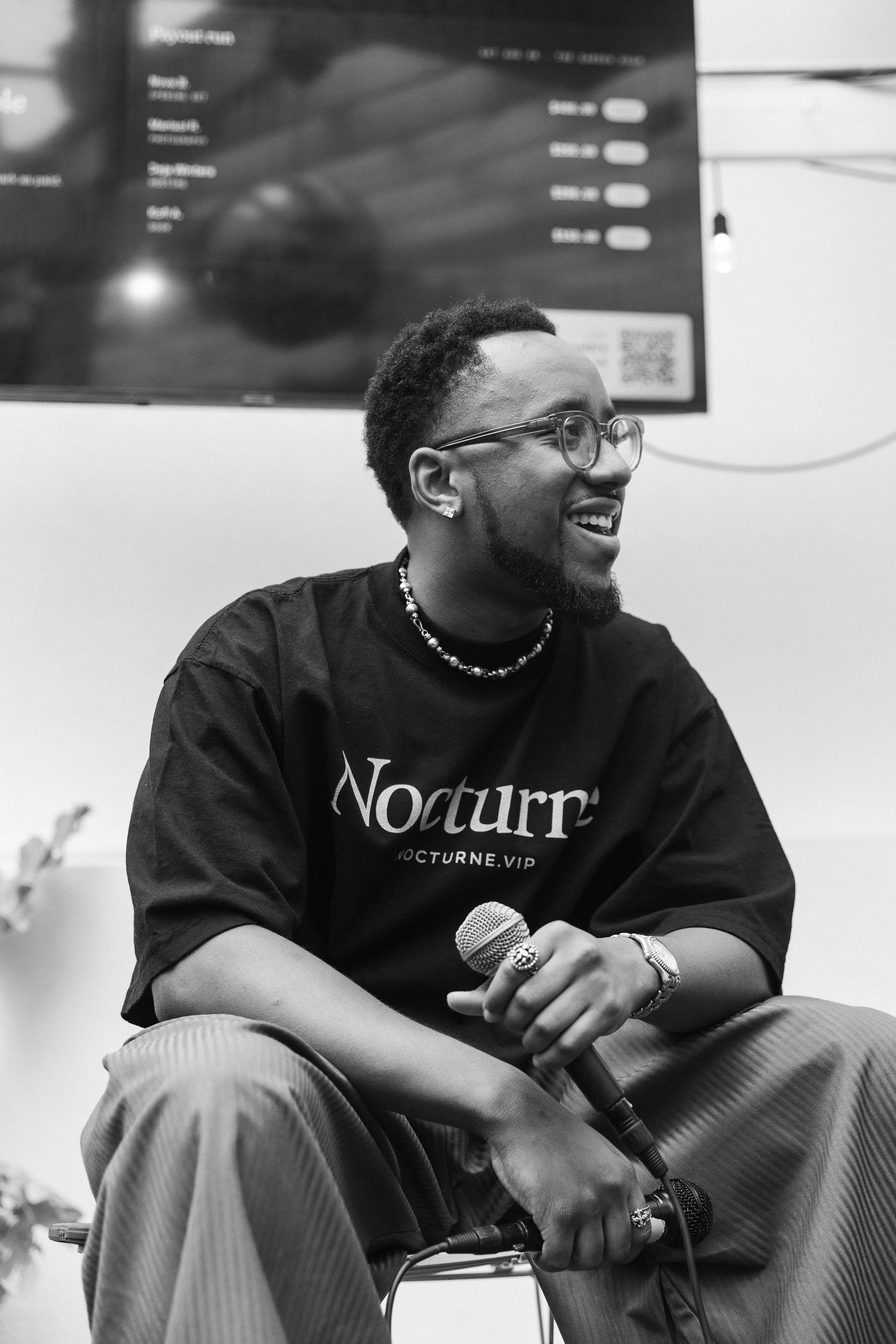
The party is only the part of nightlife that most people see. Behind every packed room is a quieter chain of bookings, contracts, invoices, payouts, negotiations, and relationships holding the whole thing together. Ayinde Castro has spent years moving through both sides of that equation – as a DJ, an event producer, a community builder, and now a founder trying to rethink how the business actually works.
A Harvard Business School graduate and former LinkedIn product professional, Castro founded Elevate Social in 2022, turning a desire to create community for Black professionals and creatives into an events platform that has since reached 14 cities and more than 50,000 people. He taught himself to DJ along the way, initially to shape the sound of his own events, before becoming part of the same network of artists, promoters, and venues he was booking.
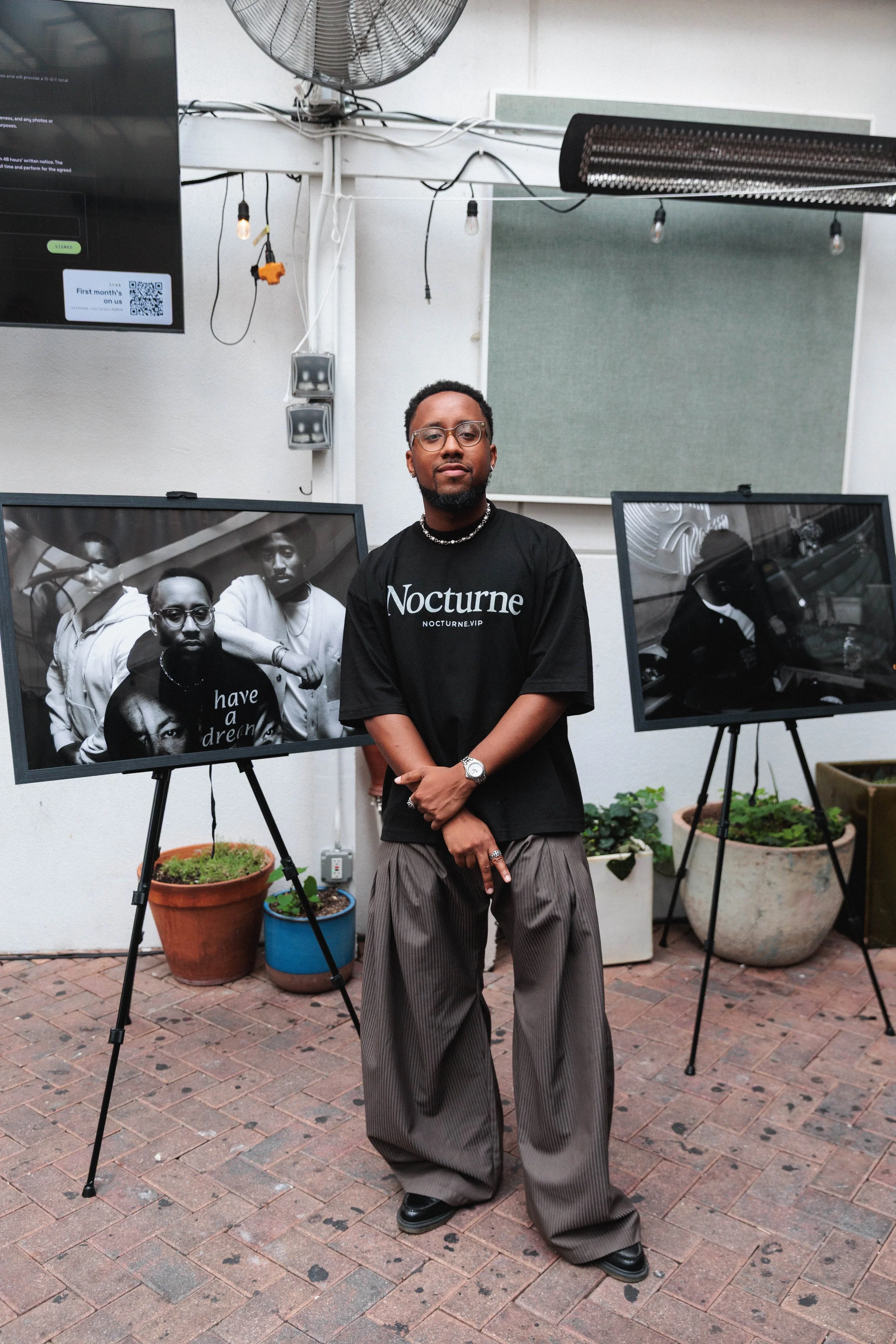
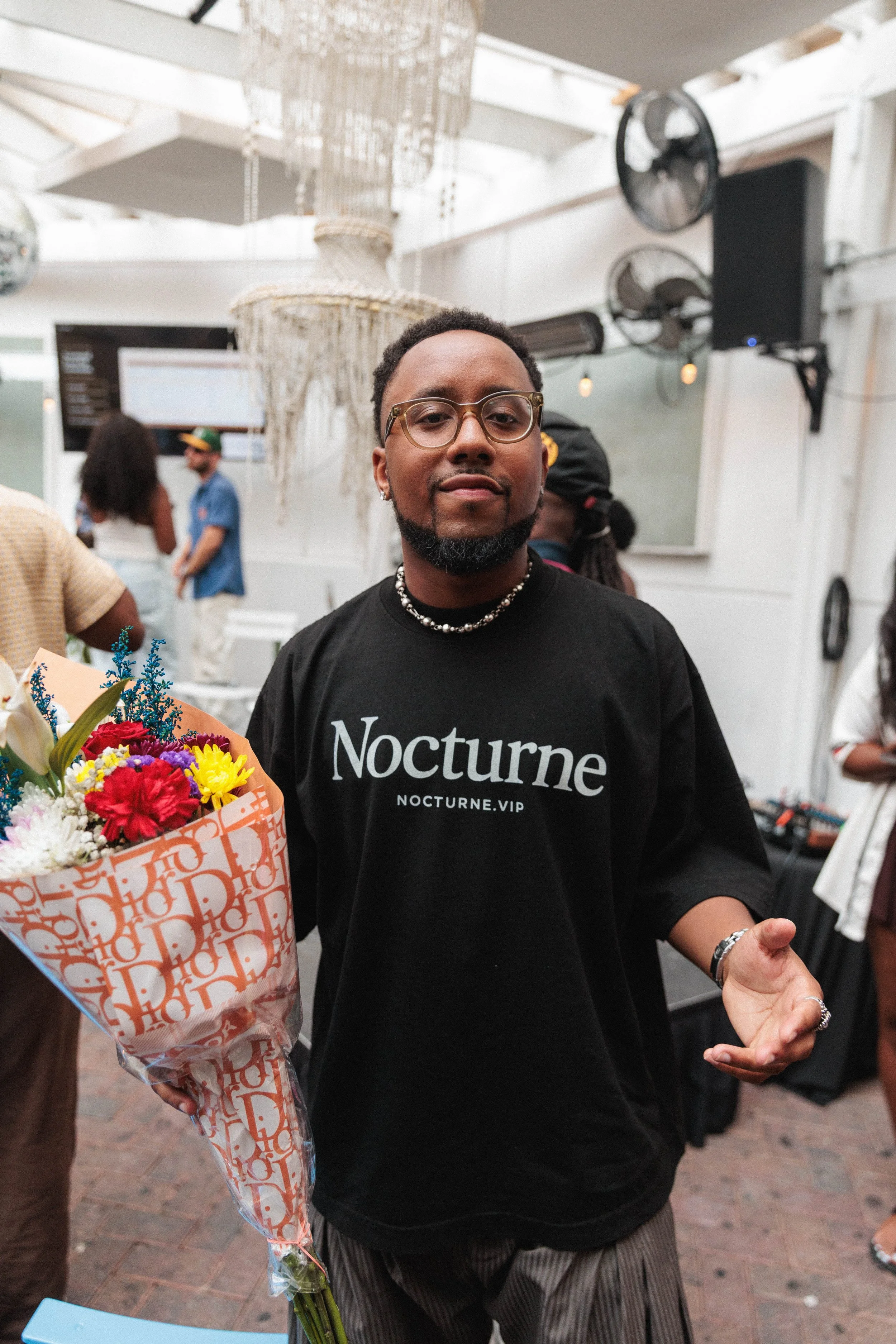
It was from inside that world that he began to notice how much of the industry’s business still depended on informal systems—and how rarely the people creating the culture had the infrastructure to match it. That became the thinking behind Nocturne, his all-in-one platform for the operational side of nightlife. More than 100 DJs and promoters now use it alongside venues across Brooklyn, bringing contracts, invoicing, payments, and tax documentation into one place.
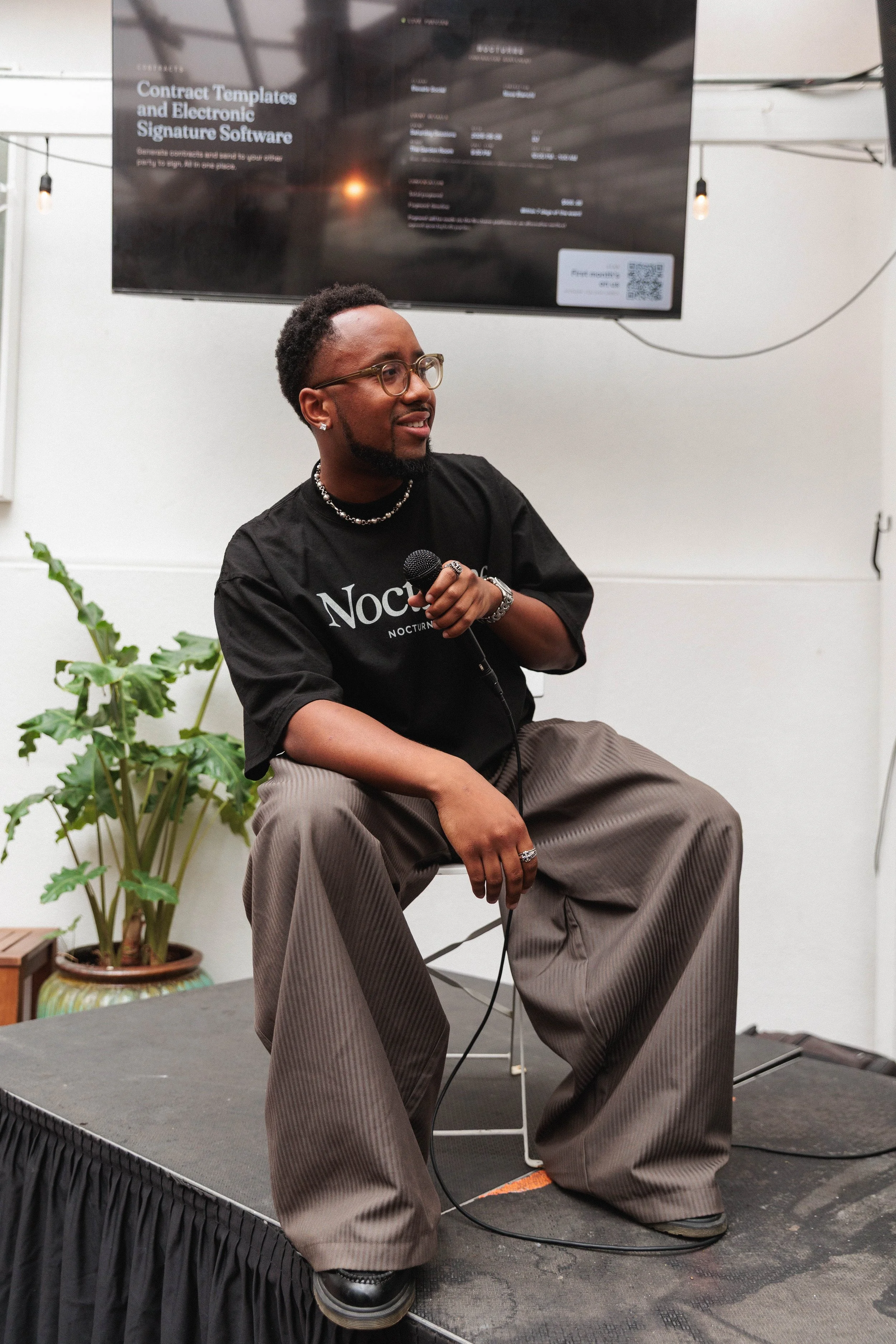
At Nocturne’s launch at Café Erzulie in Brooklyn, that conversation extended beyond the technology itself, with Castro joined by South House’s Tochi Ukwu, event organizer Kevin White, and NYC DJ Moochie of Damballa Sundays to discuss the business of nightlife.
Now, with one foot still in the party and the other in the infrastructure behind it, Castro is asking a bigger question: what could nightlife look like if the people building the culture had better tools to build the businesses around it? Ayinde Castro spoke with 1202 MAGAZINE about the nightlife that shaped him, the business realities behind the party, and what he hopes to build with Nocturne.
You were already DJing and throwing events before Nocturne. Take me back to that period—what were you seeing firsthand that eventually made you think, ‘There’s a business that needs to be built here’?
I started an events group called Elevate Social in 2022. I was living in the Bay Area, and the whole inception of it was that there wasn’t really a community for people of color to meet up and fellowship. So I started hosting brunch events for people in tech and creative industries.
People at LinkedIn, Google, and other companies would come and realize, ‘Oh, there are other Black people in the Bay,’ because San Francisco isn't very diverse. I wanted to build that community while also curating a space where people could hear music they were familiar with. We started with hip-hop, R&B, Afrobeats, amapiano, and dancehall, and that really resonated with people.
We started doing it in different cities—San Francisco, New York, D.C., Boston, and eventually 14 cities to date. As I scaled Elevate Social, I started DJing myself. I wanted to curate the sound, so I taught myself how to DJ and started booking myself for the early sets, then eventually prime time and closing sets.
I have four years of DJing experience, and what I realized in the event industry is that, at times, you don’t get paid on time, and the process of getting booked and getting paid is very antiquated. I’d text owners to reserve a date or send things over email. When it comes to taxes, you’re just scrambling to figure out how much you got paid and where that money is. Sometimes you’d realize, ‘Oh, I didn’t get paid for this gig.’
So I wanted to come up with a company that could alleviate that back-end stress and allow people to focus more on creating music and creating events, as opposed to all the logistics that go behind it.
Photography by Migi
Because when you’re actually putting on the party, you're probably not thinking about contracts and payment infrastructure—you’re thinking about getting everyone in the room. What behind-the-scenes headaches kept coming up for you?
For me, events aren’t a very professionalized industry in the sense that, for most things, you should have a contract or get paid within a certain number of days. If I’m booked for an event, someone might just text me, and I'll put it on my calendar. Afterward, I'll say, ‘Hey, can you send this payment?’ There were many times when I'd be booked for a gig, and it would be two weeks before I got paid, and I'd have to follow up via text.
Or I’d be booking events and a DJ cancels at the last minute. If I had a contract to support that, I could have avoided those headaches. I was seeing this time and time again. There's a great industry with a lot of growth, but the basics of what a business should look like aren't enforced across the board.
And you’ve been in New York nightlife for a while now. When you look at the scene in NYC today compared with when you first got into it, what feels different?
I think when I first got into the New York scene, there were fewer themed parties and events. Now we're seeing a lot more people starting to DJ and throw their own events. I don’t think there’s oversaturation. I think the market is larger for DJs and event organizers. Before, a smaller group of people did events. Now, for Black and Brown people, it’s dispersed across a lot more groups and a lot more DJs.
There’s a lot more variation. I’ve seen an influx of events. Before, there’d be one or two places everyone would try to go to, but now there are multiple venues that people are interested in and multiple party groups. There’s a lot more optionality now. With all that extra optionality, there’s more supply, and that supply needs the infrastructure layer to support those events.
Do you think people are approaching nightlife differently now—whether that’s how they discover events, build an audience, or even think about making a living from it?
Yeah. I think a lot of people get into DJing because they really appreciate the music, but there’s a real business behind it. A lot of people are taking more gigs and charging for their services nowadays. Most people I know in this space, one, love the music, but two, see it as a business.
I’ve seen a lot of people move from doing this part-time to doing it full-time. A lot of DJs I know have even moved to New York just to DJ full-time. I’m seeing more and more people, as they ramp up, take it more seriously. Some DJs I know had a job before and then chose to pursue this full-time.
There’s always been this really informal side to nightlife—texts, DMs, handshakes, spreadsheets, somebody saying they’ll send the money tomorrow. Do you think that informality is part of what makes the industry work, or has it ultimately held people back?
I think it ultimately holds people back because the event industry needs more trust. Just because something’s been the same way for many years doesn’t mean it should stay that way. There are a lot of things that we get used to in life, but we all know that they’re not right. It’s about who will be the person who changes the culture of what we deem acceptable versus not.
That’s what I’ve been trying to do—a paradigm shift in how we think about how business should be conducted. If you're one of the people who are used to getting paid when they get paid, it should instead be that you get paid within a certain number of days, or at least have an agreement about when that transaction is going to go through. It's about changing the mindset, and that will just help people in general.
How do you bring more structure into nightlife without taking away some of the spontaneity and relationships that make nightlife what it is?
For Nocturne, it’s having a software layer to build more transparency and help centralize things. For example, if you’re a DJ with Nocturne, you can quickly send the contract through the platform, have them sign it, and then, for payment afterward, you can send one link where they can put in their invoice amount, and you can pay them through that.
It’s easier in terms of transparency and the ability to do things. The process to sign up takes a couple of seconds, and once you’ve done one event on the platform, you have your W-9 and all your finances tied to it. If another promoter or DJ books you, all you have to do is click one button to share. It's pretty easy. You have a one-time setup.
Photography by Migi
I’m curious about what’s changed for you, being on both sides of this. You came into this as a performer and saw the struggles people go through, and now you’re creating a platform to streamline the process. Has seeing all of that from the other side changed how you think about the people actually working in nightlife?
Yeah. I think, in general, there’s a lot of money going through the event industry, and there’s a lot more financial literacy. People increasingly want to move their hobby into a business. For example, creating an LLC allows you to write off some of your expenses. Many famous DJs still use their Social Security number instead of [setting up a business structure].
If you pay someone over $2,000 in the U.S. a year, you need to file a 1099-NEC because they're a contractor. Not many people know that. The platform helps you handle the business stuff and formalize things because, right now, not everyone is doing it properly. What I’m seeing is that people are becoming more financially literate and want to free up time to focus on their creative pursuits, as opposed to worrying about when they’re getting paid and the logistics behind things.
Then you have this completely different experience from working in product at LinkedIn. What did you take from that world into Nocturne, and was there anything you had to unlearn when you started building for nightlife?
I wouldn’t say it’s something I had to unlearn. It’s more about the different things I learned at LinkedIn. I worked on the media team at LinkedIn, and I also worked on the payments team, so I have a lot of experience with customer interviews, understanding what people need, building a product roadmap, and building products.
I had an engineering internship, but I coded most of the website myself. I studied computer science in undergrad, so I bring what I know about how to build and how to build the right products. That's what I learned from LinkedIn: how to understand payments and media, talk to people, understand their real pain points, and then build a solution that fixes that.
I saw that Elevate Social is still doing events in New York; the recent one was August 29. How does that fit into your life now that you’re also building Nocturne? Do the two feed into each other?
Yeah, they complement each other. I’m still doing Elevate Social to curate events, and I think it helps as I build the company because I work with a lot of DJs, and we use Nocturne for our events. Whenever we go to new markets, it’s a way to get more people to understand the platform. If I do something in New Orleans, for example, everyone that I book for that event will at least understand what the product is because they're getting paid through it.
It’s helped with credibility. We’re one of the big brands in the U.S., and it helps us do different events. We even have two events at the moment—one in Boston and another one. I've still been able to do that on the side, and it helps me understand the problem statement better because I work with all these different venues and DJs. I understand their problems and can build off of that.
Photography by Migi
You’ve talked about helping the people who drive culture build more sustainable businesses. When you say ‘sustainable,’ what does that mean for a DJ or promoter? What changes for them?
What makes it sustainable for them is having systems in place to make sure that your business grows, that you’re on track with your finances, and that your liability is minimized through the contracts we offer and payments. This is supposed to be for people to handle the operational side of things. For example, if you’re a bigger act, you might have a manager to handle everything. But if you don’t come from the finance world or understand business and you want to focus on your art, this gives you a framework and ways to manage all that stuff for you, instead of paying someone for help.
Speaking of finances, there’s a bigger conversation around Black people creating so much of nightlife culture and being at the forefront of it, but not always having the ownership or economic power that comes with it. Are you conscious of that when you’re building Nocturne?
Yeah, I think in general, with Nocturne, the goal is just to level the playing field in terms of what people can access and understand. In some places, depending on where you studied or what you’ve studied, you might be more attuned to understanding finances.
The whole point of Nocturne is to provide, across the board, a level of understanding of how to conduct business in nightlife and entertainment. We’re giving people the tools to drive their own ships—making sure they’re not held liable through these contracts, making sure they’re paid on time, and making sure they understand how to file taxes if they’re paying those people. It’s about providing everyone with the toolbox universally. The whole goal is to democratize access through the software so that everyone can chart their own future. Now you have all the tools to succeed in handling your logistics in that way.
We’ve talked a lot about what you want Nocturne to change for people in nightlife, but what does success actually look like for the company itself? Are you at a point where you're thinking about scaling the business, bringing in investors or strategic partners, or is the focus still on proving the product and building the network?
I think we’re past that. It’s more so looking at investors now and also scaling more densely within New York and other markets. We have four venues on board, and over 100 DJs and promoters on the platform. It’s more so about continuing to scale. The goal, what success looks like for us, is to help change the narrative in the entertainment business around how you should conduct business. That’s the goal: having a paradigm shift and a mindset shift around how things should be done. If I can play a part in that change, then I’d be happy.