Sustainability Takes Center Stage At NYFW FW26
Re.Stance, Caroline Zimbalist, and RENÉE are some designers who are working with intention.
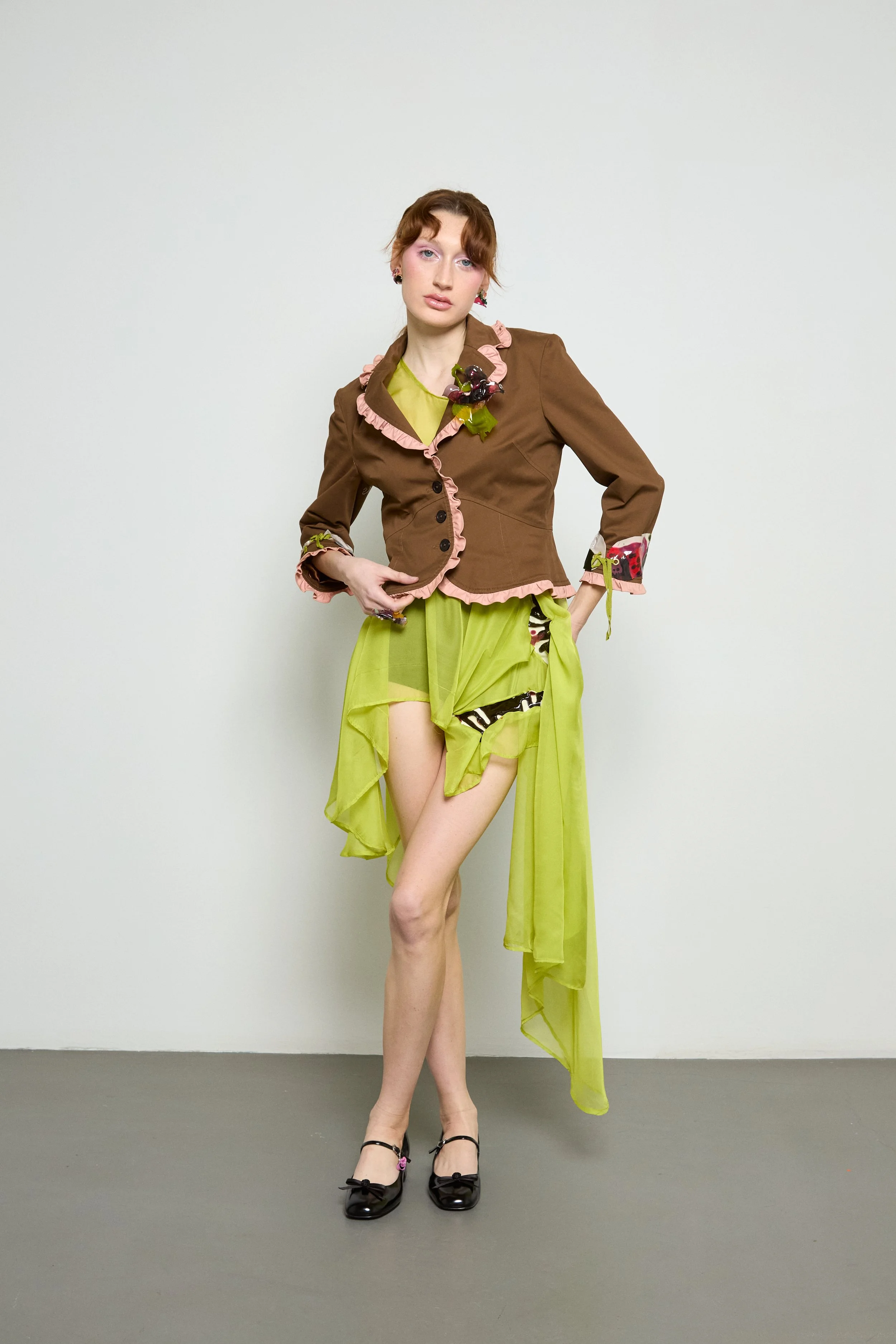
Caroline Zimbalist, Image Courtesy of REP Agency
With the turning of the guard at American Vogue, Bhavitha Mandava’s historic British Vogue cover, and Rachel Scott’s woman-forward debut at Proenza Schouler, new life is undeniably rushing into the fashion industry. Nowhere is this more apparent than in the sustainable fashion scene.
Pre-empting the official schedule, model and artist Bianca Gittens curated a two-day visual art and runway show under her collective Re.Stance, which is committed to slow practice and to uplifting marginalized members of the fashion industry. One dress by artist Borinquen Gallo was entirely made of woven caution tape but contained the volume and texture reminiscent of Blazey’s Bottega.
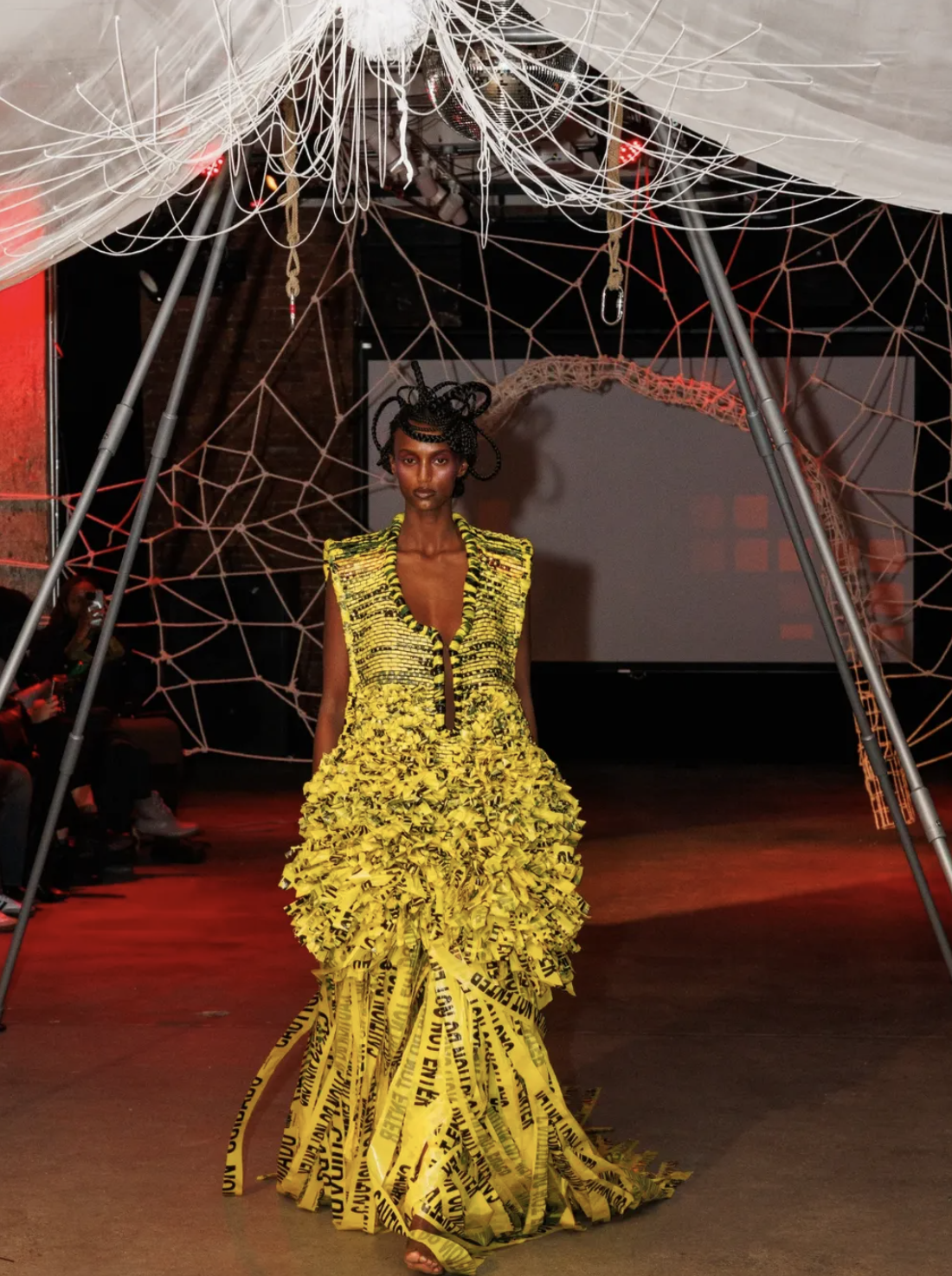
Borinquen Gallo, Photography by Kaylin Webster
The CFDA even nodded to the importance of sustainability with the official NYFW inclusion of Forbes 30 Under 30 honoree Caroline Zimbalist. Whether a pointed statement or founded in quiet intentionality with materials, it’s clear that sustainable fashion is here to stay. Zimbalist made her official NYFW debut with a collection that featured the designer's love of hand-painting fabric, fantastical bioplastic shaping, and sharp coquette tailoring.
Though Zimbalist has a BFA in Fashion from Parsons School of Design and training at Central Saint Martins in London, she broke onto the scene with her distinctive biodegradable bioplastic green vessels, which she hand-molds in her studio. Her stockists for these vessels, as well as jewelry, have included the Whitney Museum and the Museum of Art and Design shops.
L’Space Gallery, where the presentation took place, was activated to display Zimbalist’s journey from artisan to fashion designer, which Zimbalist calls a “sideways progression.” Attendees walked through a short hallway decorated with Zimbalist’s trademark flower-filled vessels before entering the garment collection in the gallery space.
The collection features sharply tailored yet lace-trimmed, cropped jackets, flowing, hand-painted skirts styled with equally colorful bioplastic corsets or vests, and delicate, sheer fabrics that feel fit for a sustainably-minded forest nymph.
The allure of the collection comes from the detailed-use of Zimbalist’s trademark bioplastic. The complete bioplastic corset complements the bioplastic belt buckles that cinch the waist of asymmetrically hemmed sun dresses or the bioplastic chest armor that holds up a flowing mini dress or even the bioplastic charms that hang off unexpected places, like a hook sewn onto the skirt of a dress or the clasp of a Charles & Keith shoe.
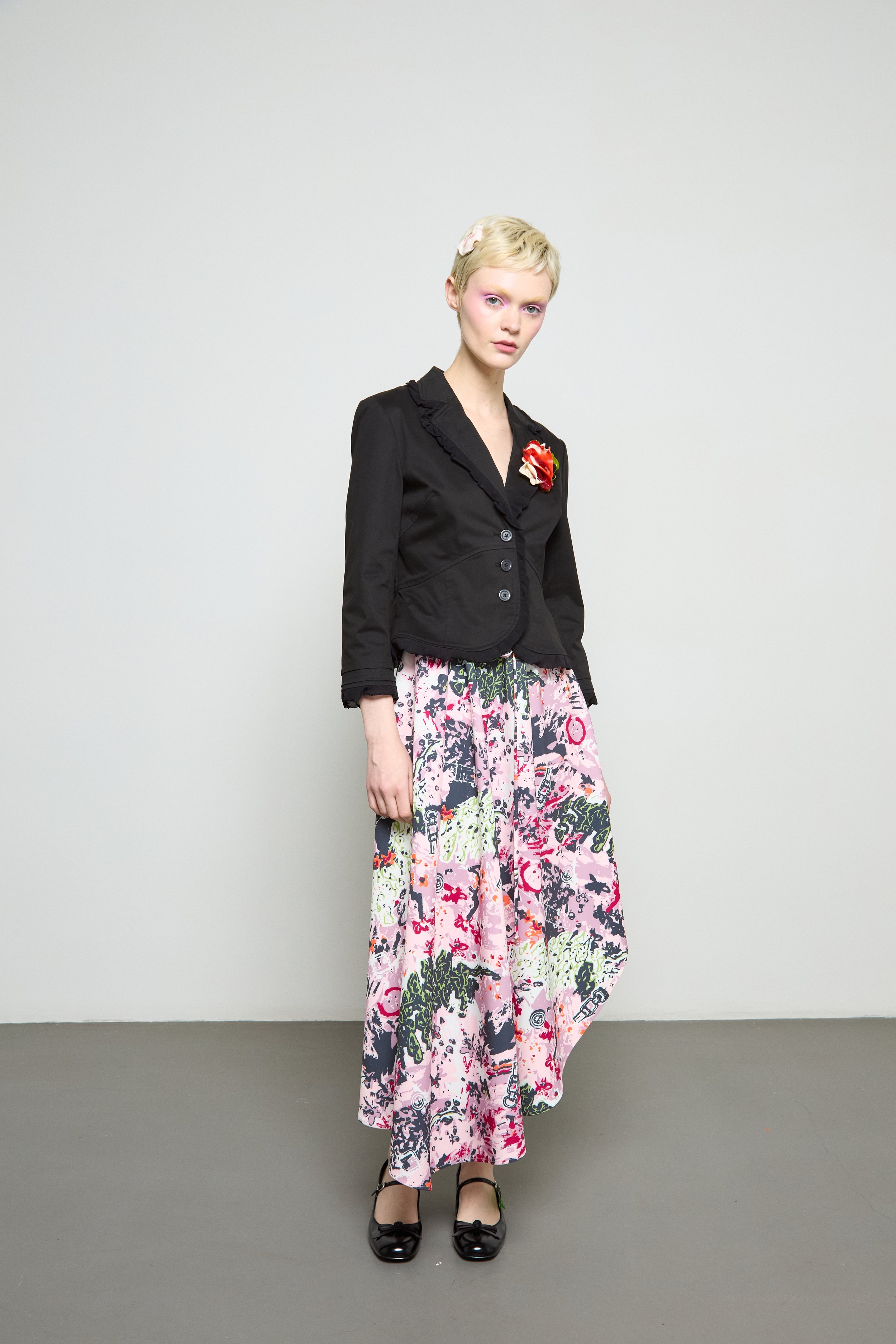
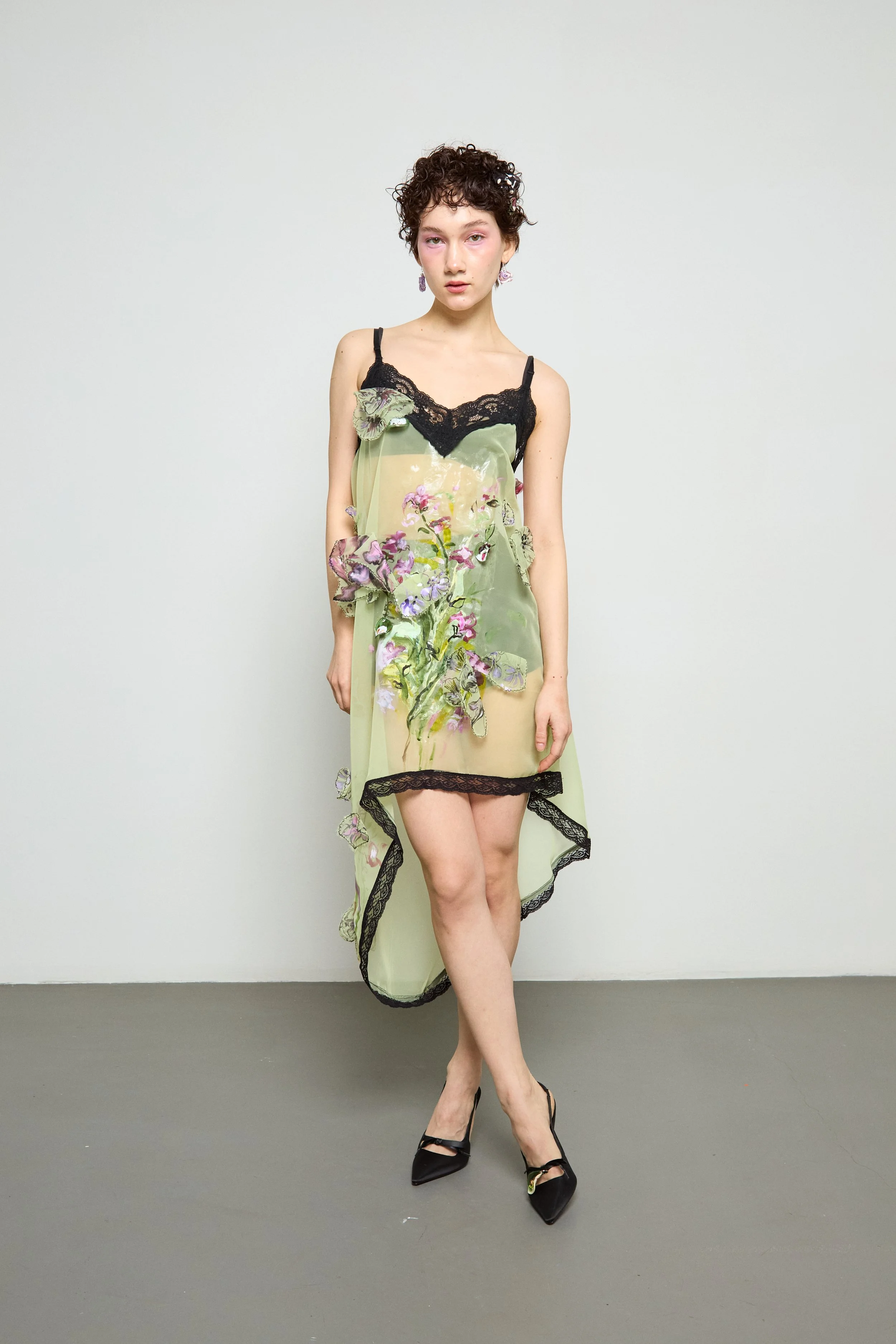
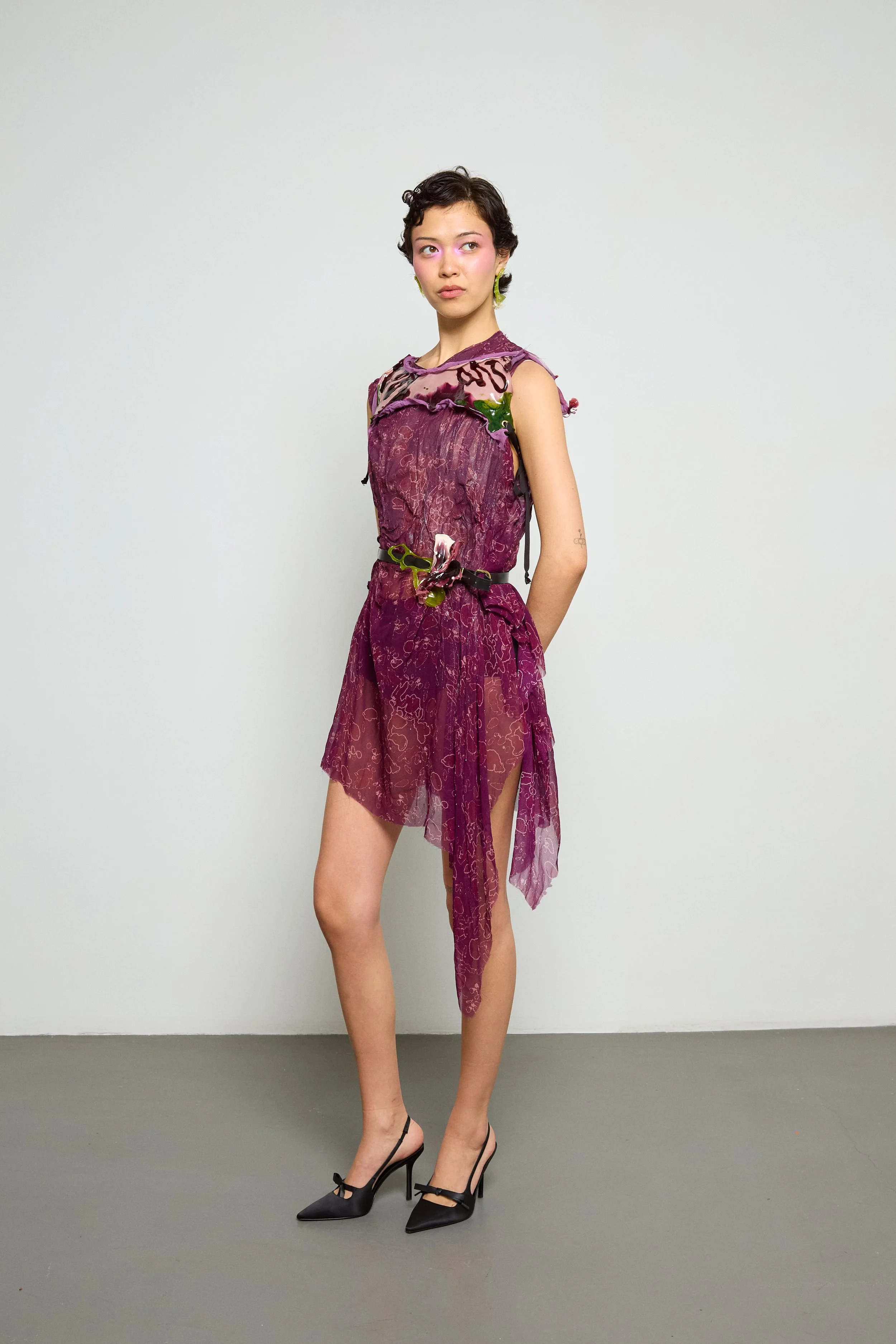
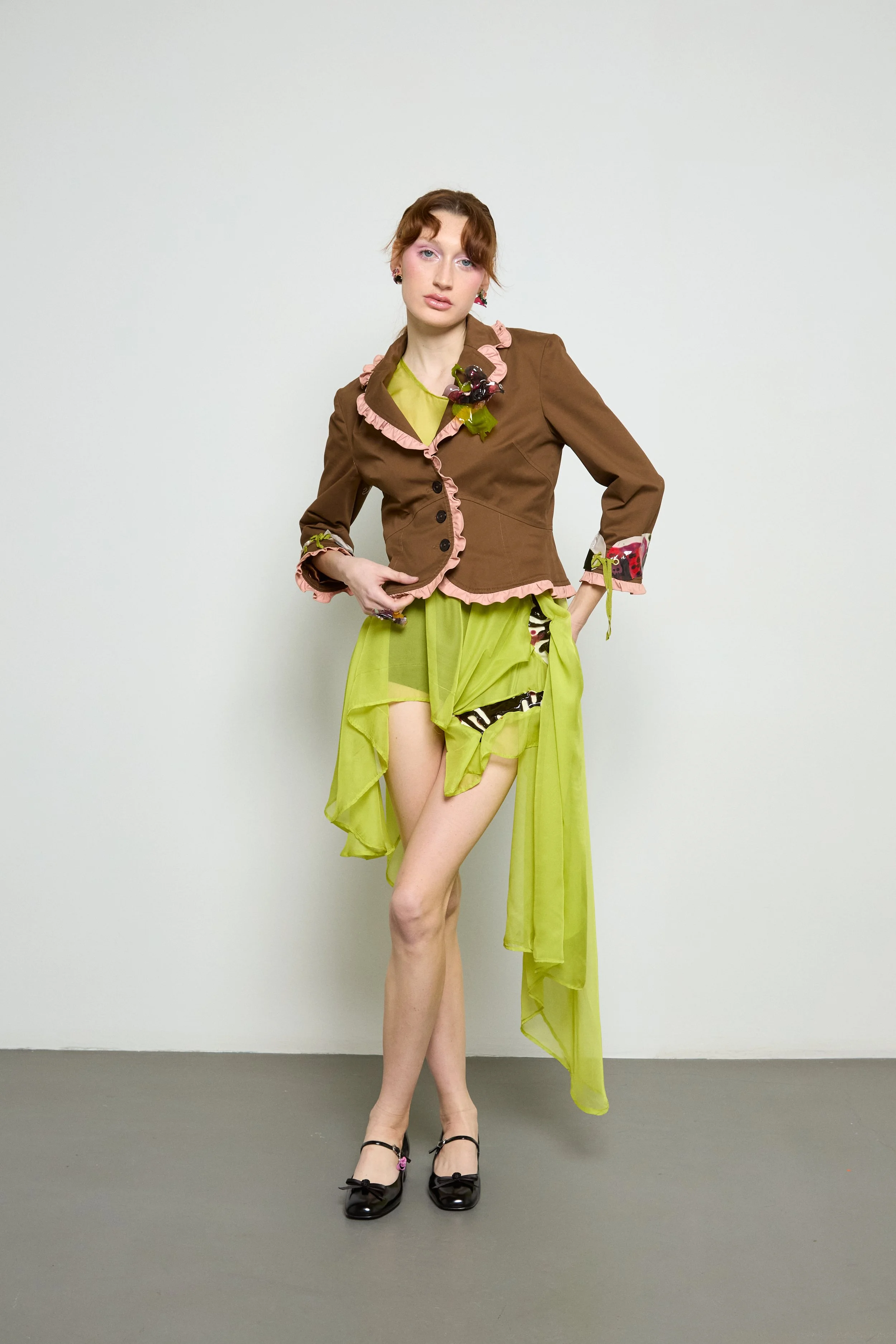
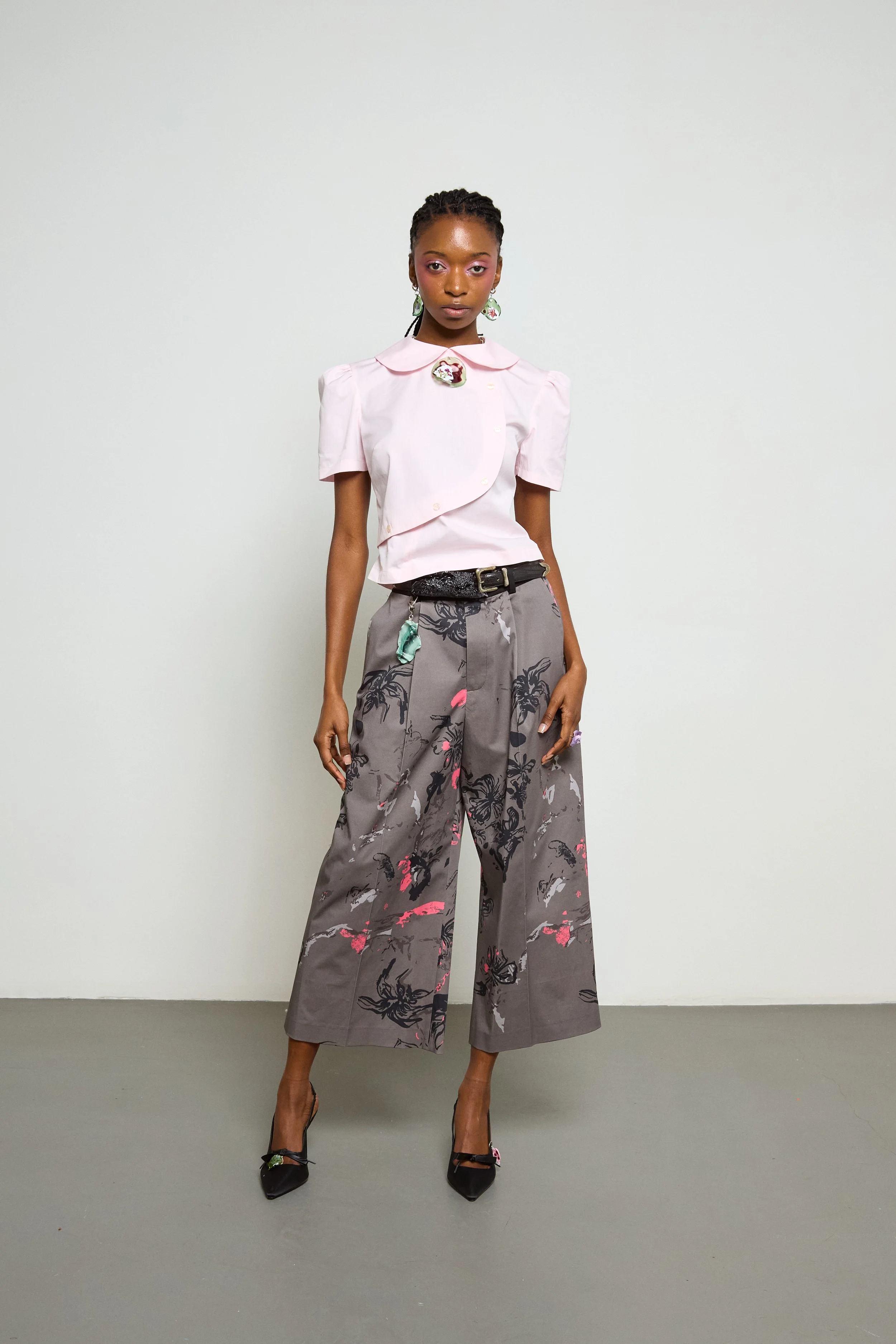
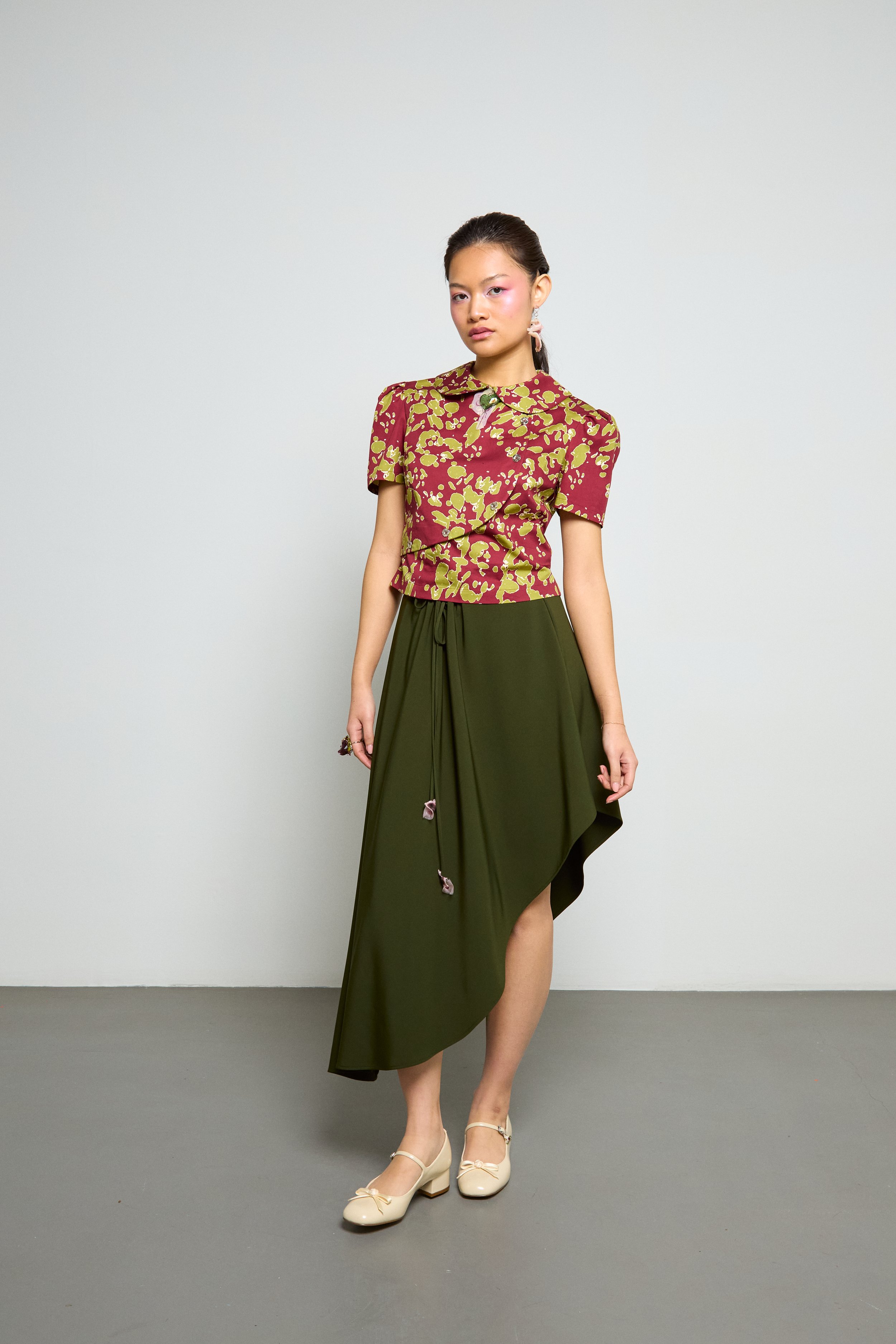
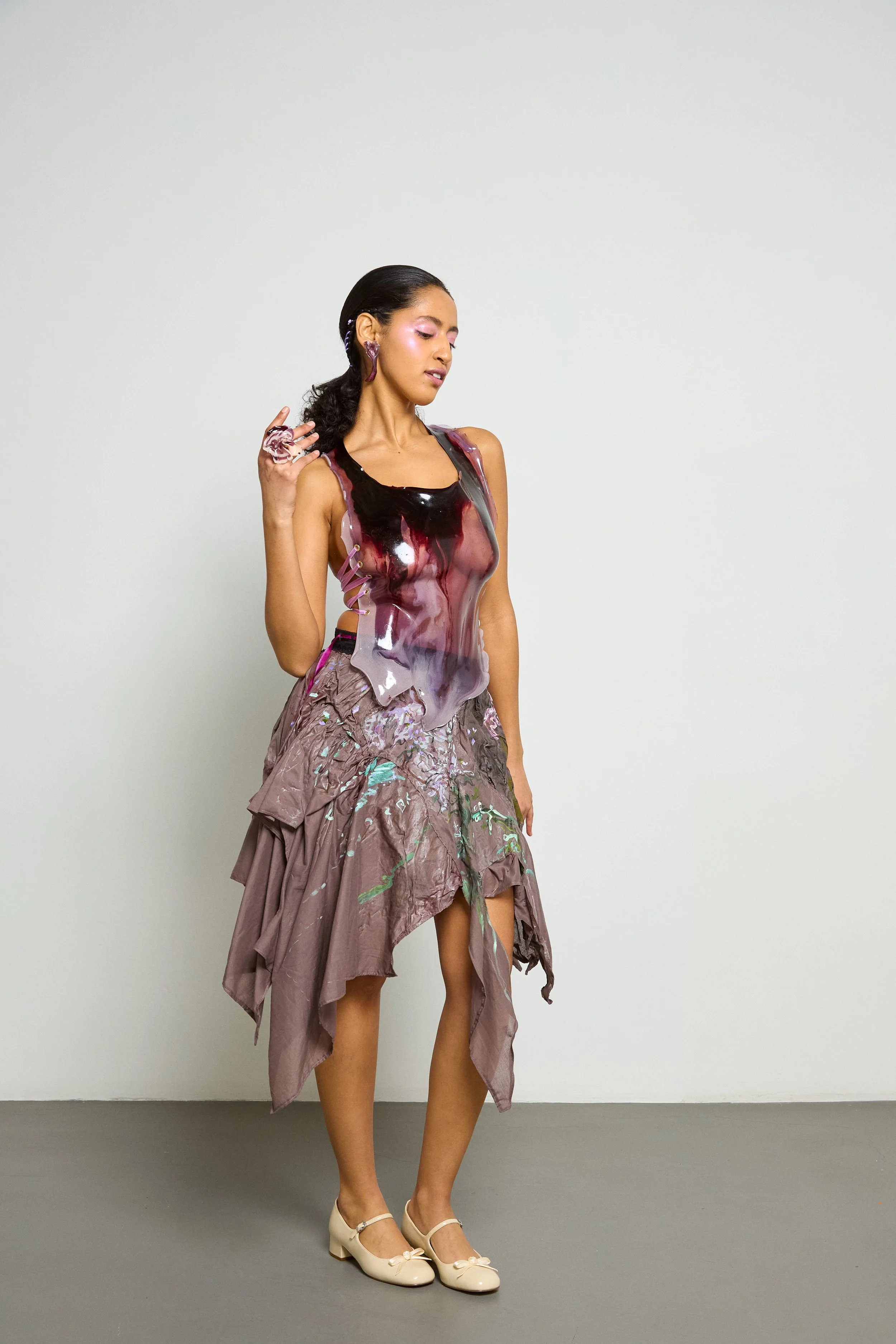
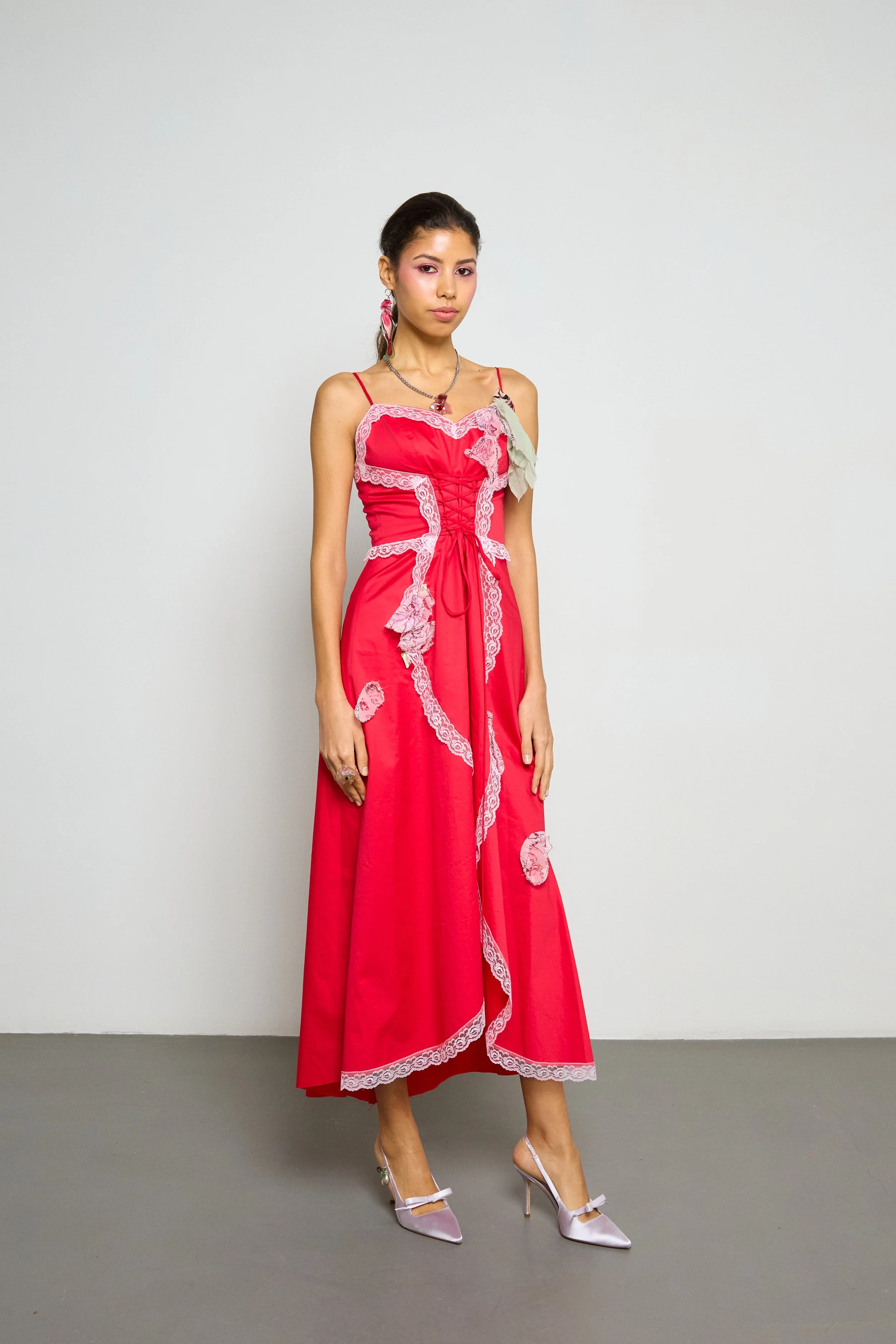
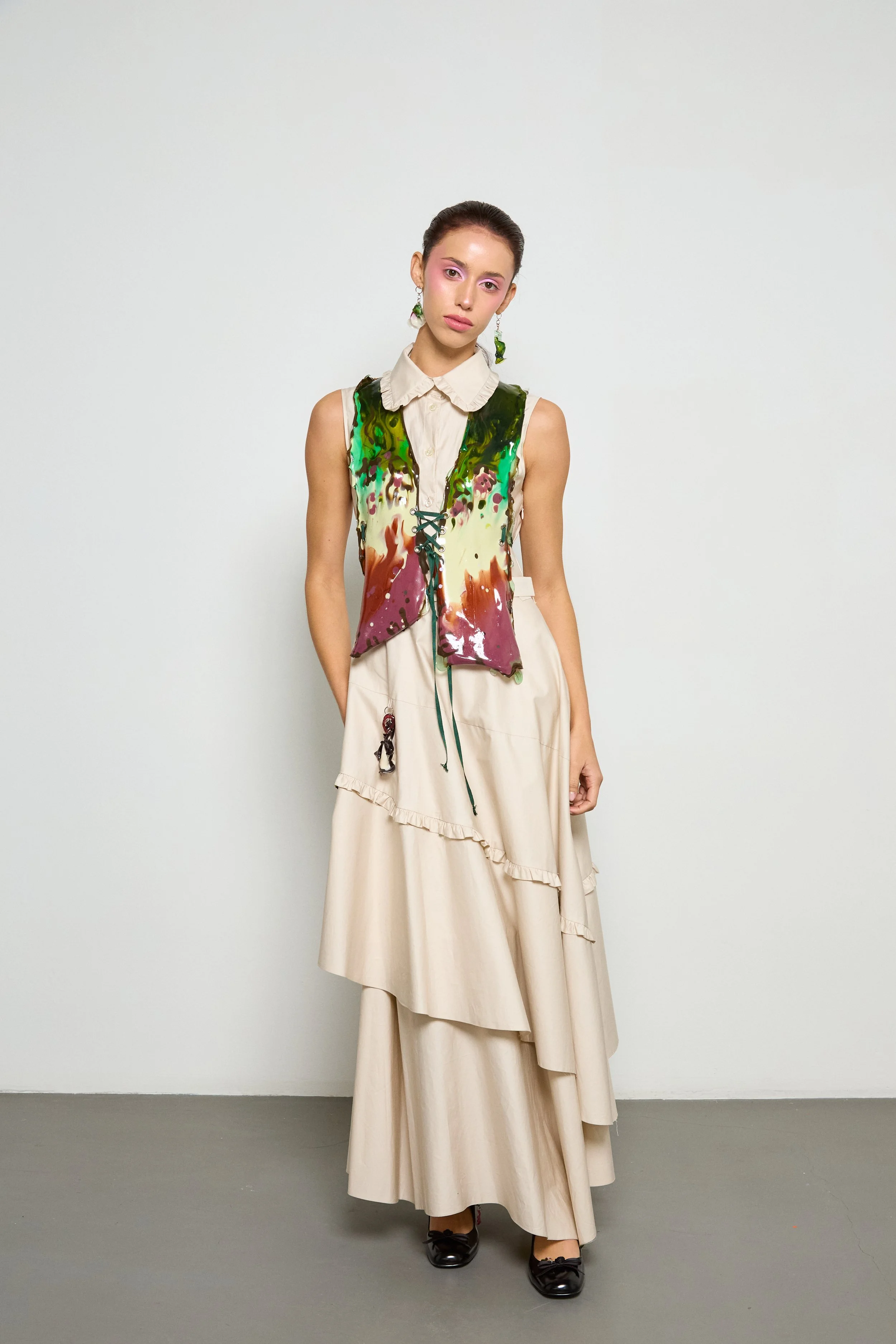
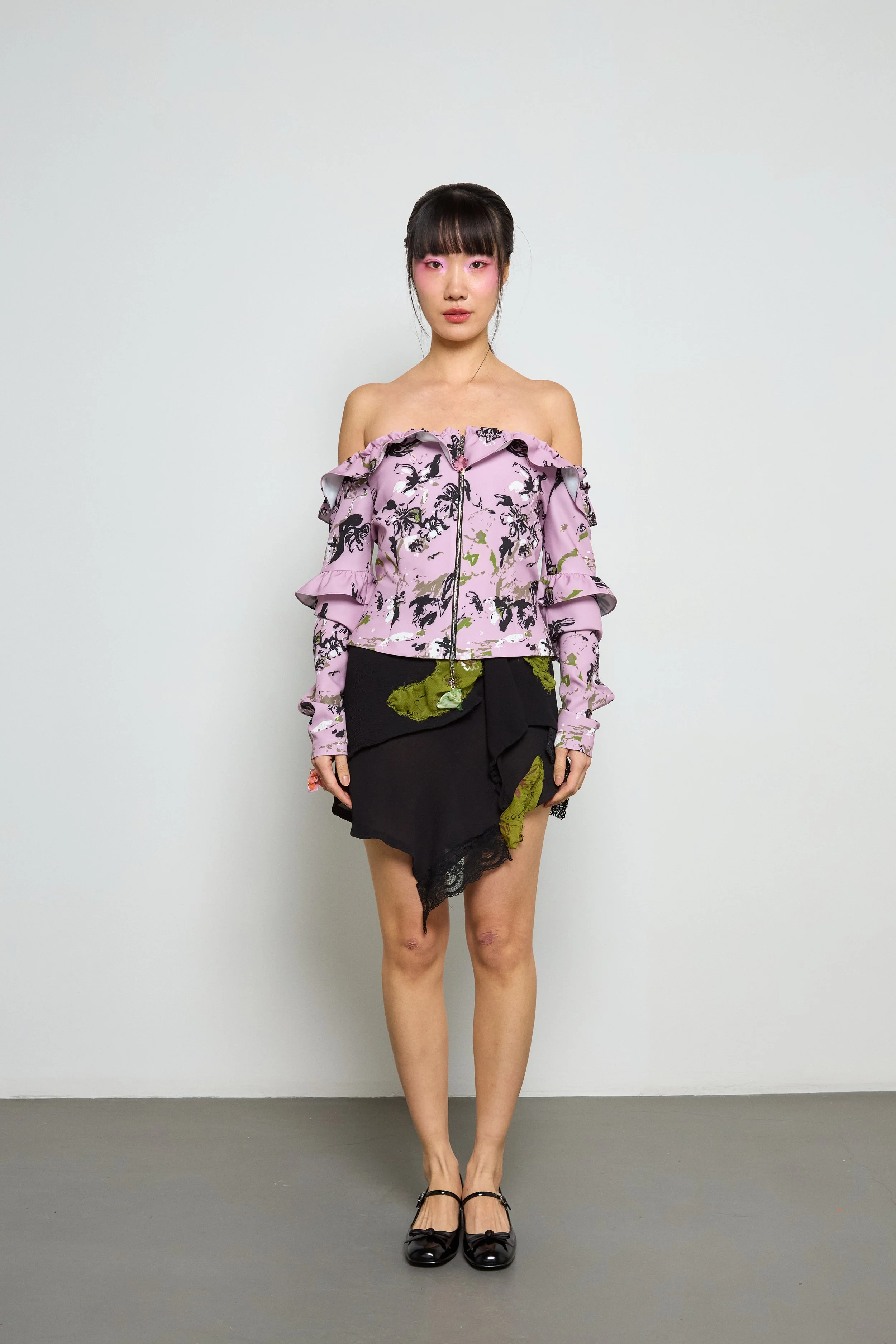
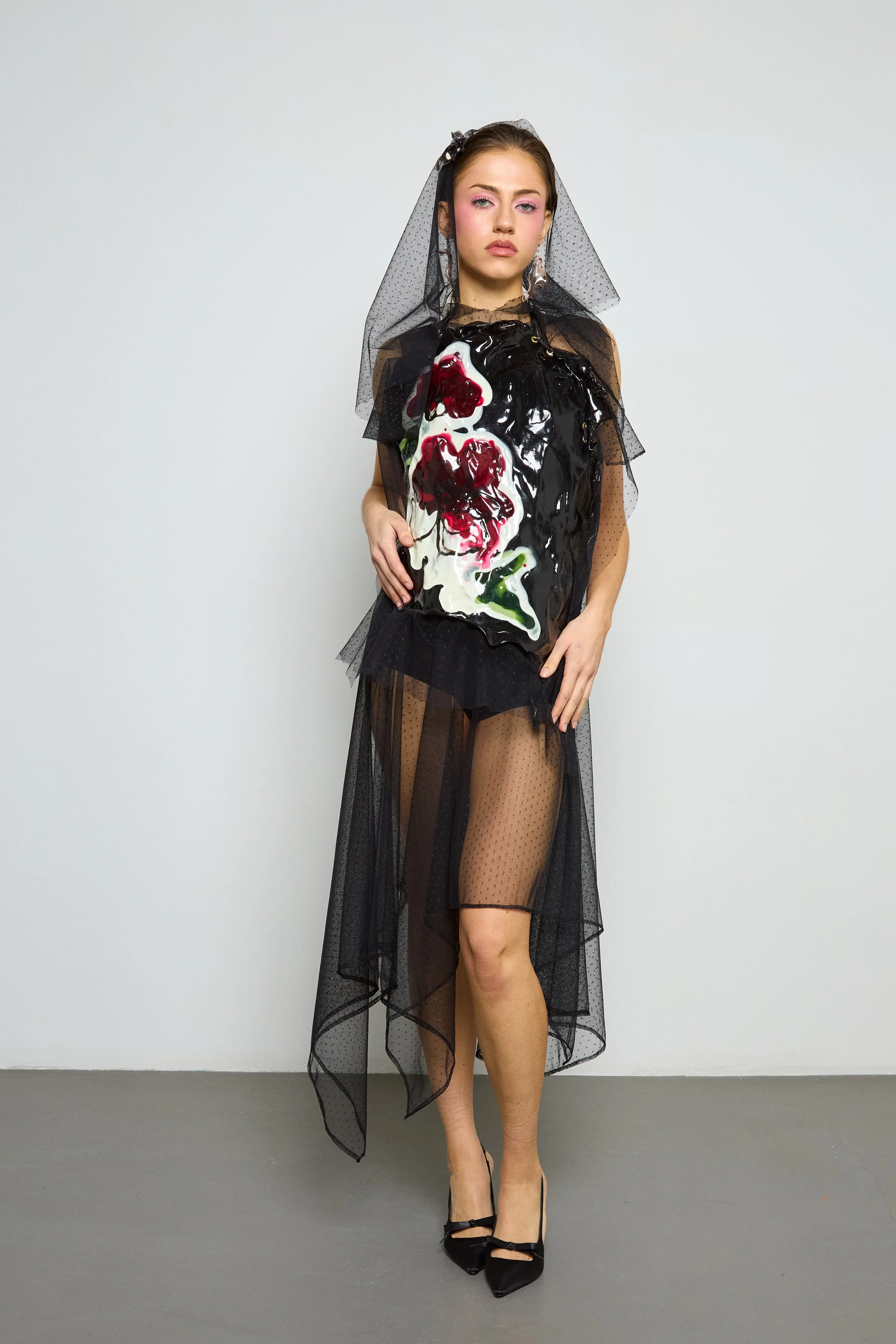
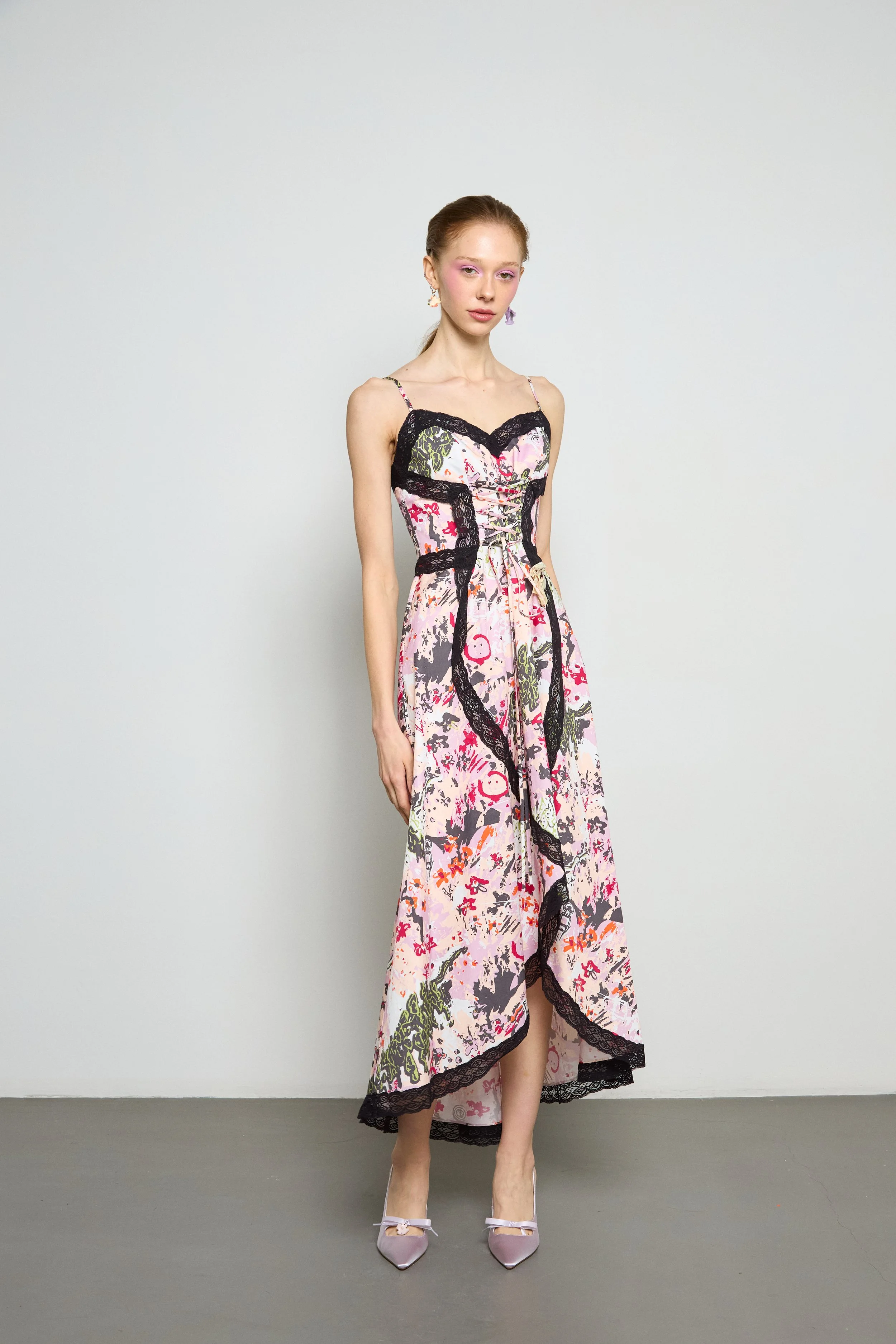
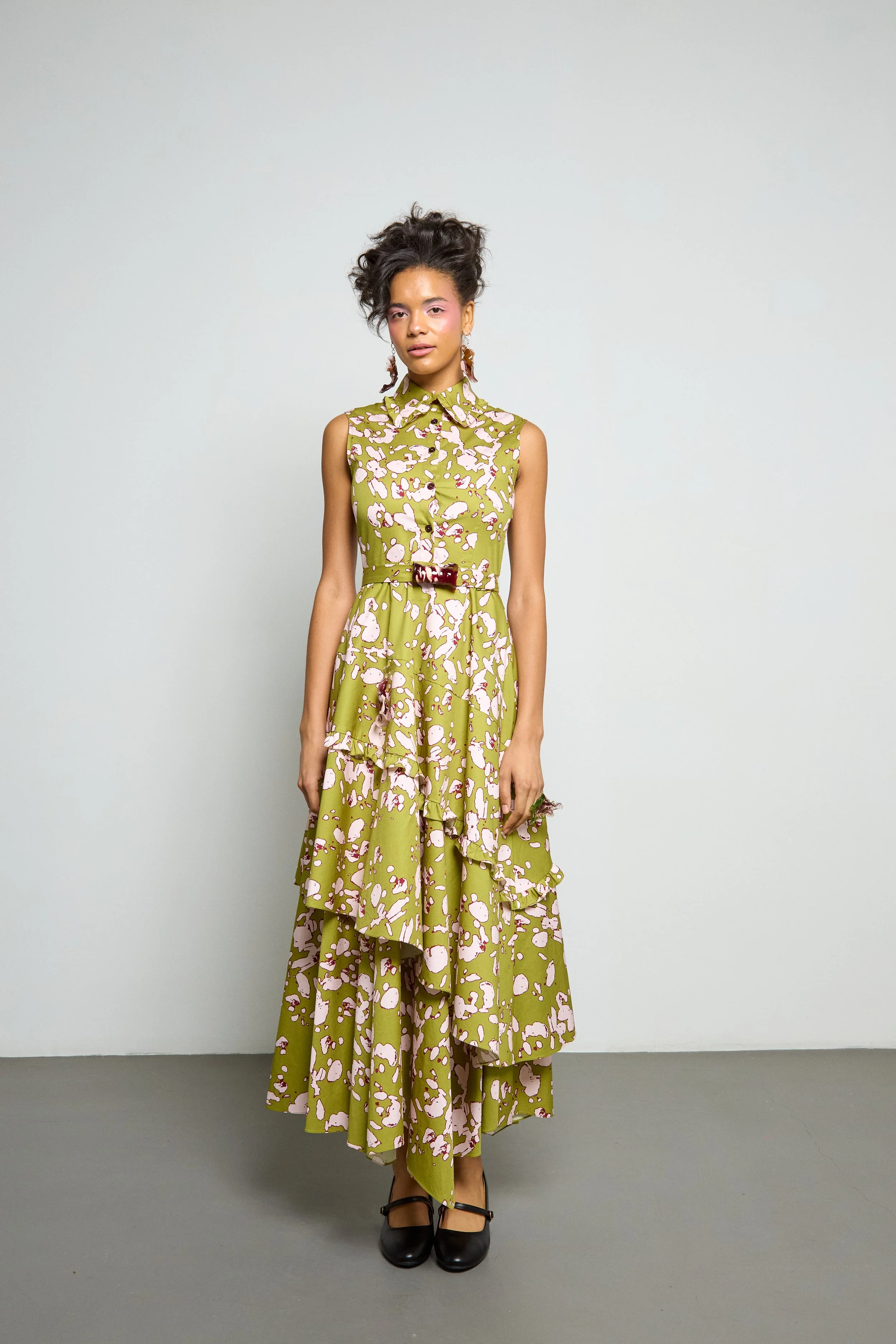
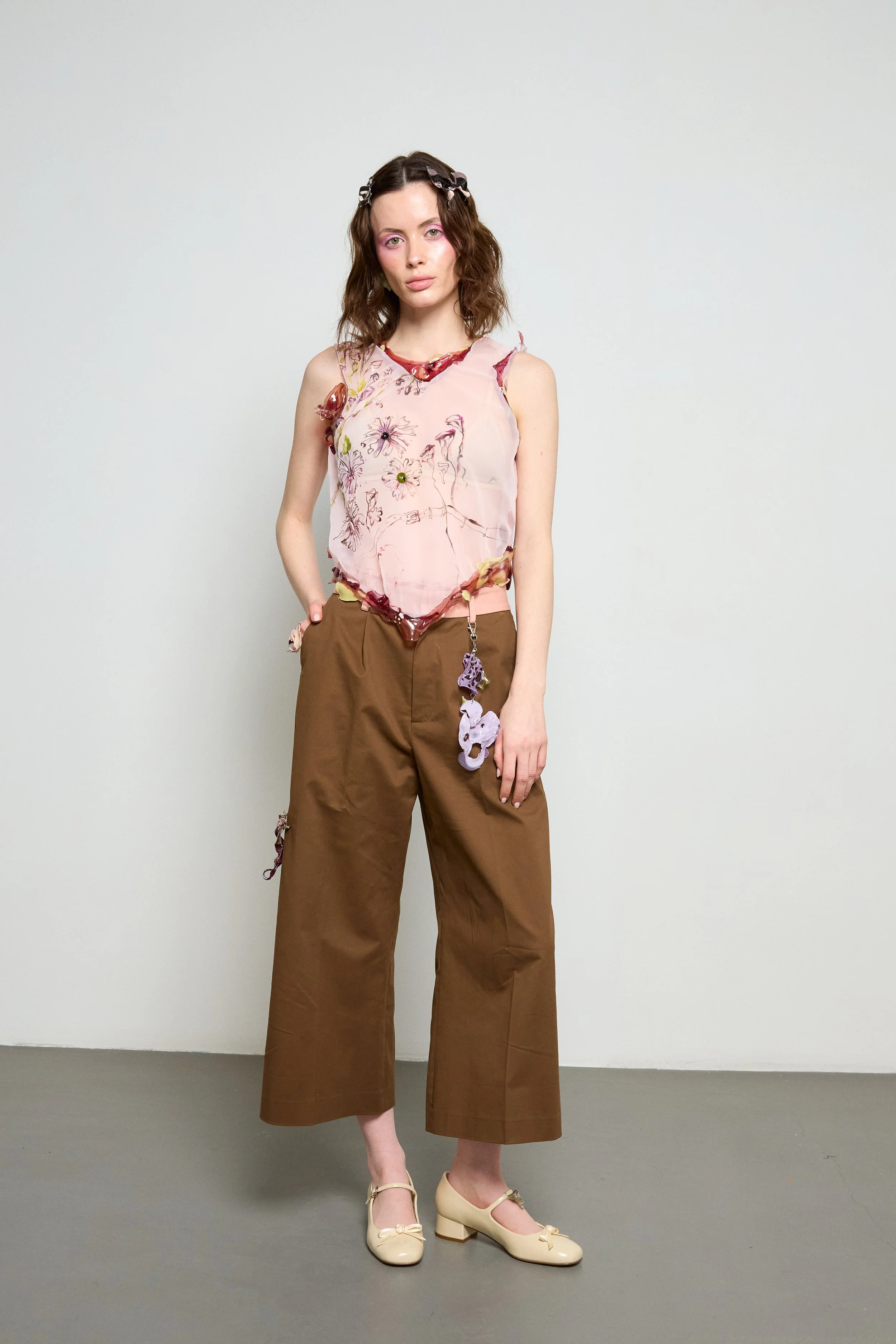
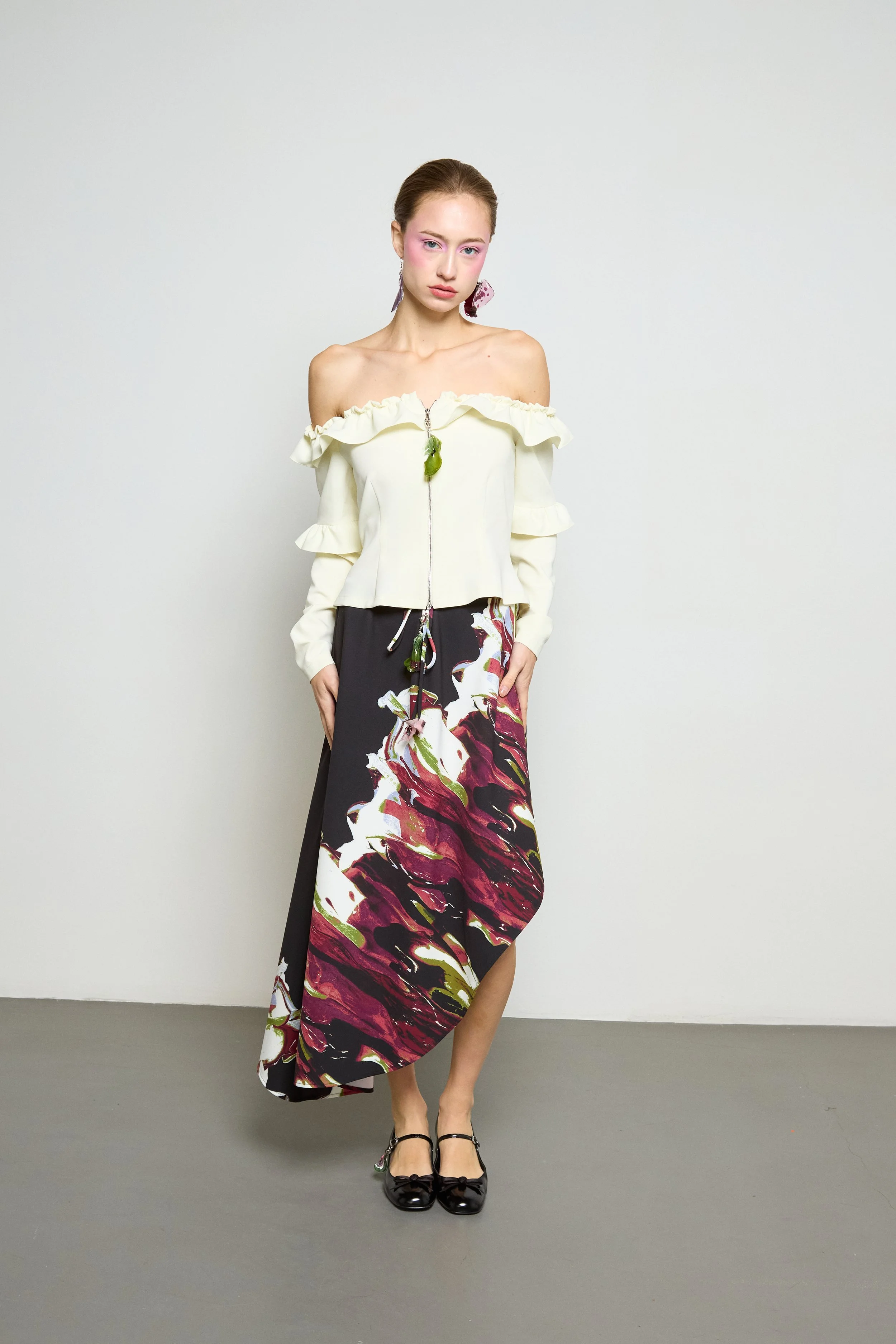
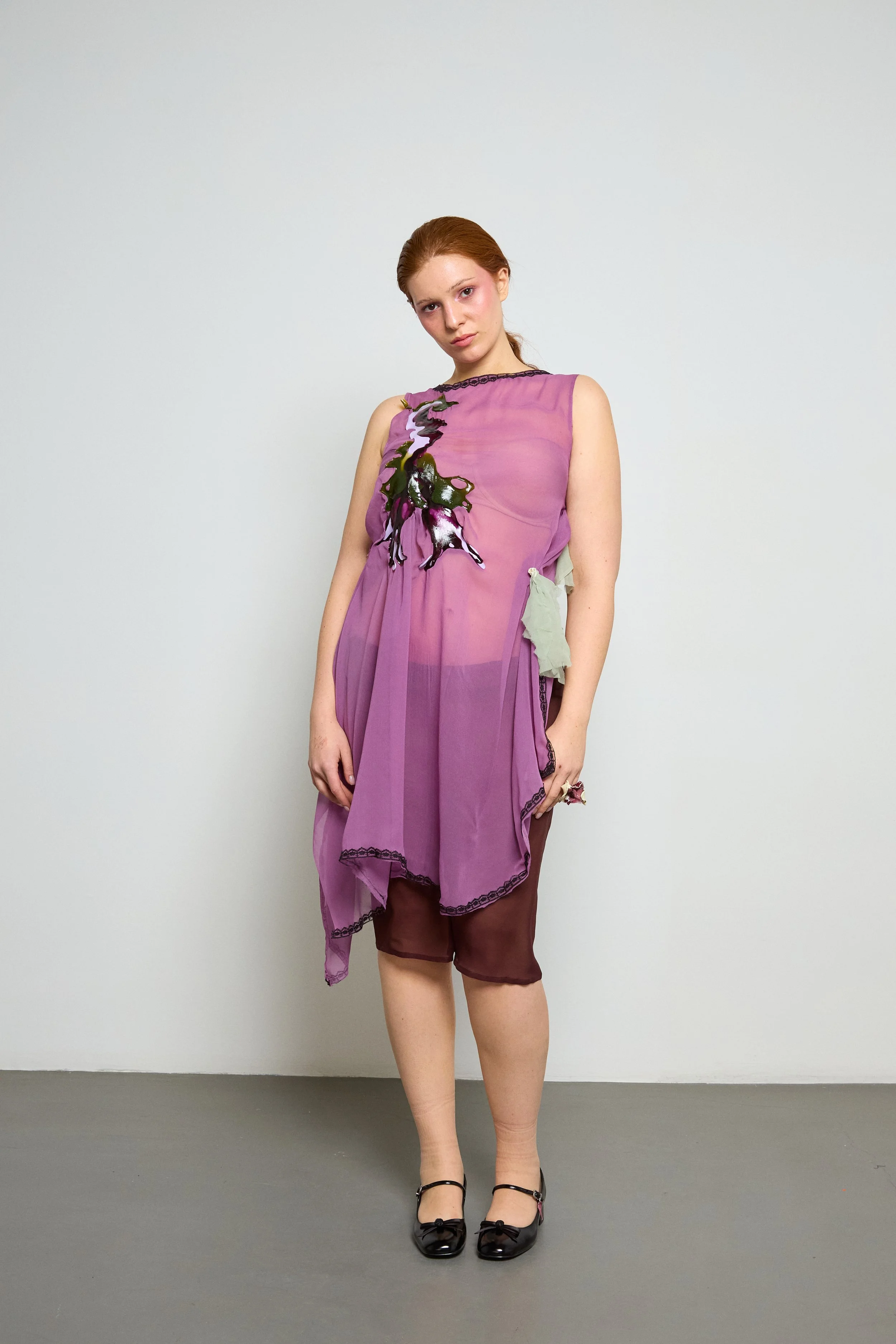
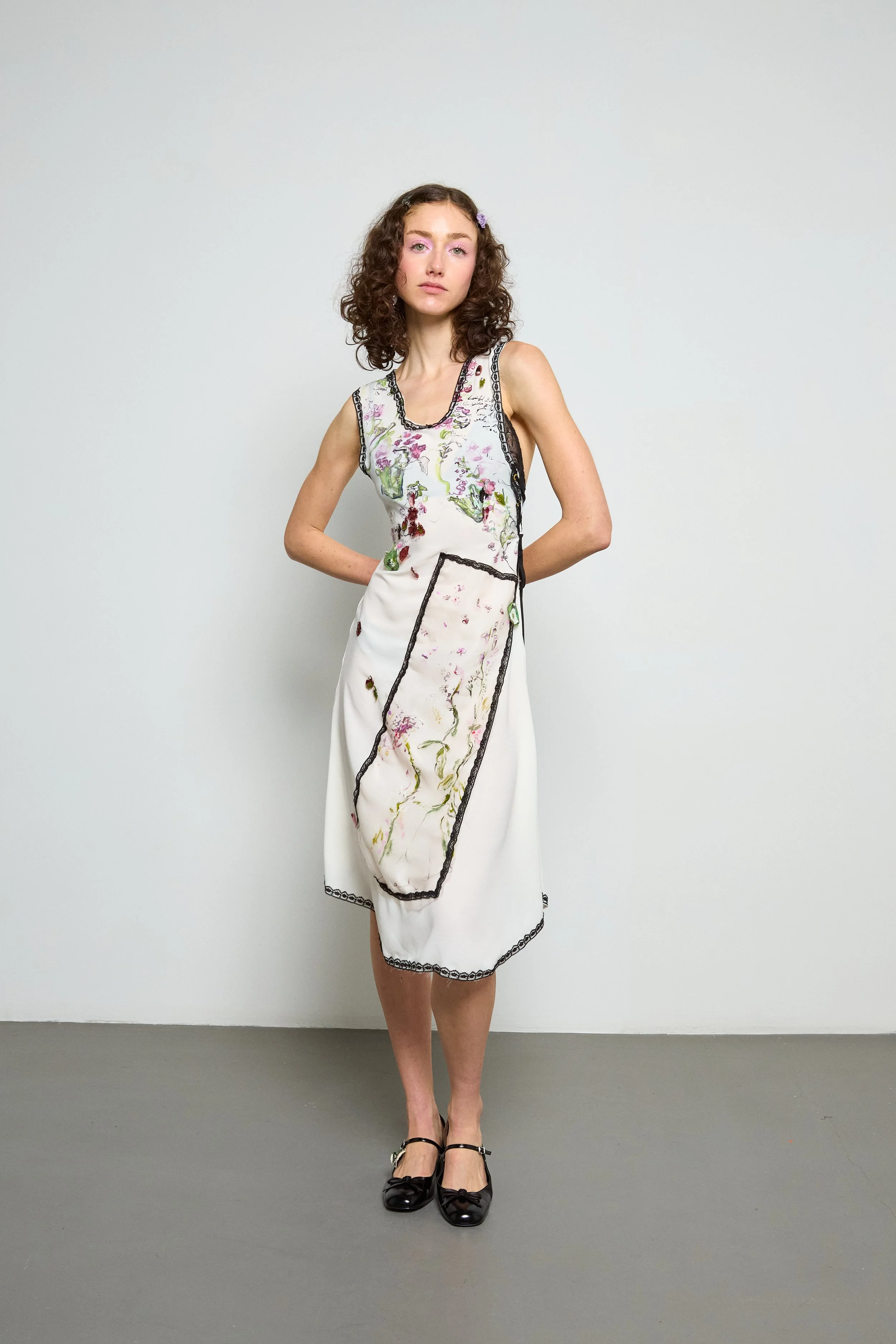
Caroline Zimbalist, Image Courtesy of REP Agency
The latest collection is the most “seamless” integration of green materials and traditional design construction. For Zimbalist, the collection represents a subtle shift away from “intentional exploration into sustainable practices within fashion” towards a model that makes her work “accessible to consumers who might have found heavy biomaterial use to be too artsy.”
”My maturation could be described as becoming less vocal about sustainability and offering it more as a suggestion,” said Zimbalist.
For other designers, such as Camryn McClain of RENÉE, a commitment to using sustainable materials comes from seeing the industry’s waste firsthand—as well as witnessing brands taking earnest strides in the right direction. Excitingly, McClain scored a gig with the Coachtopia team in 2022, before the eco-friendly sister-brand of Coach officially launched.
“Watching people work that way is so much more productive in this industry,” said McClain, who presented her AW26 collection in a dreamy window-filled studio on the 5th floor of a walk-up downtown. House music from listening-room-meets-coffee shop Silence Please on the second floor of 321 Bowery filtered through the vents as fashionistas captured content of the six or so models wearing McClain’s latest creations.
“I like the idea of secret spaces,” said the designer, on her love of the chaotic whimsy that defines life in New York City. Her collection follows suit by expanding on her penchant for a design code of hand-crocheted braid detailing made from deadstock cotton jersey, and by playing with draping on form-fitting silk and jersey.
Two standout dresses feature long fringe skirts cut from deadstock jersey. Though the dresses evoke the freedom of letting your hair dance wild in the wind, McClain avoids associations with Americana-festival chic by grounding the designs in Black 90s nostalgia.
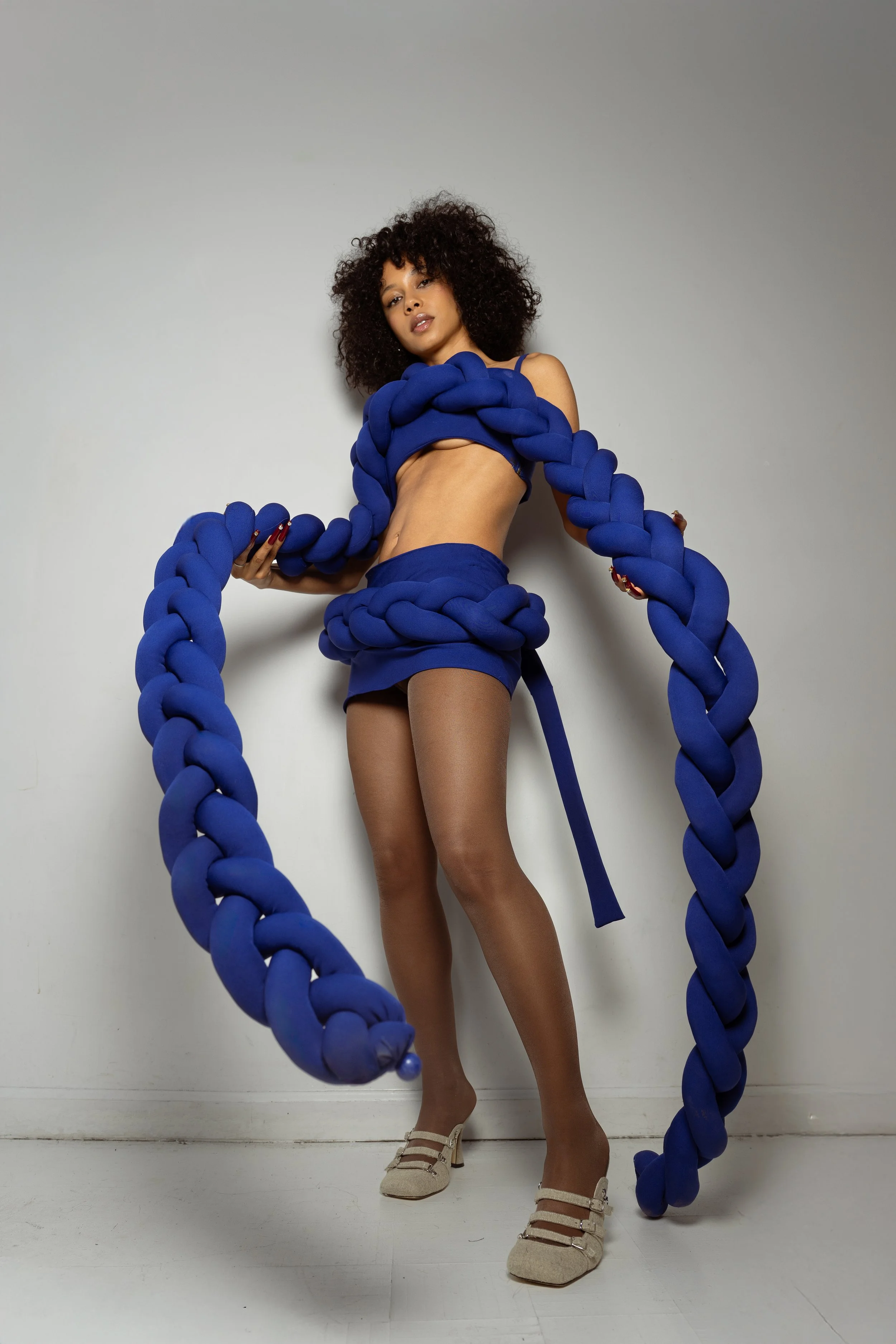
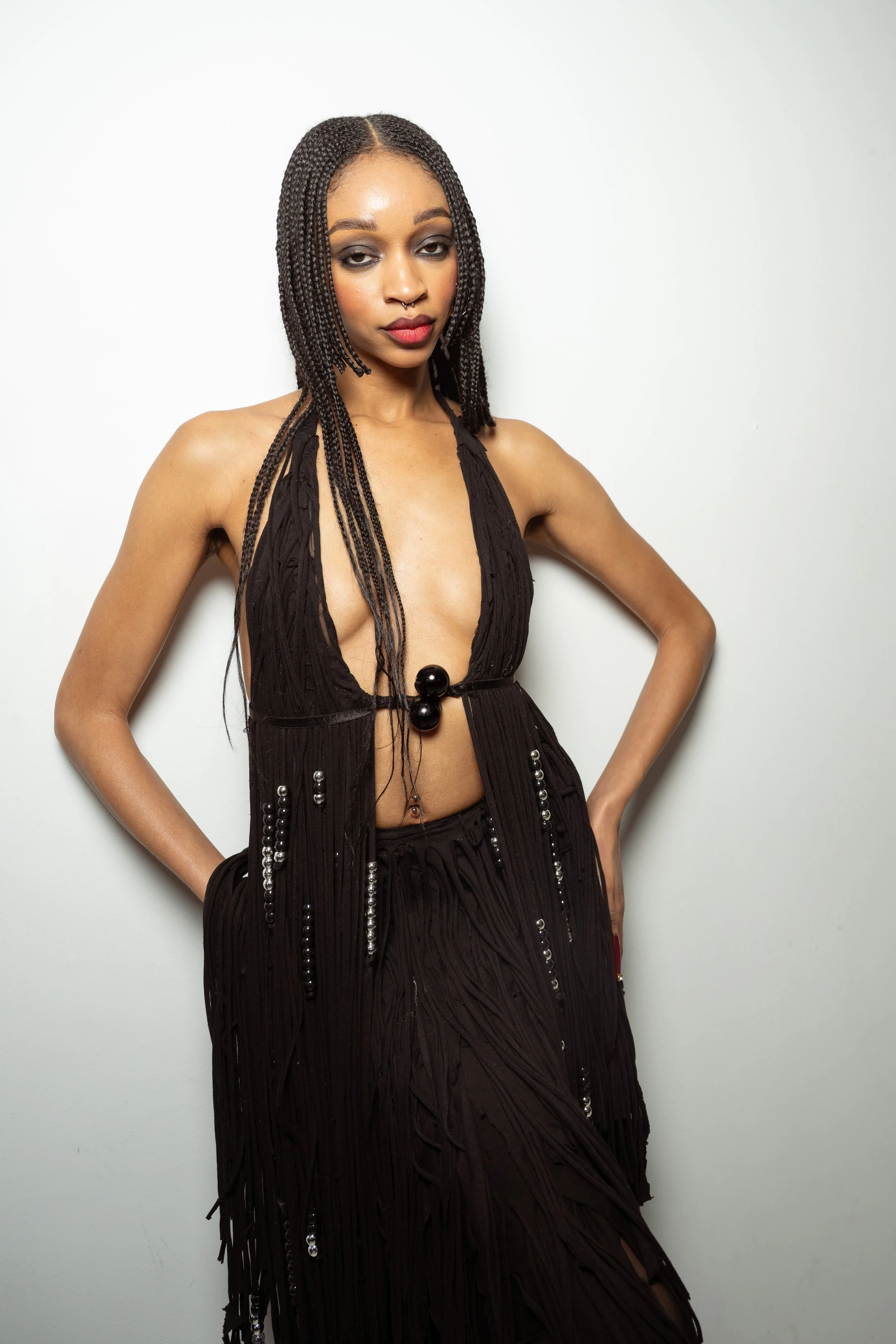
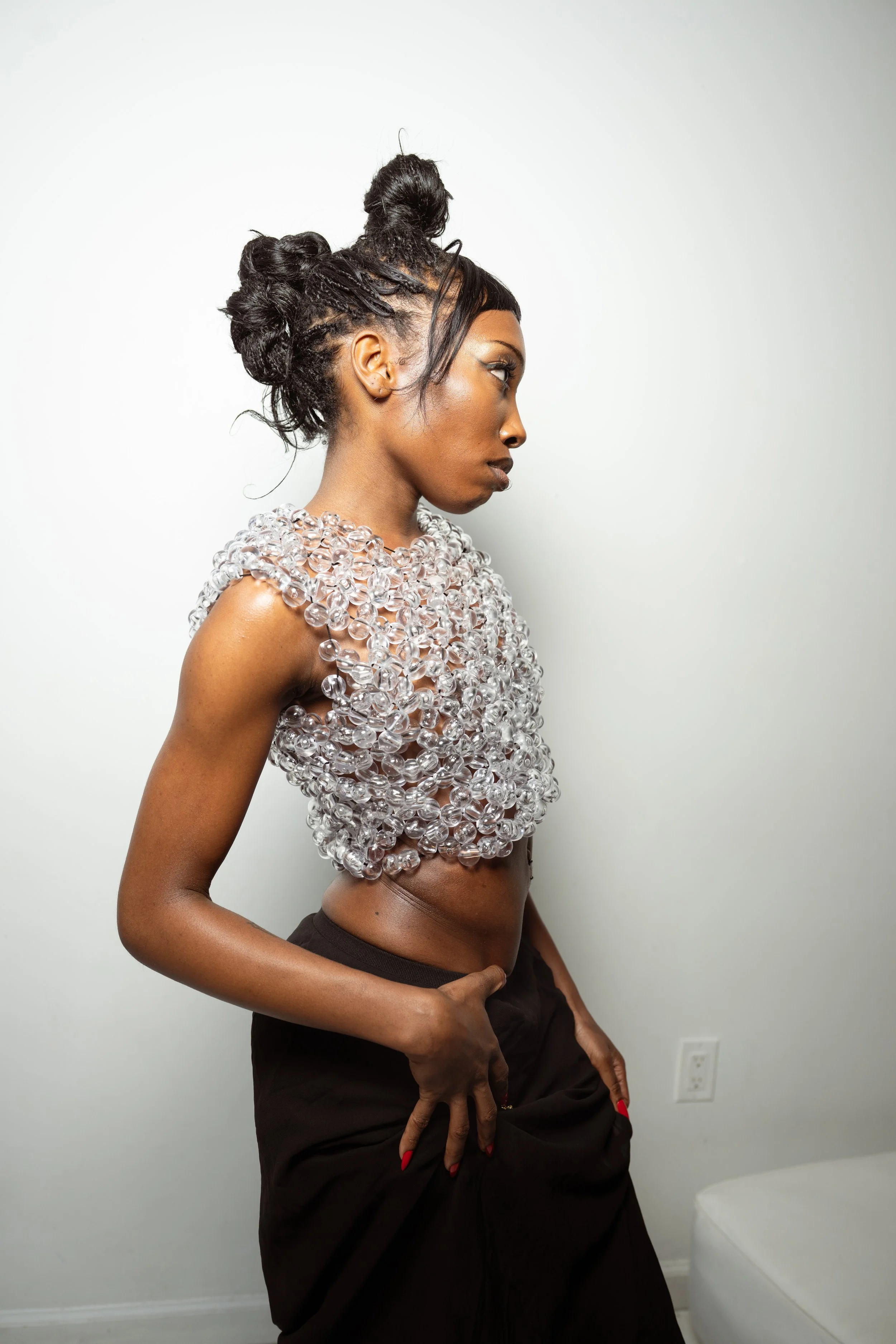
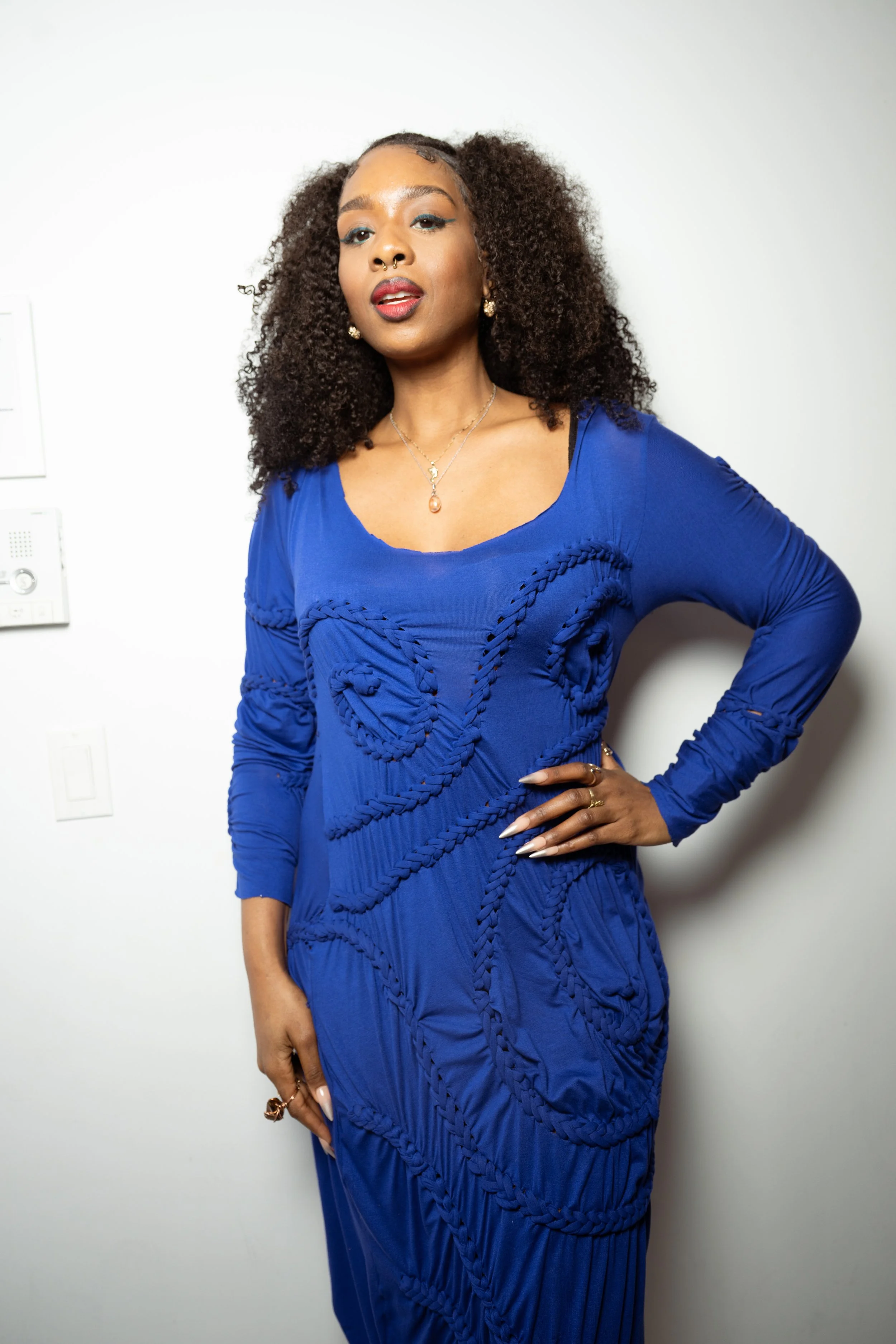
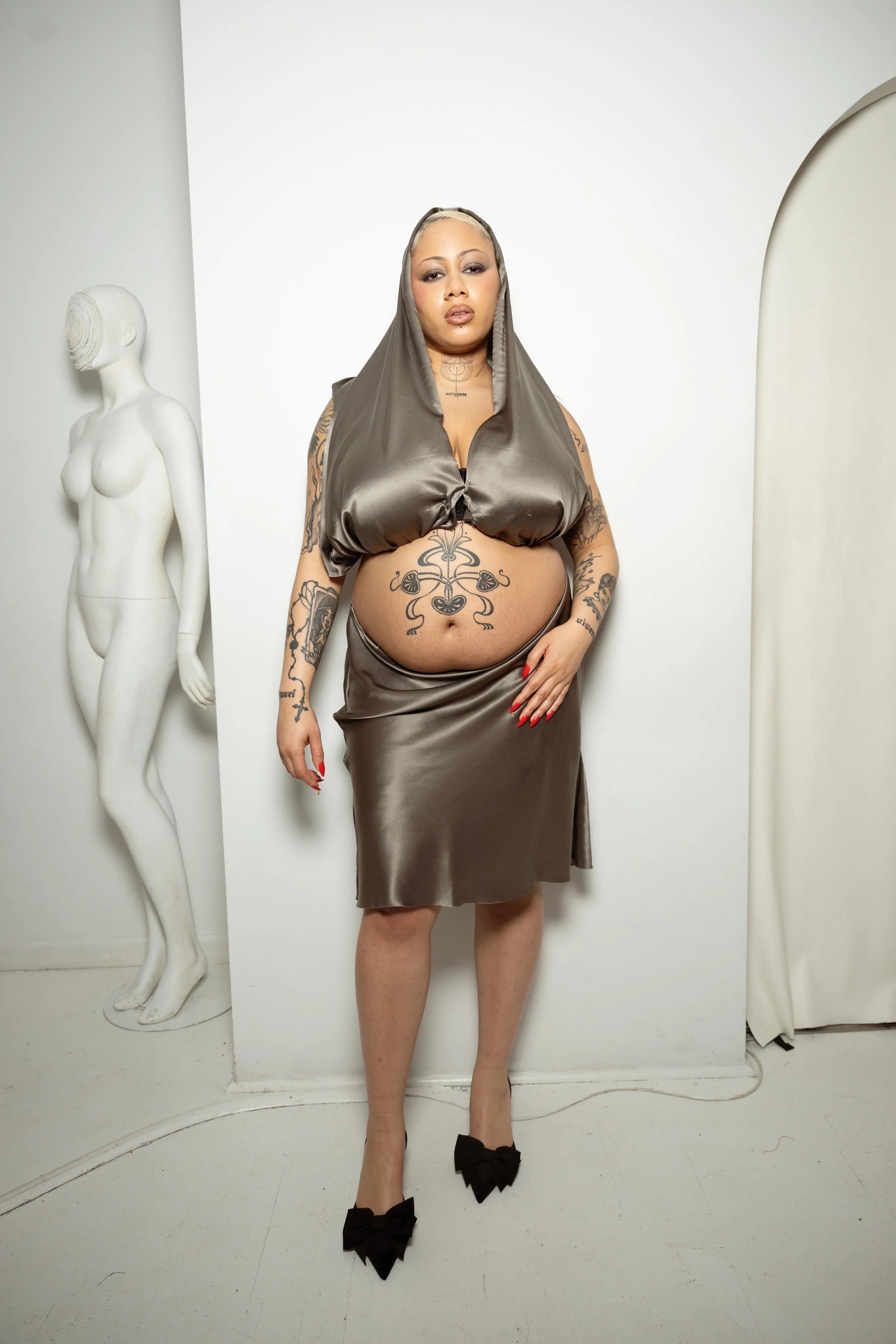

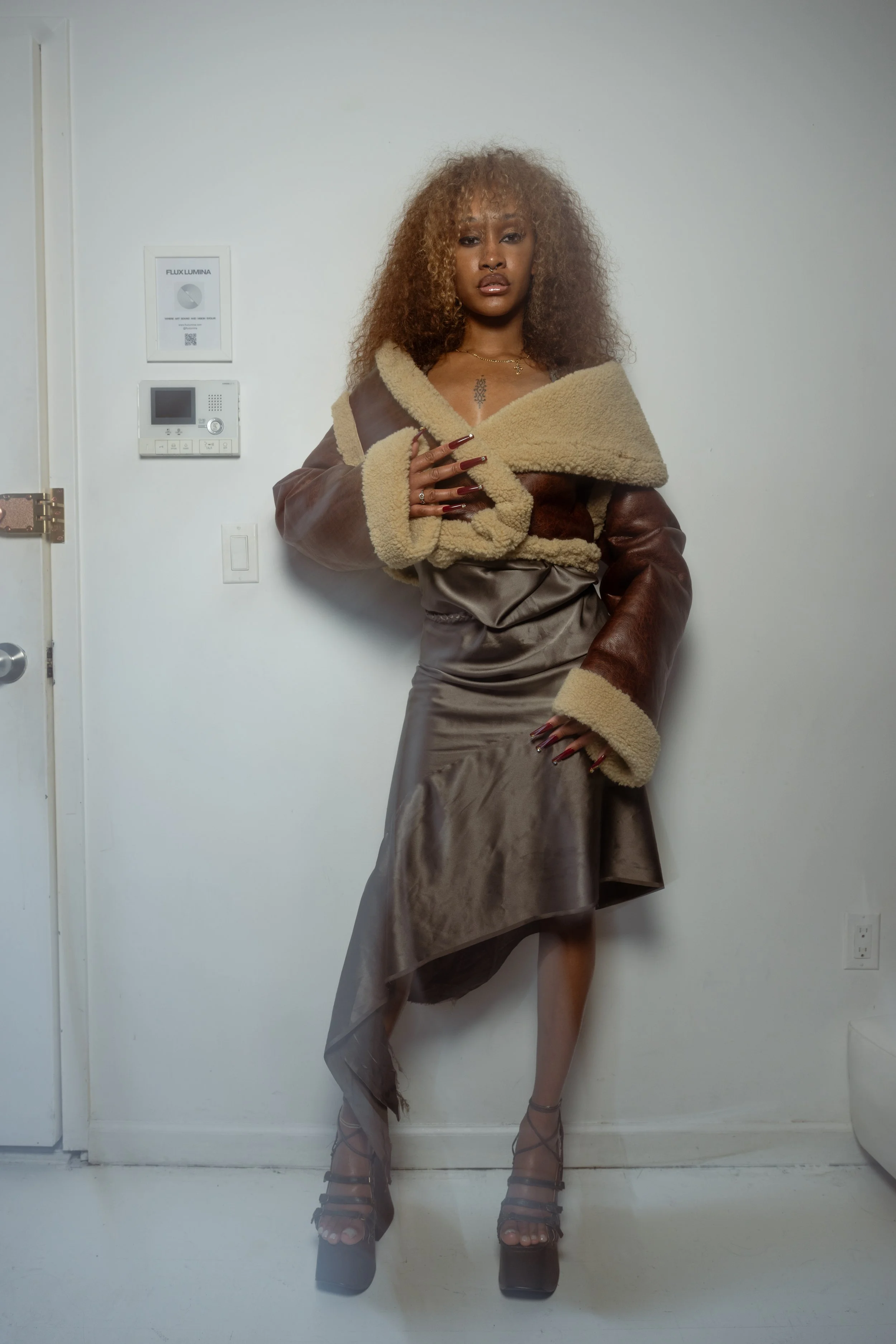
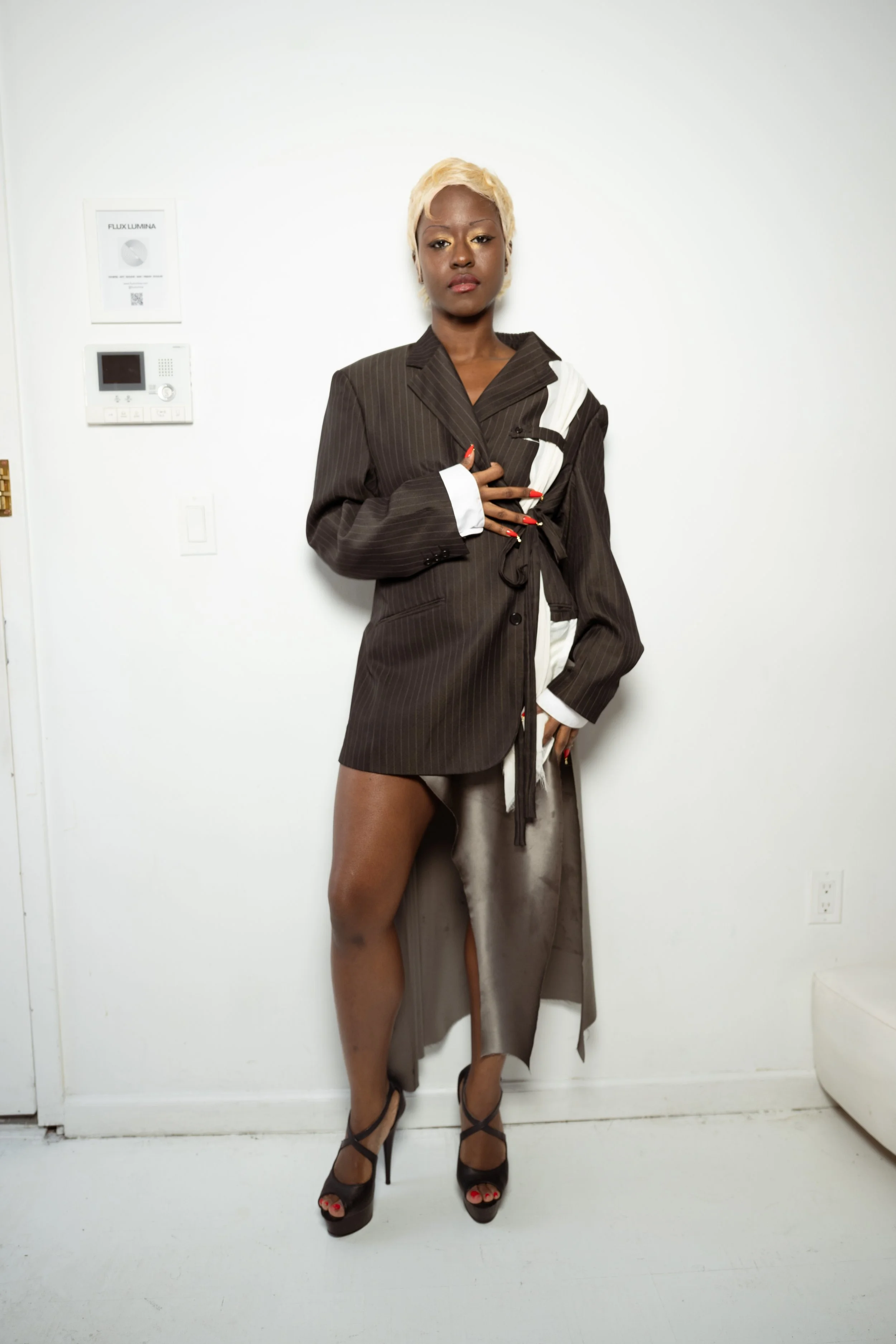
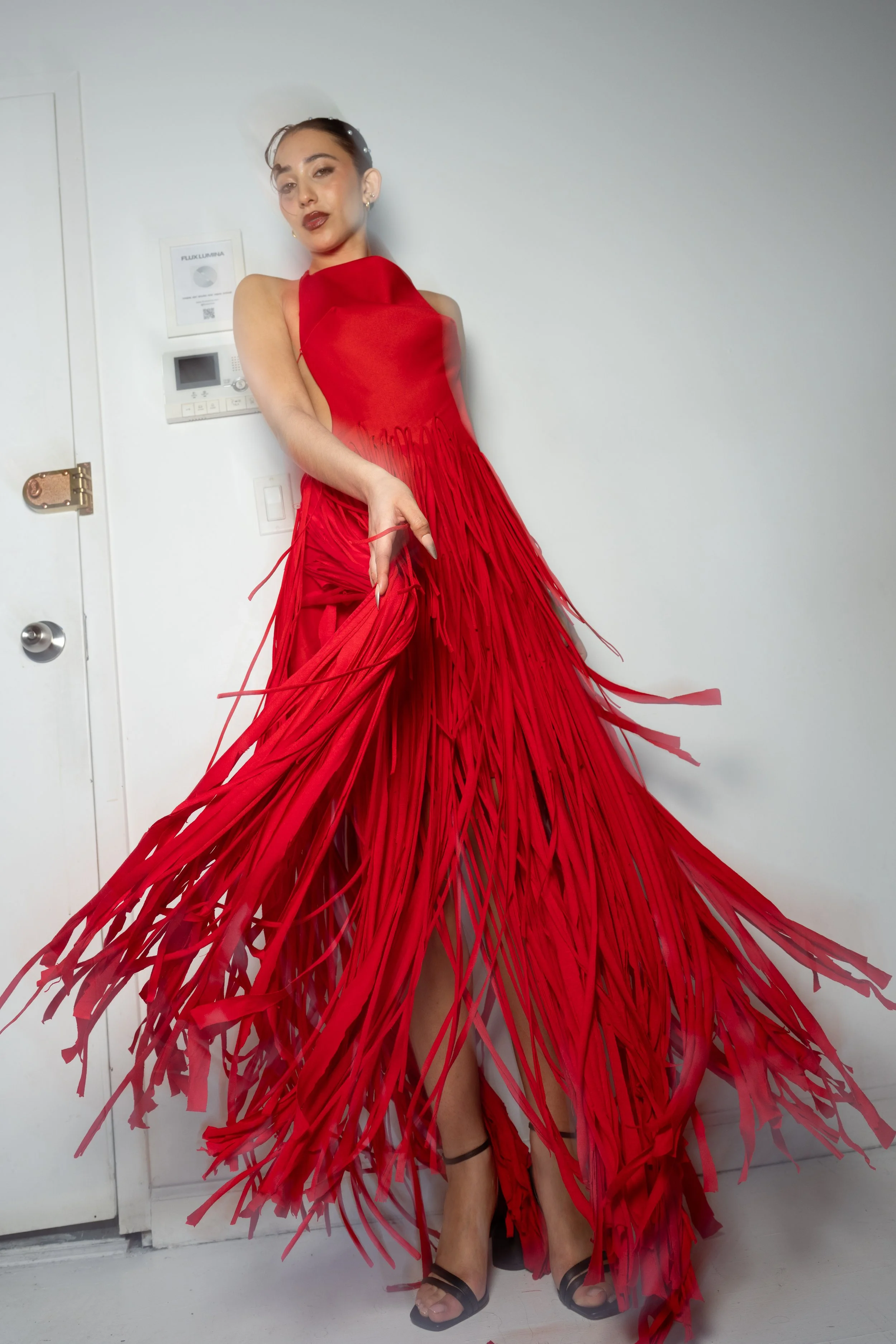
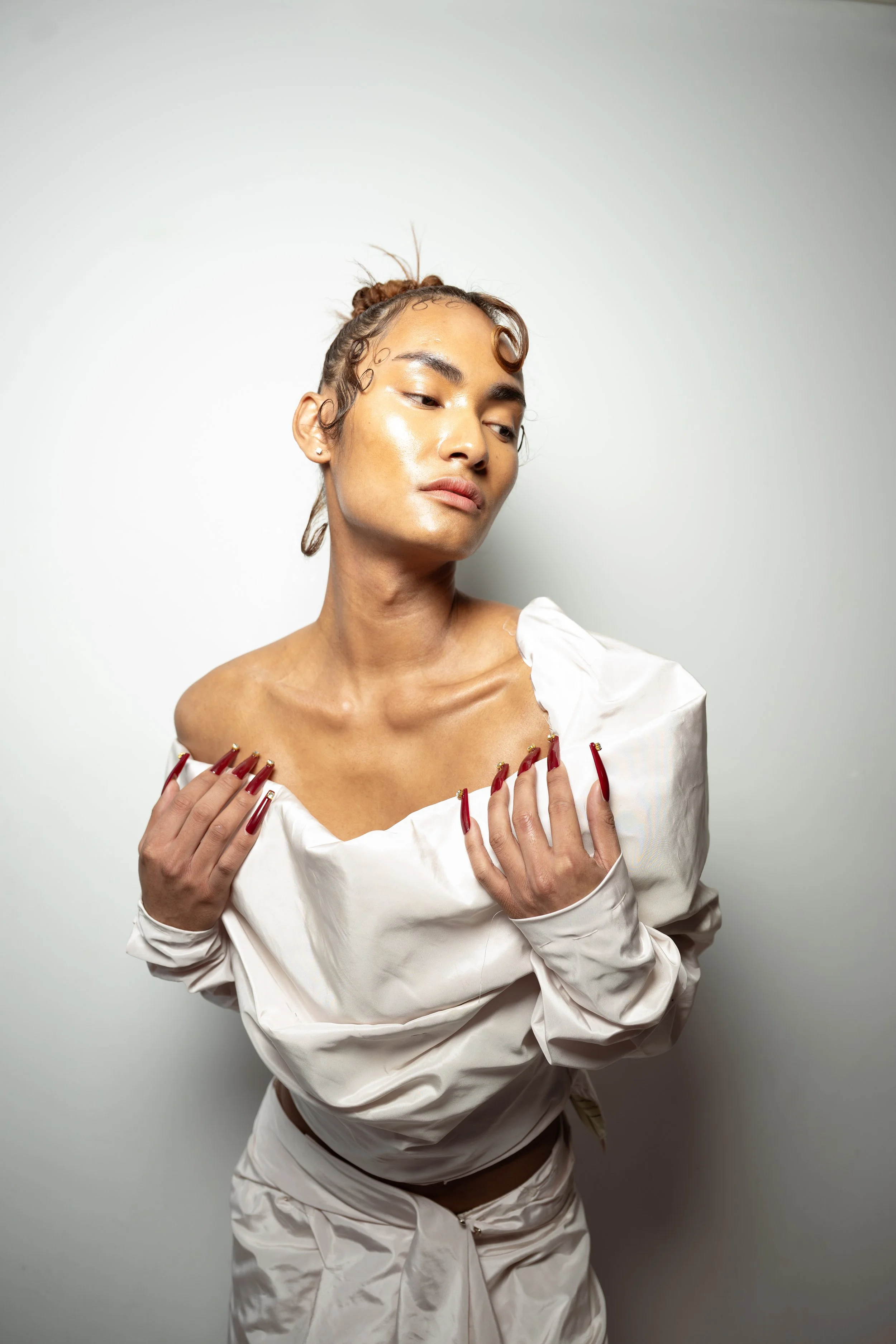
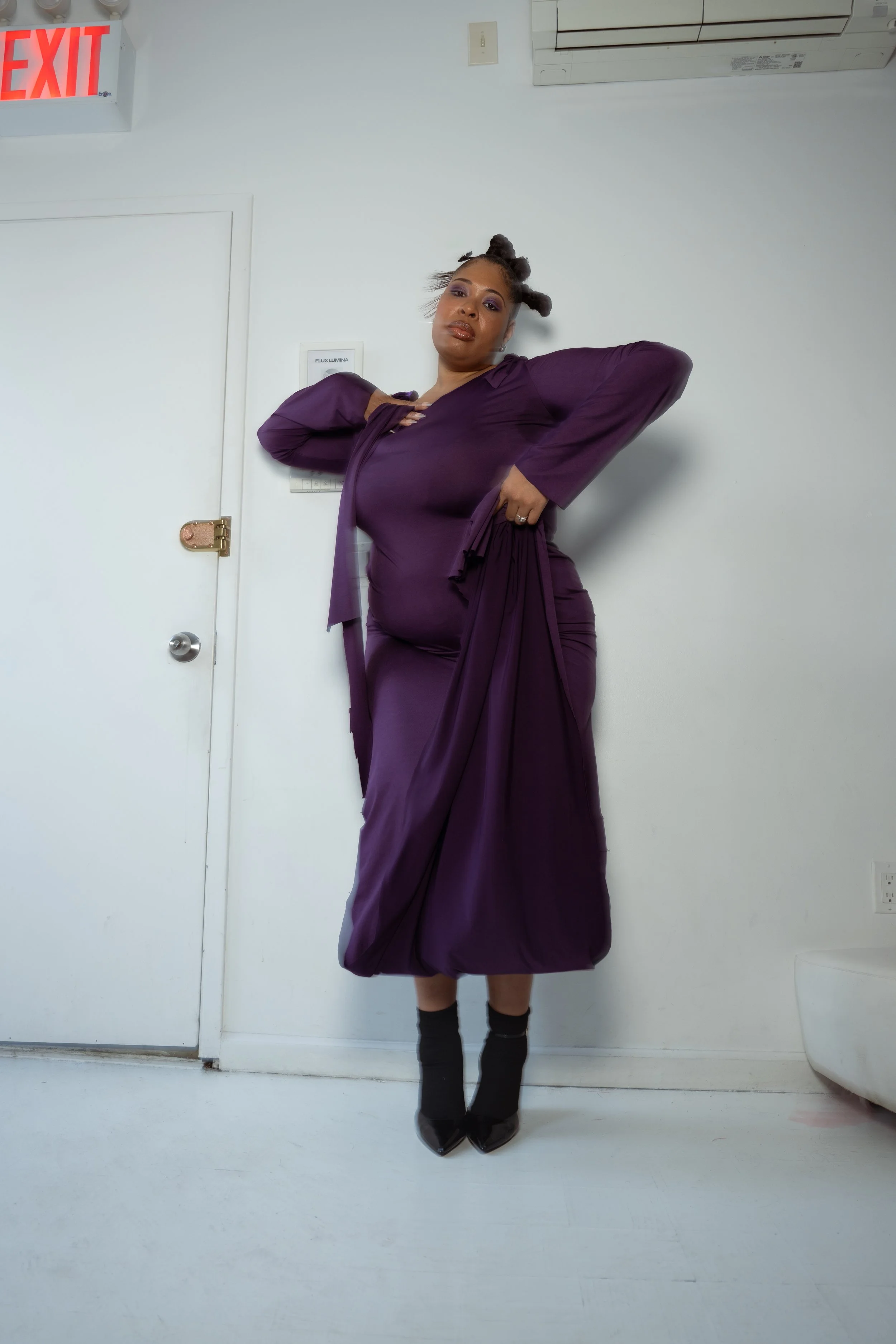
RENÉE, Image Courtesy of Lindsey Media
Knockers, sometimes called bubble hair ties, to be particular, form the finishing details of several pieces of the collection—running in strands down fringe, embellishing the shoulder of a day-to-night royal purple midi dress, or forming the basis of the knit of a see-through crop top.
“In terms of the theme, I was thinking of things that are sensual, that have movement, a lot of things are cut on the bias, just experimenting more,” said McClain.
It’s a less on-the-nose approach to celebrating Black culture from the designer, raised in her mother’s cosmetology school in the DMV. Similarly, this collection marks a turning point for McClain, who, after years of working for contemporary mass-market brands (she currently specializes in denim at Mamiye Brothers), is shedding societal expectations to explore fashion and design on her own terms.
“It feels weird to be able to talk about things that are kind of dreamy, especially today in this climate, which is why it’s important for people to remember we still have that whimsy,” she said. “I’m a creator, I’m always going to create, and this is me being able to live.”