Behind the Decks and Beyond the Noise with Soraya
The DJ and producer is charting her own path and blending cultures through her music.
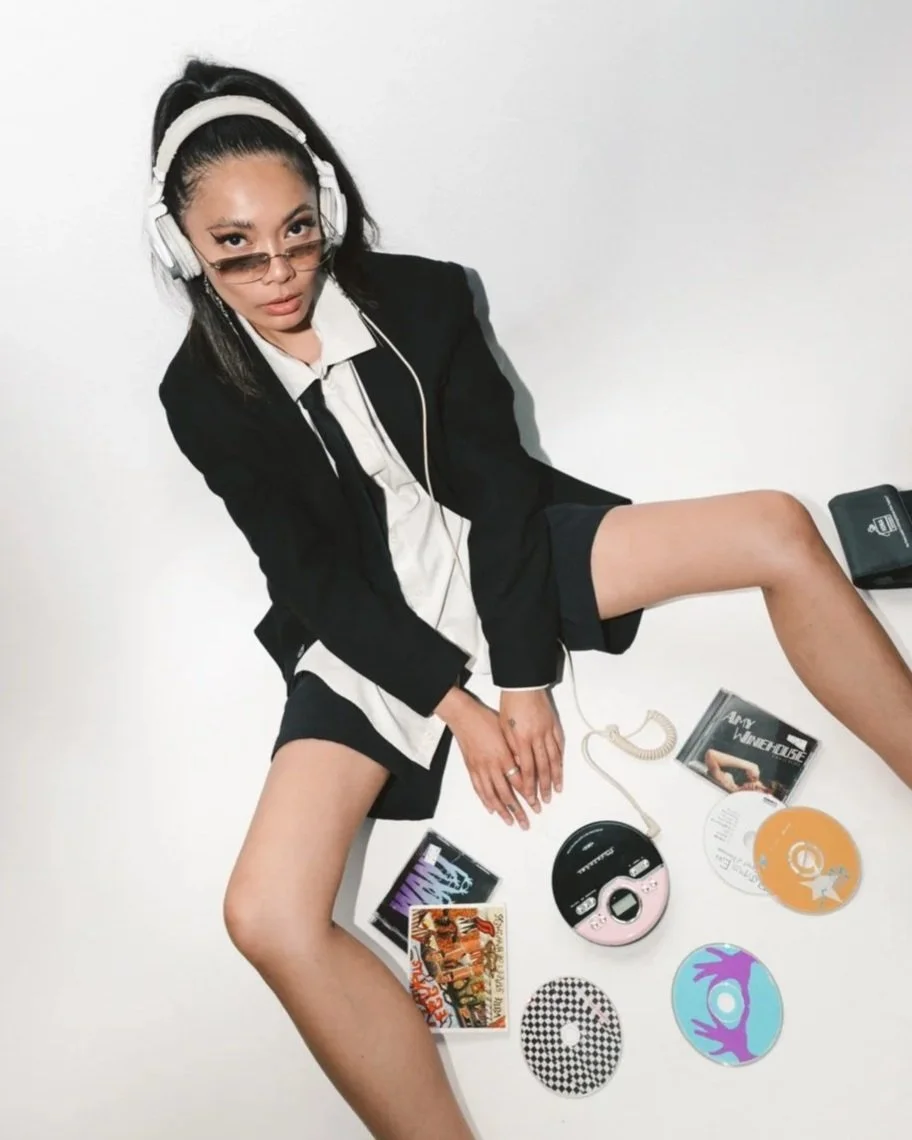
Photo Courtesy of Soraya
“It’s basically strapping weights around your waist and like holding your breath,” says California-based DJ, music artist, and producer, Soraya. Her voice was excited and lively over our early-morning call. We’re on the topic of free diving, and to hear her talk about it is to watch her truly come alive. I try to picture it, and the image feels like the perfect reflection of her life as it is now.
After more than a decade commanding dance floors, the 28-year-old, born Shelby Pinckard, is finally surfacing with her own sound, one that she’s expanding on in her latest single, “Danse de L’amour.” Released this past summer through Gorgon City’s label, Realm Records, which she recently signed to, the single marks a turning point in how Soraya approaches sound.
It’s a hypnotic, deeply textured track built around French-Creole vocals, indie-dance grooves, and a kind of euphoria that feels both nostalgic and new. “Releasing through Realm was a dream,” Soraya says. “I admire their roster so much. And Gorgon City, they’re just so genuine. I felt really welcomed.”
It hasn’t always felt that way, though. In fact, the shift from DJing to producing wasn’t immediate. Hence, we get settled right in to talk about her leap from playing to producing—the thrill, uncertainty, and a dive into something far more profound. And when we do, it doesn’t come across as an identity she chased. Rather, it feels more like the music pulled her in. “I’ve been listening to dance music since I was like 15 or 16,” she says. “I’m 28 now, so it’s been a constant that has influenced so much of my life.”
Long before her career took off, she was a teenager sneaking into 18+ shows with a fake ID, trying to understand why it felt so electrifying and spiritual. She takes me back to those years, from walking in, moving to the front of crowds, studying the way the DJs controlled the room at parties, to immersing herself to learn from friends who were already in the industry full-time and that turn-about time to booking her first club show at 20—playing with decks parents had got her for Christmas, joking that she ‘couldn’t even order a drink.’
“I had a residency then in Hawaii and started getting booked and playing shows for fun.” Having spent a good portion of her life there and for college [majoring in PR and French], Soraya is infatuated with the island; its culture, people, and energy. Even through the soft glow she radiates on screen, it’s clear the island still lingers in her.
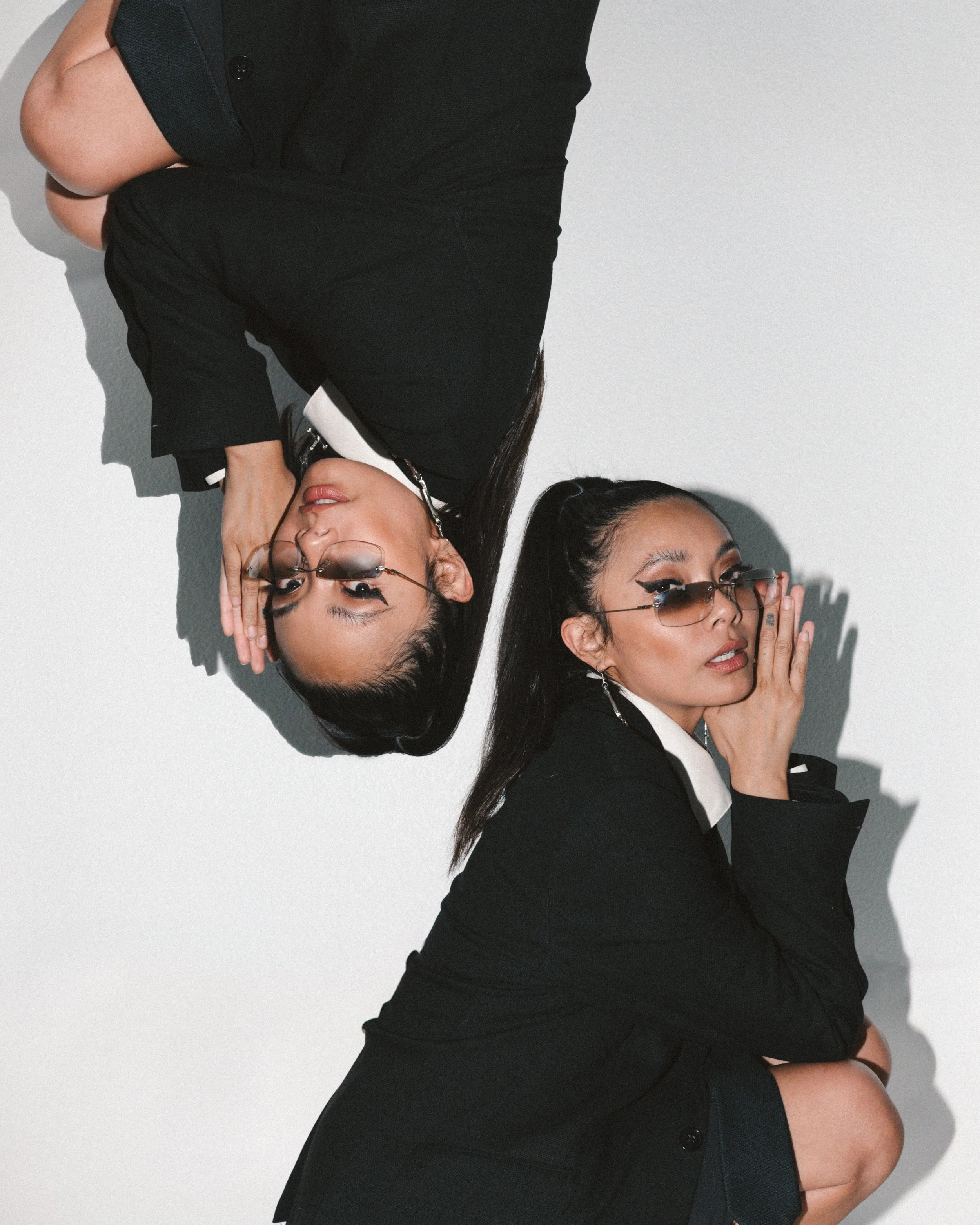
Photo Courtesy of Soraya
Once she returned to California in 2020, it took off in a way she didn’t anticipate. “Honestly, it all kinda just happened. I got booked a lot more, signed with my manager two years ago, and it’s just been good,” she says. And it has been more than good, with a performance tab featuring venues like Sound Nightclub in Hollywood, Area15 in Las Vegas, FNGRS CRSSD events, and more, and shared stages with artists like Eli & Fur, Max Styler, and Super Flu, among others.
“I like the way I’ve grown or how dance music has,” Soraya says. “Compared to when I started listening, the culture has changed a lot. Now there are so many sub-genres. I’m into old, like 80s rock bands, funky vocals, and basslines. I think my own sound is rooted in those influences, while also carrying guitar riffs and tones from that era. A lot of people pull from that base anyway. It progressed initially into dark disco, whereas it’s just this groove that’s like deeper, and now it’s its own genre. So I would describe indie dance as weird, funky, and anything out of the ordinary. It’s a fun way to express yourself in and outside of music.”
It’s a sound that mirrors her multicultural personal story, one that stretches across continents. With Filipino, Vietnamese, and Chinese heritages, she was adopted at birth in San Diego and raised by a Korean-adopted father and a Midwestern mother from Iowa. “It’s very different being Filipino-American, which is something I’ve been learning more and more about what it means as I get older, especially with my family, where I didn’t even notice it.”
But how do you go from curating the pulse of other people’s sounds for years to finding out what hers feels like in melody form? To produce and make her own music? Soraya takes that familial approach to growing and learning. Behind the decks, she loosely structures her sets with a beginning-middle-end flow, but the plan always takes its own course once she’s actually playing.
Despite having producer friends who can make a song in a few hours to help demystify the process, she admits producing is still a journey. “I spent ten years figuring out my sound as a DJ before I ever tried producing,” she says. “Even though I struggle with translating the sound I play out into production, I think there’s definitely a difference between when I first started and now.” Still, she’s grateful that it’s helped her understand her musical identity and direction, and to evolve and experiment with it.
For instance, her debut single, “Brain Delay,” released through Maccabi House, shot into Beatport’s Indie Dance Top 10 within 24 hours, gathering support from heavyweights like Adam Ten, Mita Gami, and more. For a first release, the momentum was almost surreal. Its accompanying visuals carried that same sense of stop-motion video collages, layered and playful. I ask her if that’s part of trusting the process, to allow the growth to be messy and unfinished.
Her face lights up before she explains that the regional and cultural influences around keep shaping that exploration. From the diverse textures of US dance-music cities, each has its own identity. “It’s interesting how there’s UK Garage, and here we have like New York’s faster, Euro-leaning vibes or Miami’s Latin blends and Chicago and Detroit’s house and techno roots. And then, especially San Diego pulls from a unique mix of all these and camping-festival culture, and some European influences.”
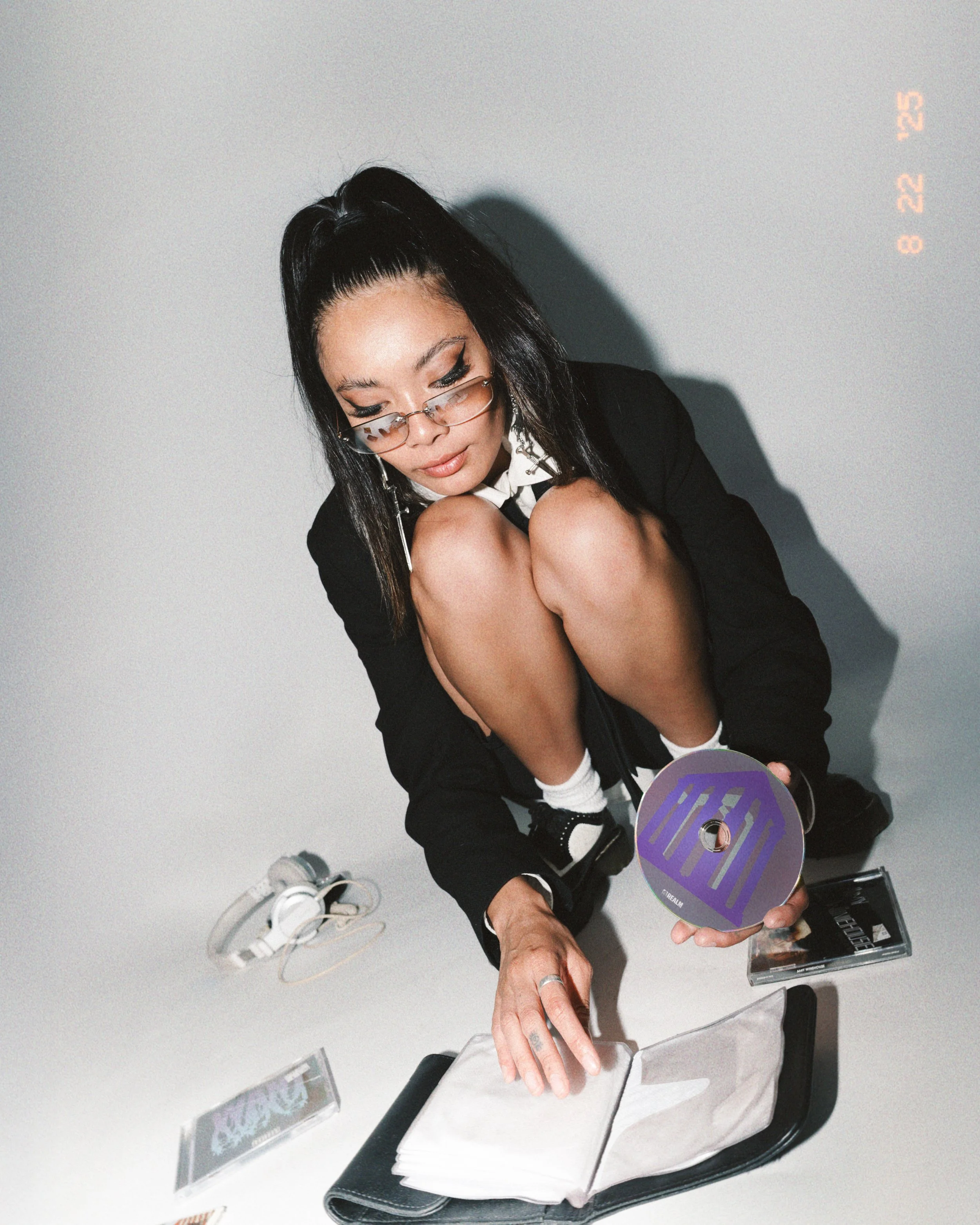
Photo Courtesy of Soraya
She admits that, however, it does feel like a roller coaster moment navigating this industry or any other, as a woman of color, where that visibility can feel both demanded and fleeting. “Being a brown woman, I feel like opportunity is inherently harder to come by,” she says. “Especially when I started, being about 18, it did feel like a boys club only, and a lot of people would ask me like ‘how old are you?’—so I definitely had to learn a lot of things about the industry and to grow into it. Just that love for it is what’s carried me through, and I think there’s always more opportunity for it to be inclusive.”
Something Soraya acknowledges is the shift toward more community-focused spaces for women [and of color], such as He.She.They, the inclusive label and party collective, and Femme House, founded by LP Giobbi, which opened doors early on in her career.
“LP is just super rad and so talented, and Femme House provides free classes to Womxn in Color, so that’s how I first started learning how to produce,” she recalls. Beyond that, she also keeps an eye on festival metrics, like Book More Women, which tracks women’s representation across lineups, noting how visibility can shift the entire ecosystem.
Just like free diving, artistry requires patience—descending deeper each time, without the certainty of what waits below. For Soraya, that descent has meant staying rooted in genuine passion, in a time when everything feels so commodified, with unpredictable algorithms and content cycles.
Soraya’s story before the stage reads all too well. A corporate-work-life stint that she found had to balance (as we’ve all) at one point. The work was intense, with her describing the times as, “I was working for this bigger agency in LA, having such a hard time not being home, and I would like to stay for three days out of the week. Even though it was all very draining, being younger and in music, I felt like I had to be in the big city in order to prove myself.”
And that grind molded her, realizing she didn’t need to be physically embedded in those spaces to build something real. When she finally shifted to freelancing, she partnered with her longtime best friend and manager, Johnny, joining Sunburn PR and Management as both a client and a co-pilot, leading the PR side. “He’s run Sunburn for over a decade, so partnering with him just made sense.”
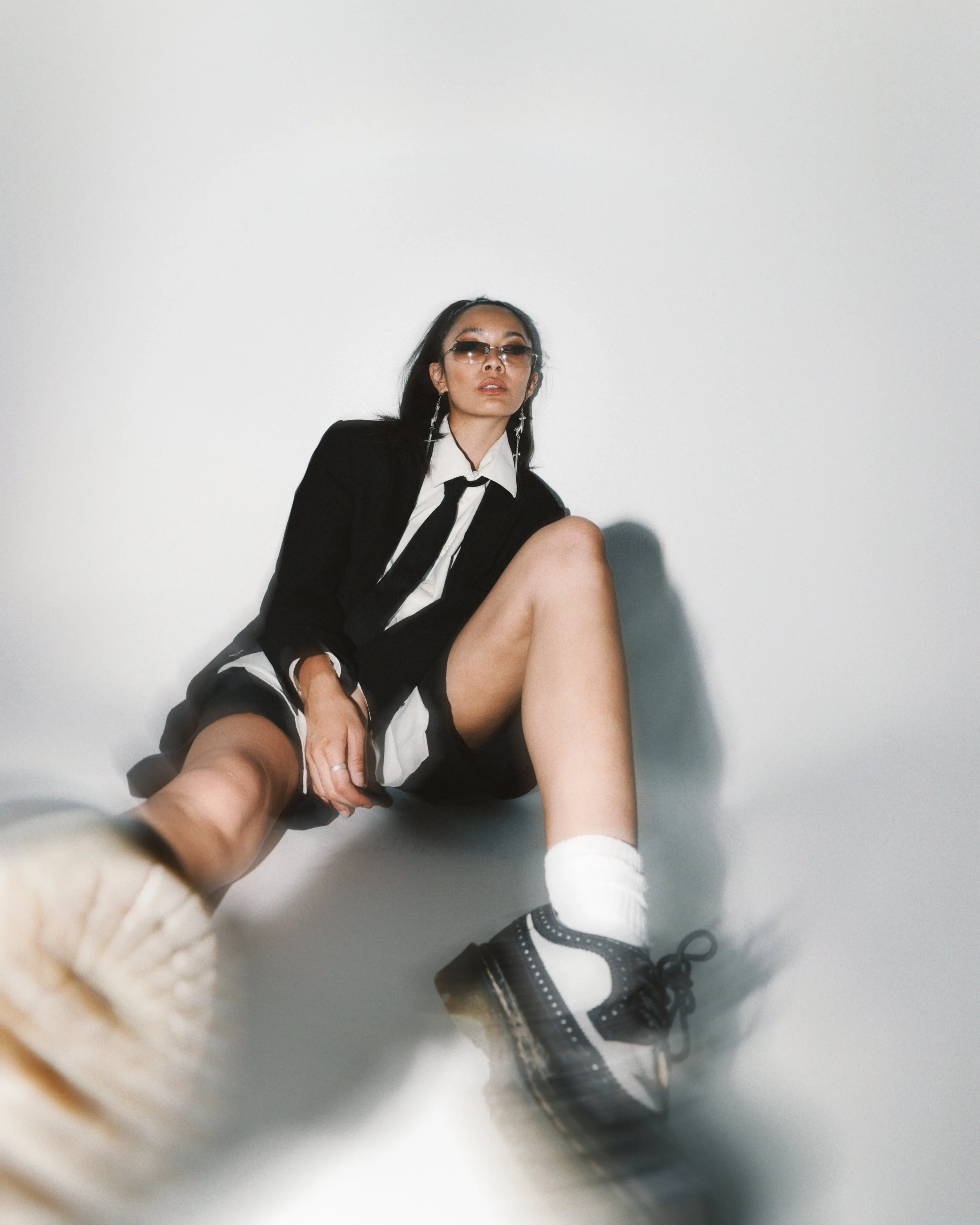
Photo Courtesy of Soraya
That duality taught her the business from every angle, whether time management, storytelling, and marketing, and the work it takes to build something from the ground up. And in a landscape where artists are now juggling everything from social media to distribution, Soraya blends her background with lived experience.
“I’m always excited to tell the stories of my clients to journalists with like pitches, which has helped me navigate my own career with clarity, which many young artists don’t get access to,” she says. “It’s really one big network of finding ways to make everything work for both sides of myself. Like I’ve known Gorgon City for a while, just through mutual friends, and it’s these people I meet in these spaces that connect me with shows.”
Beyond her own releases, Soraya shares her surprising love of folk music artists such as Noah Kahan & Mumford & Sons, and names other artists currently inspiring her, from Gabss to the London-based duo Moontalk. “I really like Rafael and Omri.’s music too, I actually recently played shows with both of them, and I’ve always been a fan of Daft Punk,” she says. “Ultimately, I would also like to open for or play more festival line-ups with live artists.”
When Soraya’s not behind the decks or the studio desk, she gravitates toward stillness and aesthetics both in motion and in pause. On her Instagram, cooking clips and travel snapshots blend seamlessly with glossy performance photos. “I find it to be such a good outlet for me, so I’m always experimenting in the kitchen, anything from homemade pasta to Japanese dishes,” she says. “I make those a lot.”
For someone whose life revolves around rhythm and ‘chaos,’ these rituals serve as small reminders that creativity doesn’t always need to be loud. And all while there’s this ease to her off-stage life. Recently, she’s also taken up golf, not only for the sport itself, but also for the look of it. “I've gotten somewhat good at it, actually,” she says. “It’s all the rage in pop culture right now with all of the new streetwear-slash-gorp-core golf companies. I've been absolutely loving brands like Fiori Golf, Home Course, Malbon, and Baggy Pants Golf.”
When asked what she hopes people take away from her music, Soraya insists, “I hope that my music would inspire women and people of color to pursue it too, and to also leave with an emotion of like having had a good time at my sets; without being there for a trend, for just being themselves,” she says. “Experiment, have fun, and don’t be afraid to be bad at something in the beginning—that’s how you actually learn. Honestly, the only reason I’ve gotten anywhere is that I kept asking questions and wasn’t scared to ask for help.”
She acknowledges her hope that younger DJs and producers, especially women artists, will permit themselves to start even when the path feels uncertain; the same mindset she carries when she talks about her many creative outlets, from diving to cooking to fashion. “Maybe one day I’ll do a cookbook. Something about food and DJing. But yeah, not quite there yet.” It’s an answer that feels her rightfully self-aware, optimistic, and still learning to trust the dive.