Redefining the Divine: Harmonia Rosales Reclaims Creation at Getty Museum
The exhibition is on view until April 19.
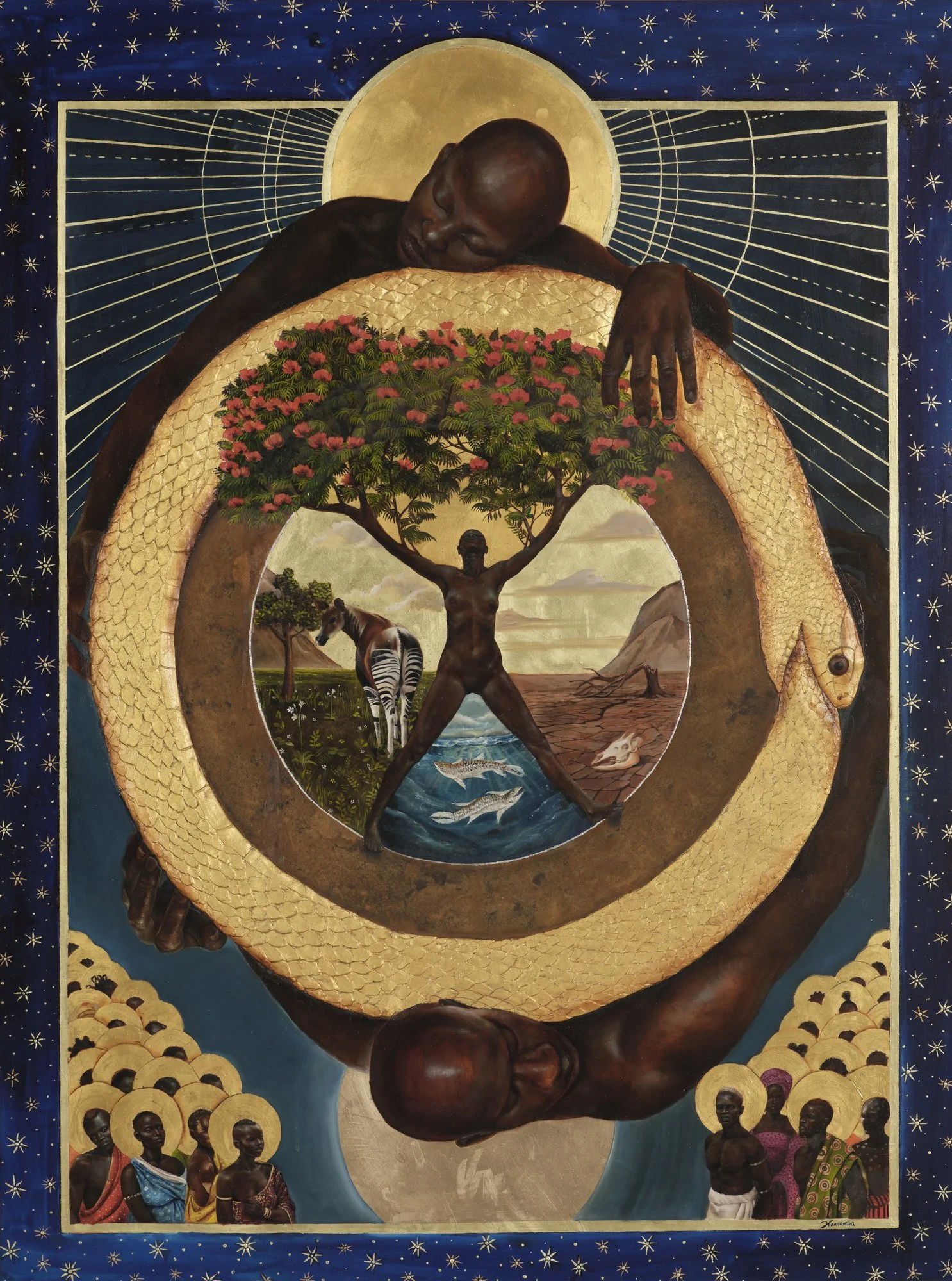
Image Courtesy of Getty Museum and Harmonia Rosales
When we think of art representing creation and the divine, our minds often turn to Eurocentric and Catholic art that has graced the halls of museums and churches for centuries. Harmonia Rosales is here to reclaim the image of the divine through her body of work, Beginnings: The Story of Creation in the Middle Ages, on view at the Getty Museum in Los Angeles until April 19.
The Afro-Cuban artist drew her inspiration from the spiritual lens of Yoruba cosmology while challenging the Western depictions of the divine. Her work takes on a contemporary lens, musings that have become part of our artistic language and history. The exhibition challenges viewers to question what they have been taught about art through institutions, and what it means to see themselves and their culture represented in something bigger than they are.
Beginnings: The Story of Creation in the Middle Ages shifts the narratives of ancient and biblical misogyny and racism, even a concept as acclaimed as Adam and Eve. Rosales compares and contrasts how Western biblical ideologies often perceive certain types of people, animals, or objects to be dark, damning spirits. Meanwhile, in Yoruba cosmology, these same concepts, can be seen as good, healing omens.
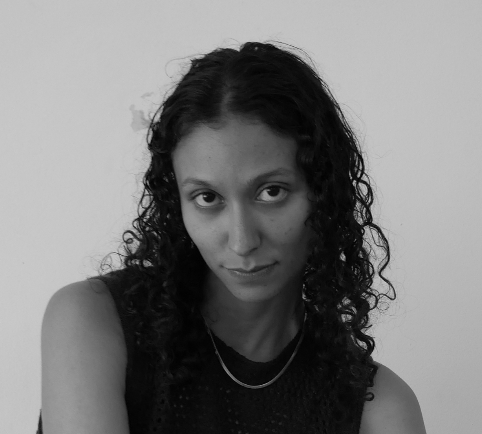
Rosales spoke with 1202 MAGAZINE about her mission to bring Black bodies to the front of the conversation, and the process of bringing this exhibition to life at the prolific museum, The Getty.
What inspired you to dedicate a body of work to Creation?
What inspired me to dedicate a body of work to Creation is really the core mission of my practice. I’m interested in bringing Black bodies back into divinity. Origin is infrastructure. It’s the foundation that shapes how people understand themselves. Without it, there’s nowhere solid to plant our roots. Right now, many of our origin stories begin in chains. That’s what we’re taught in school, that our history starts with enslavement.
But a people cannot build a sense of belonging or possibility if their beginning is framed only through trauma. People need origin, because origin shapes imagination, and imagination shapes how we understand power, worth, and where we belong in the world. So, for me, returning to Creation isn’t just about mythology. It’s about rebuilding a foundation.
Tell me about the themes: Visualizing the Creation, Creation in the Abrahamic Faiths, The Introduction of Evil, Beginnings and Ends, and Adam and Eve.
The themes in this body of work explore some of the most fundamental structures that shape how we understand the world: Creation, the Abrahamic story of Adam and Eve, the introduction of evil, and the idea of beginnings and endings. For centuries, these stories have been visualized through a very narrow lens. In Western art, Creation is often presented as a linear moment directed by a singular, patriarchal god, usually depicted as a white man. Adam and Eve are portrayed as white bodies, and the narrative often places blame on Eve, framing women as wayward or responsible for humanity’s fall.
I wanted to reimagine those foundational structures. My work asks what happens when we revisit these stories through the lens of African spiritual traditions, where the relationship between humanity, nature, and the divine operates very differently. For example, the serpent has been demonized in many Western traditions as the source of evil. But in many African cosmologies, the serpent represents knowledge, power, and cosmic balance. It is not something sinister but something sacred. African spiritual systems often understand existence as cyclical and relational rather than hierarchical. Everything moves in tandem. Nature, spirit, and humanity are intertwined and constantly transforming.
By contrast, many dominant Western religious narratives place humanity at the top of a hierarchy above nature. My work tries to shift that perspective. Rather than elevating humanity over the earth, I’m interested in restoring humility, reminding us that we are part of nature, not separate from it. So, in reimagining these stories, I’m not simply revisiting biblical themes. I’m questioning the frameworks that shaped them and reclaiming symbols and ideas that were demonized when African spiritual knowledge was suppressed.
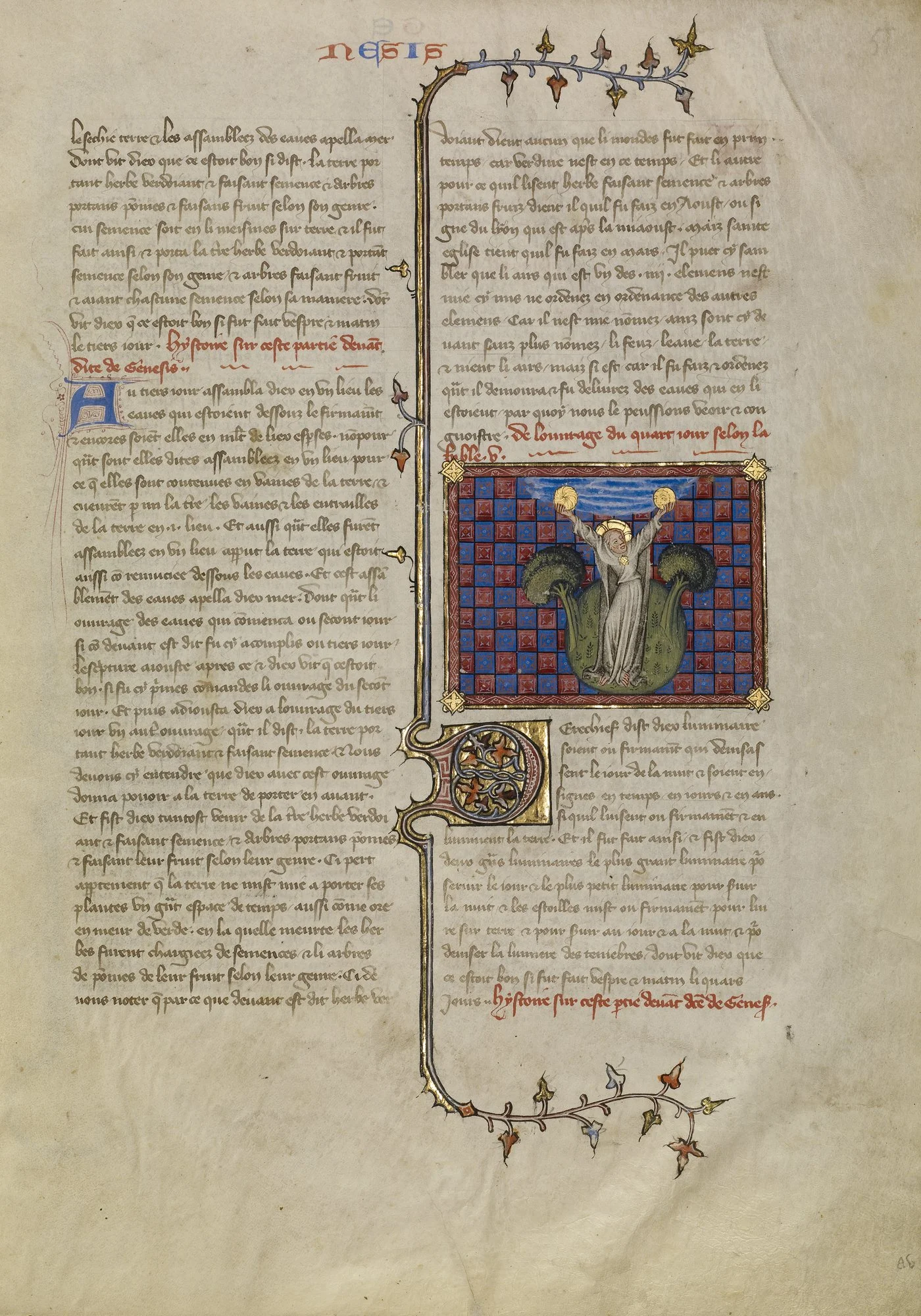
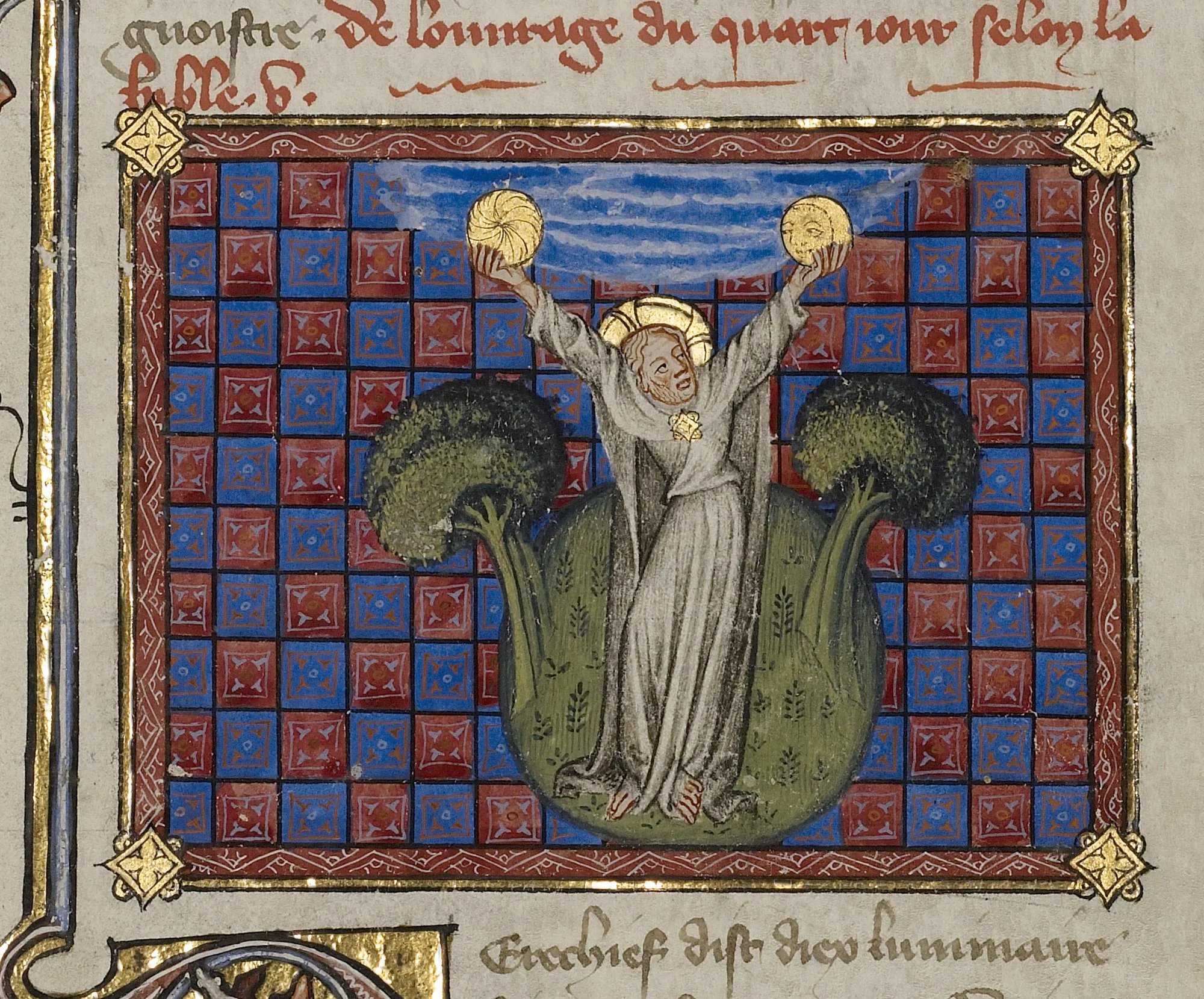
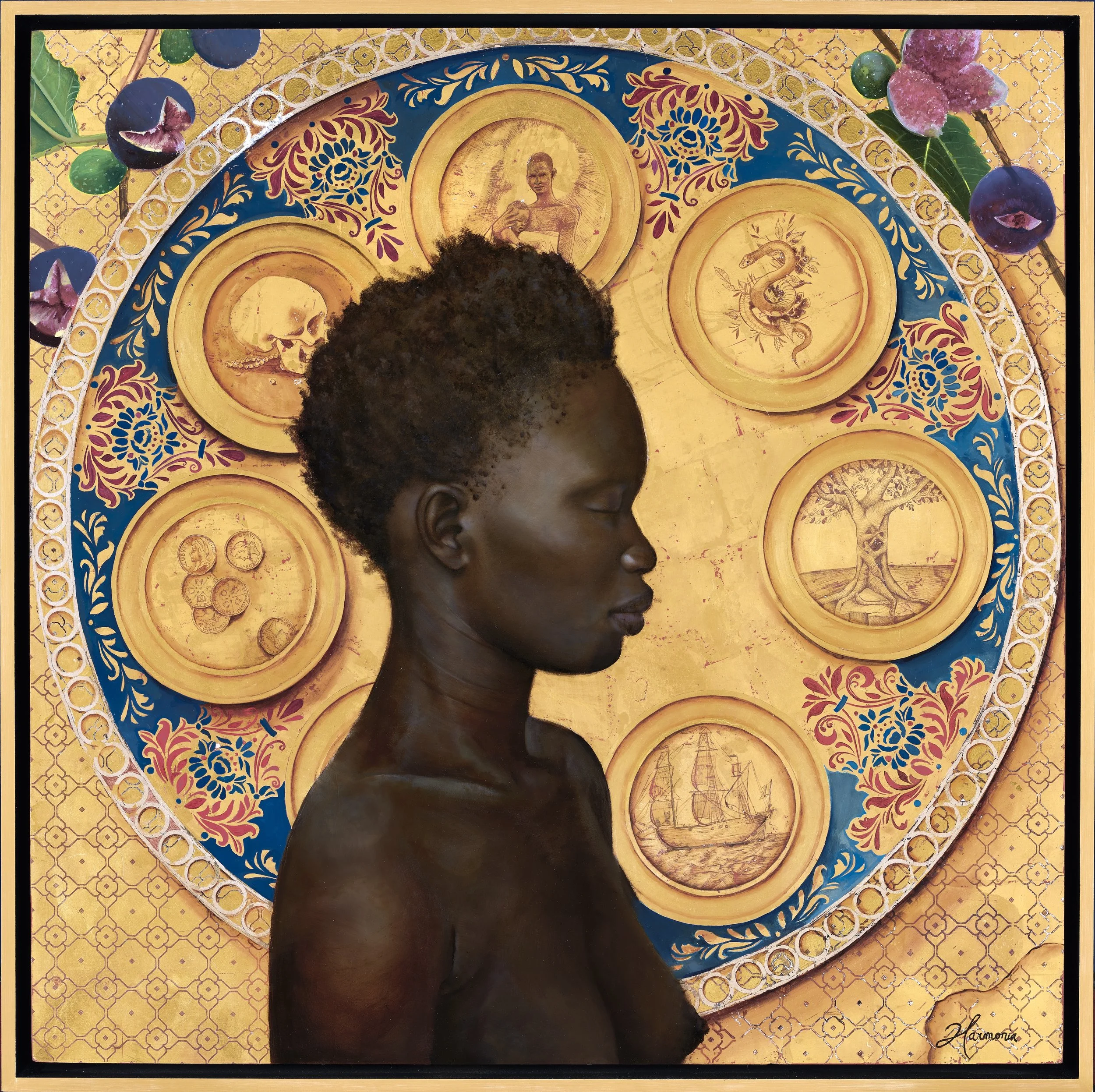
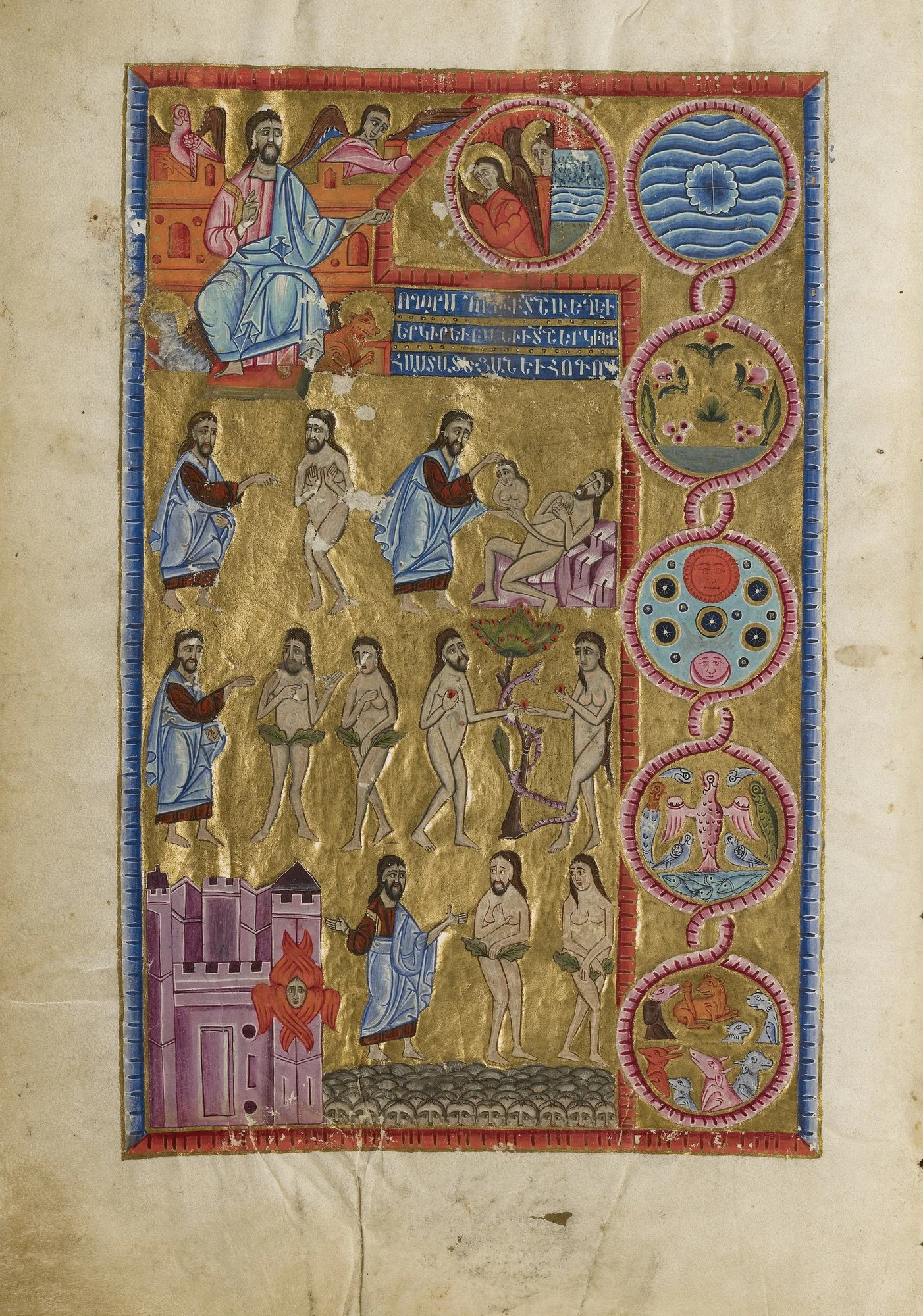
Image Courtesy of Getty Museum and Harmonia Rosales
From what religious perspective, if any, did you create this body of work?
The primary spiritual lens behind this body of work is Yoruba cosmology. What I find fascinating is that many of its principles echo ideas found in Indigenous cultures around the world. At the center of these traditions is a deep love for the earth and an understanding that humanity exists in relationship with the natural world, not above it. The forces that sustain life, water, wind, rivers, and forests, are treated as sacred and alive.
That perspective shaped how I approached this work. Rather than presenting creation as a single moment controlled by a distant authority, Yoruba cosmology understands existence as relational and ongoing, in which the divine moves through nature itself. So, while the work references themes many people recognize from Abrahamic traditions, its philosophical grounding comes largely from African spirituality, which emphasizes balance, humility, and respect for the forces that keep us alive.
What was the timeline for this exhibition, and what challenges/emotions did you face throughout the process?
Elizabeth Morrison, Larisa Grollemond, and I worked on this exhibition for about three years. That amount of time really allowed us to build a genuine relationship and level of trust with one another. For me, the process was actually very smooth and enjoyable. Because we had time to develop the ideas together, it felt collaborative rather than rushed. There was a real sense that we were building something thoughtfully.
One of the most exciting parts for me was seeing the manuscripts up close. As an artist who often engages with historical imagery and visual traditions, having access to those works in person was awe-inspiring. The entire Getty team was also incredibly welcoming throughout the process, which made the experience feel less like work and more like a creative dialogue. It was truly a joy to be part of.
How does this exhibition represent your Afro-Cuban culture?
I’ve always found this question a little difficult to answer because my culture shows up in ways that are both visible and subtle at the same time. Being Afro-Latina, specifically Afro-Cuban, and born and raised in America gives me a particular vantage point. I grew up very aware of how history travels, across oceans, languages, and cultures. The African spiritual traditions that shaped the Caribbean didn’t disappear during the transatlantic slave trade; they transformed, adapted, and survived.
My work moves within that global current. The way I interpret the gods, the way I dress them, and even the versions of the stories I choose to tell all come from that Afro-Cuban-American perspective. It’s a lens shaped by migration, diaspora, and cultural blending. The exhibition represents my culture not only through the imagery of the Orishas and African spirituality, but through the understanding that these traditions are part of a living, evolving story that traveled from Africa to the Caribbean and now continues through the diaspora.
How does it feel to have a major body of work in the Getty?
It feels rewarding, especially in the sense of acknowledgment. Not just for me as an artist, but for the cultural and spiritual history that shaped this work. For so long, the traditions I draw from, particularly Yoruba spirituality, were suppressed or silenced, often by the very systems that produced many of the manuscripts we now see preserved in museums. To have this work in dialogue with those manuscripts feels meaningful.
It’s a way of saying that these stories, these cosmologies, are also part of human history. They carry their own philosophical and theological weight. And placing them in that space allows them to be seen not as something outside of history, but as part of the broader conversation about humanity’s efforts to understand creation, divinity, and our place in the world.
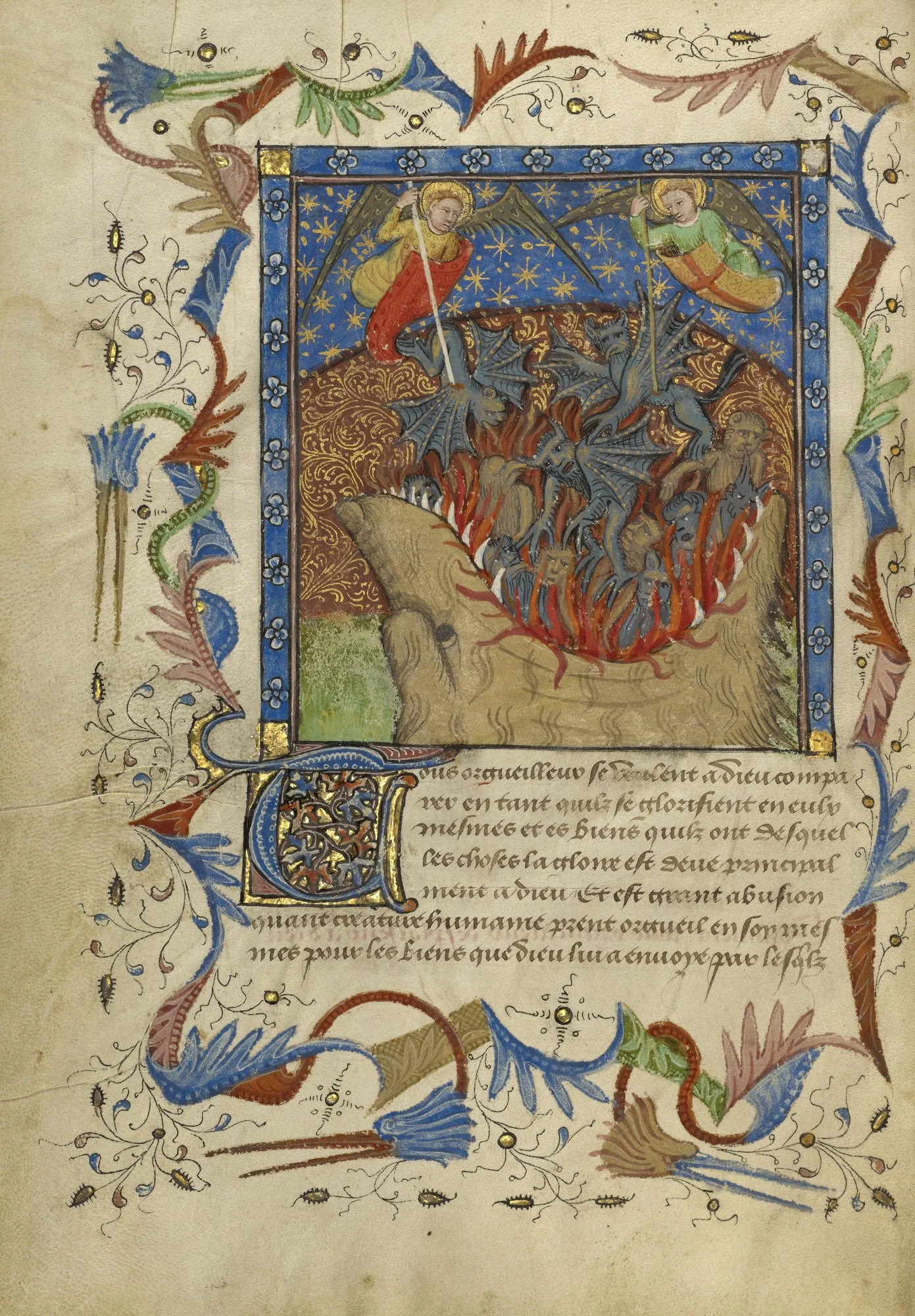
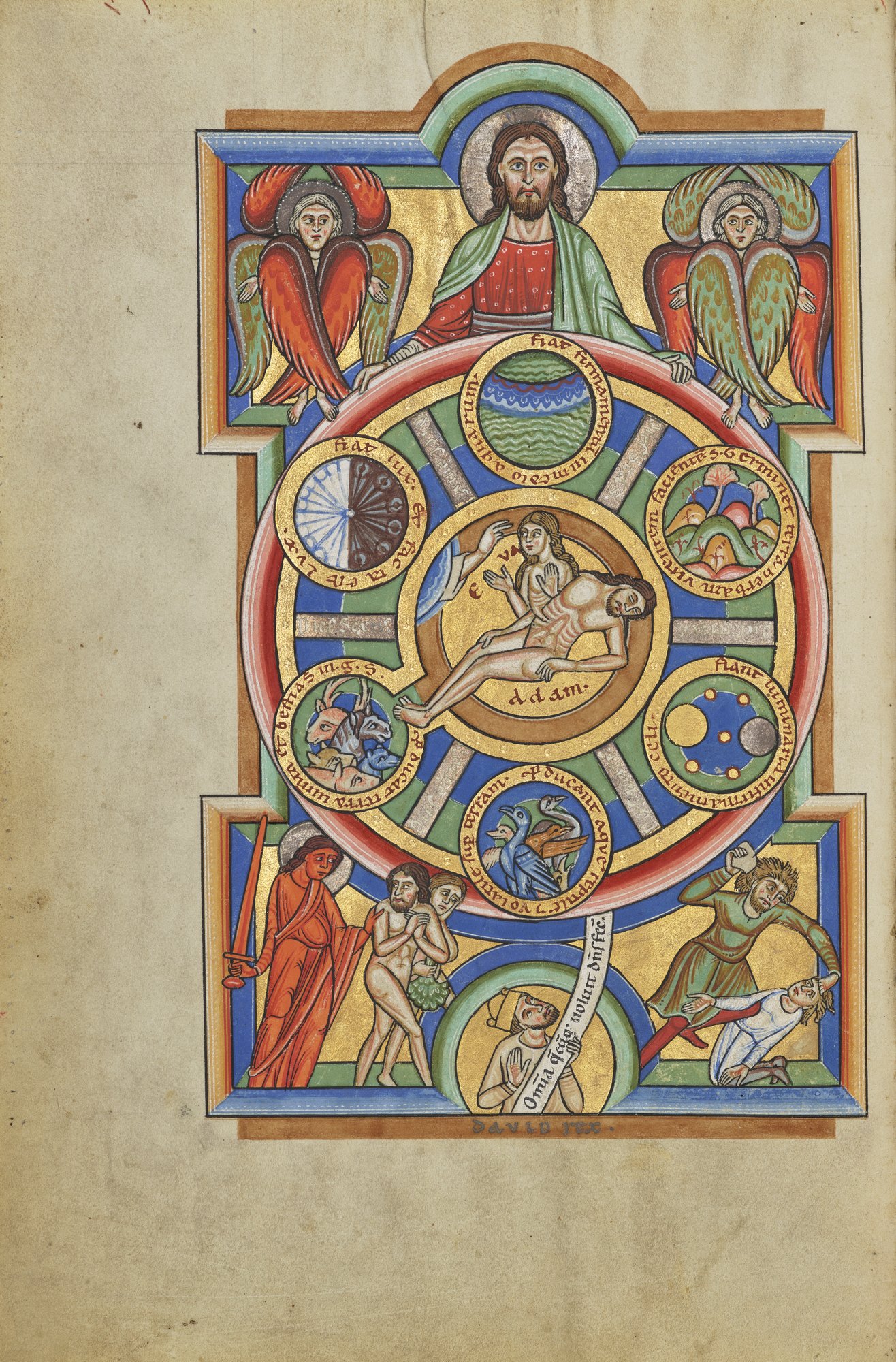
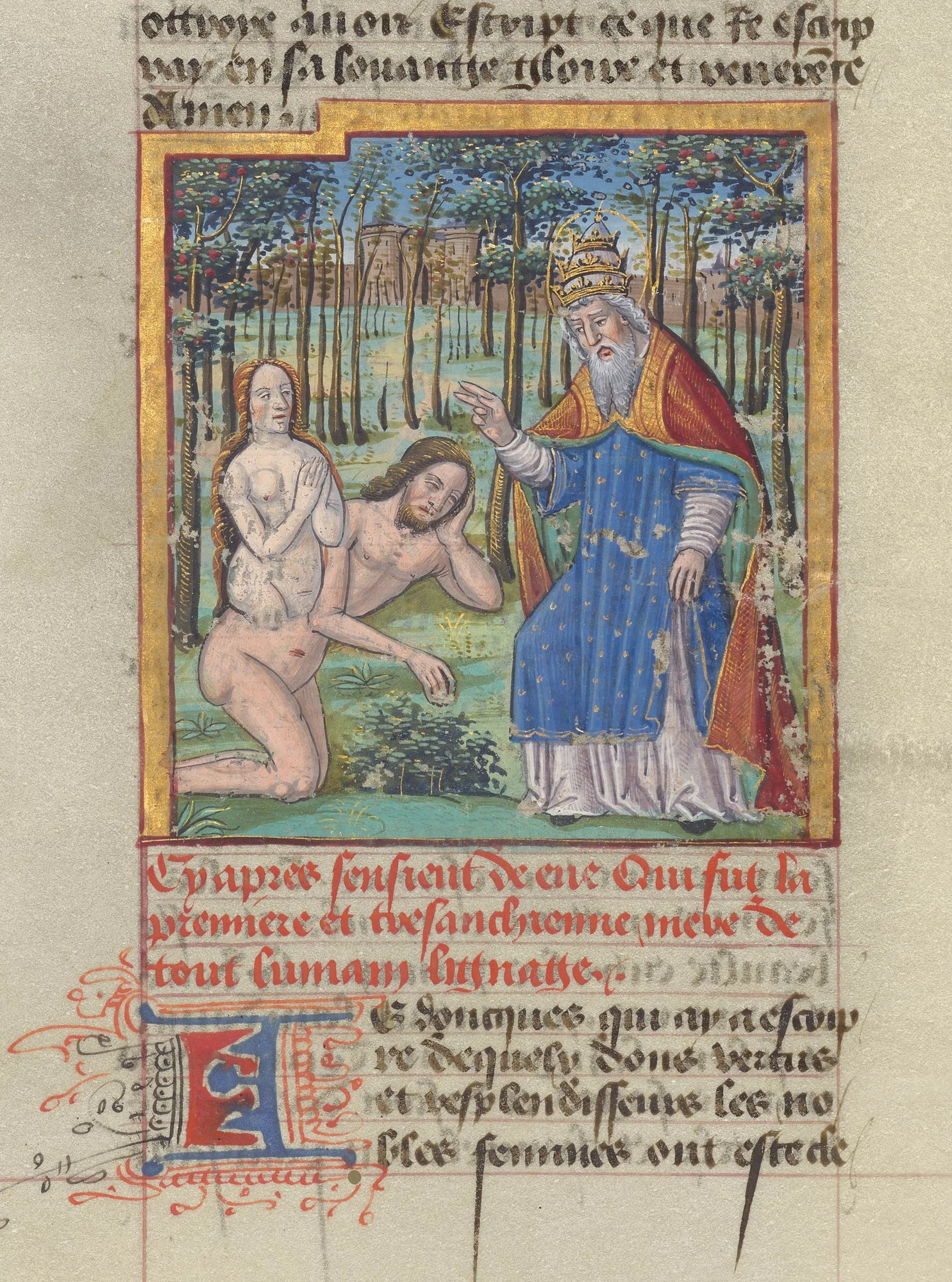
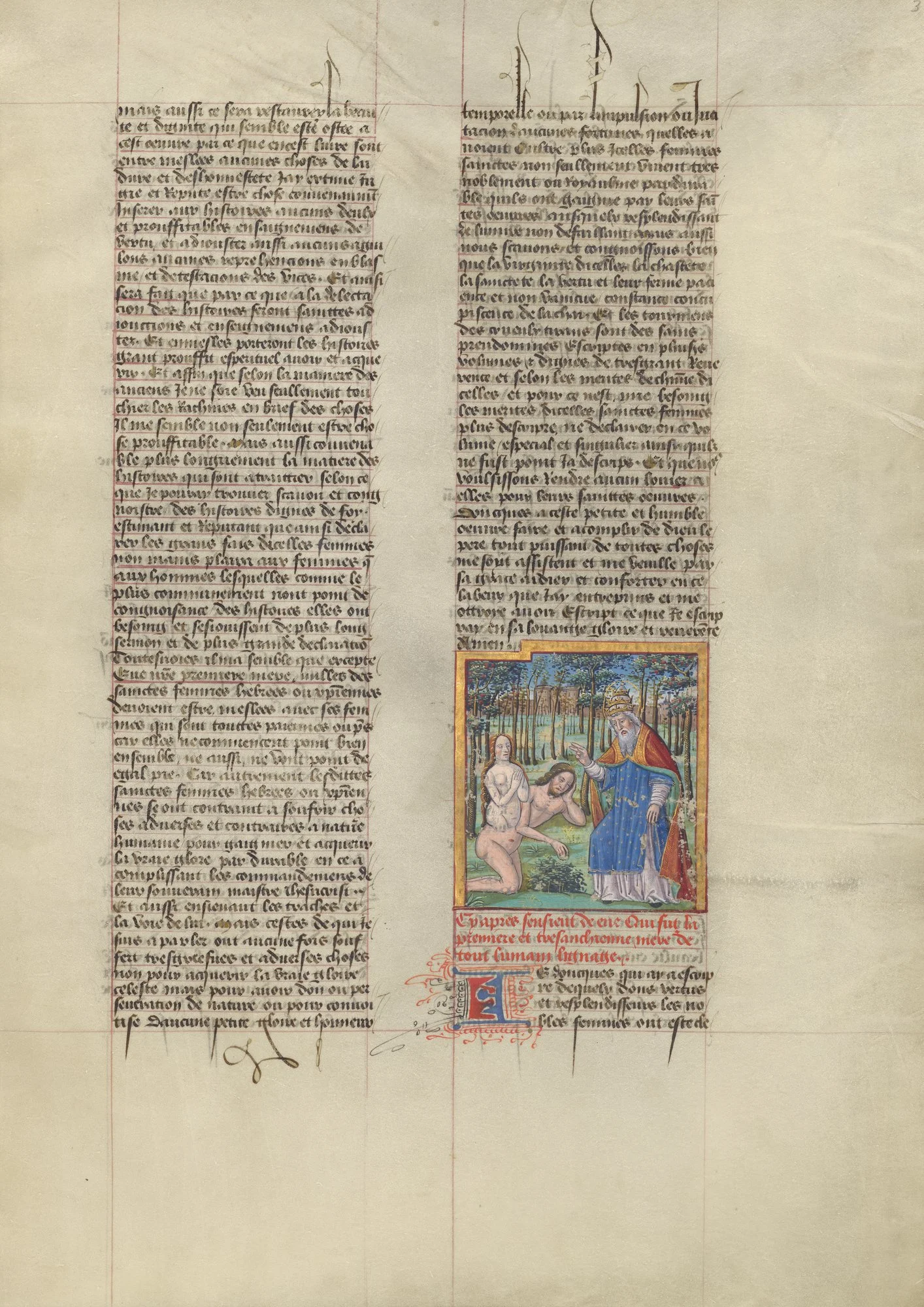
Image Courtesy of Getty Museum and Harmonia Rosales
How does this exhibition tie into modern topics such as socioeconomics, gender, and identity?
My work invites viewers to question the systems that shape what we accept as truth. Who determines what defines beauty, belief, identity, or even history? Many of the structures that influence society, whether cultural, religious, or economic, are built through narratives repeated for centuries. But often the most important thing to examine is not only what is told, but what is omitted. When we begin to look at those omissions, we start to understand the larger agendas that shaped them.
This connects directly to modern conversations around gender, identity, and socioeconomic power, because the stories societies choose to center often determine who is valued, who is marginalized, and whose knowledge is considered legitimate. My work encourages viewers to engage critically with those questions. Not simply to reject the past, but to examine it more deeply so that we can understand it and, when necessary, challenge and correct it.
How have you displayed your artistic evolution through this exhibition?
I think my evolution is visible in how I’ve begun to interpret my own work. Over time, seeing audiences from different cultures engage with it and begin to question the narratives they’ve inherited has expanded my understanding of what the work can do. It showed me that the conversation isn’t only about my personal perspective or cultural history. It’s about creating space for people to reconsider the foundations of what they’ve been taught. Watching that happen has opened my eyes to the larger impact the work can have.
What do you hope viewers take away from this exhibition?
I hope they, too, can begin to question what they have been taught. I want them to see Blackbodies painted with the same luminosity, monumentality, and theological seriousness traditionally reserved for European figures. To feel what it looks like when we are positioned as origin, as mythic, as divine. Because that visual shift does something deeper than representation. It reshapes imagination. And imagination shapes how we understand worth, power, and belonging. If visitors leave recognizing that divinity was never limited, that it was simply framed that way, then the work has done its job.