The exhibition is on view at the SCAD Museum of Art until December 13, 2026.
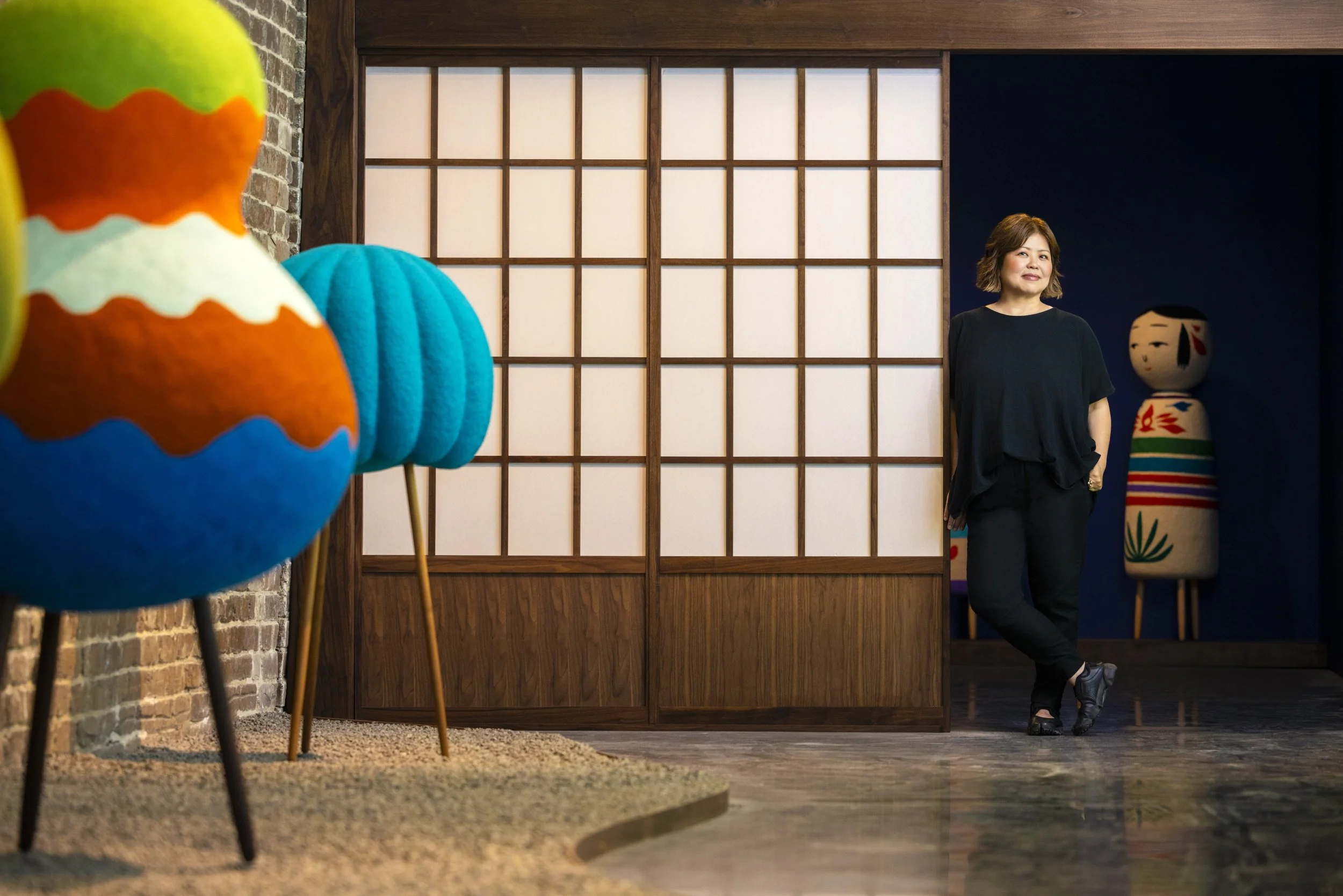
Photo Courtesy of Masako Miki and SCAD MOA
Japan is filled with folklore and urban legends. Though they’re depicted as dark, scary, and evil entities, many of these supernatural beings often lack emotion, conflict, empathy, and status–unlike the human experience.
Artist Masako Miki created her own version of these entities, giving them life, color, personality, texture, pattern, and purpose in her latest exhibition, The Garden of Wandering Spirits. On view at the SCAD Museum of Art’s Railroad Gallery until December 13, 2026, Miki transformed the space into a vibrant Japanese garden accompanied by watercolor paintings.
Inspired by ancient mythological Yōkai characters, Miki’s felt-wool sculptures, like Yōkai, inhabit living and non-living objects in nature, yet they lack the identity and interpretation we naturally inhabit. Although the Yōkai characters have a fixed reputation regardless of their intention or purpose, this reflects how humans often create their own narratives and opinions based on imagination and experience.
As Miki walked us through the Railroad Gallery of The Garden of Wandering Spirits, she spoke with 1202 MAGAZINE about what these characters mean to her artistically and emotionally, how she channeled cultural perspectives to create these beings, and her research on Japanese gardens in the U.S.
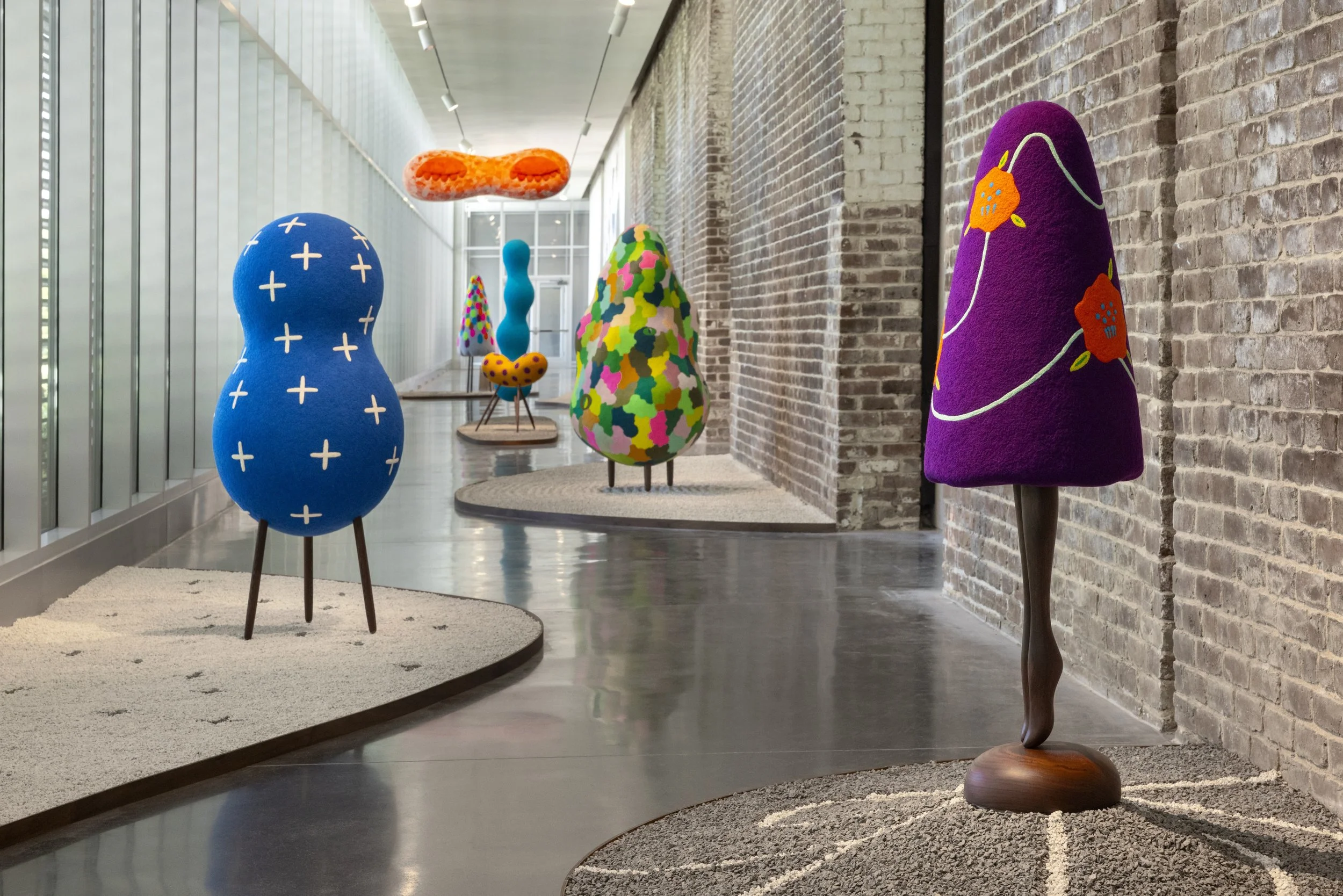
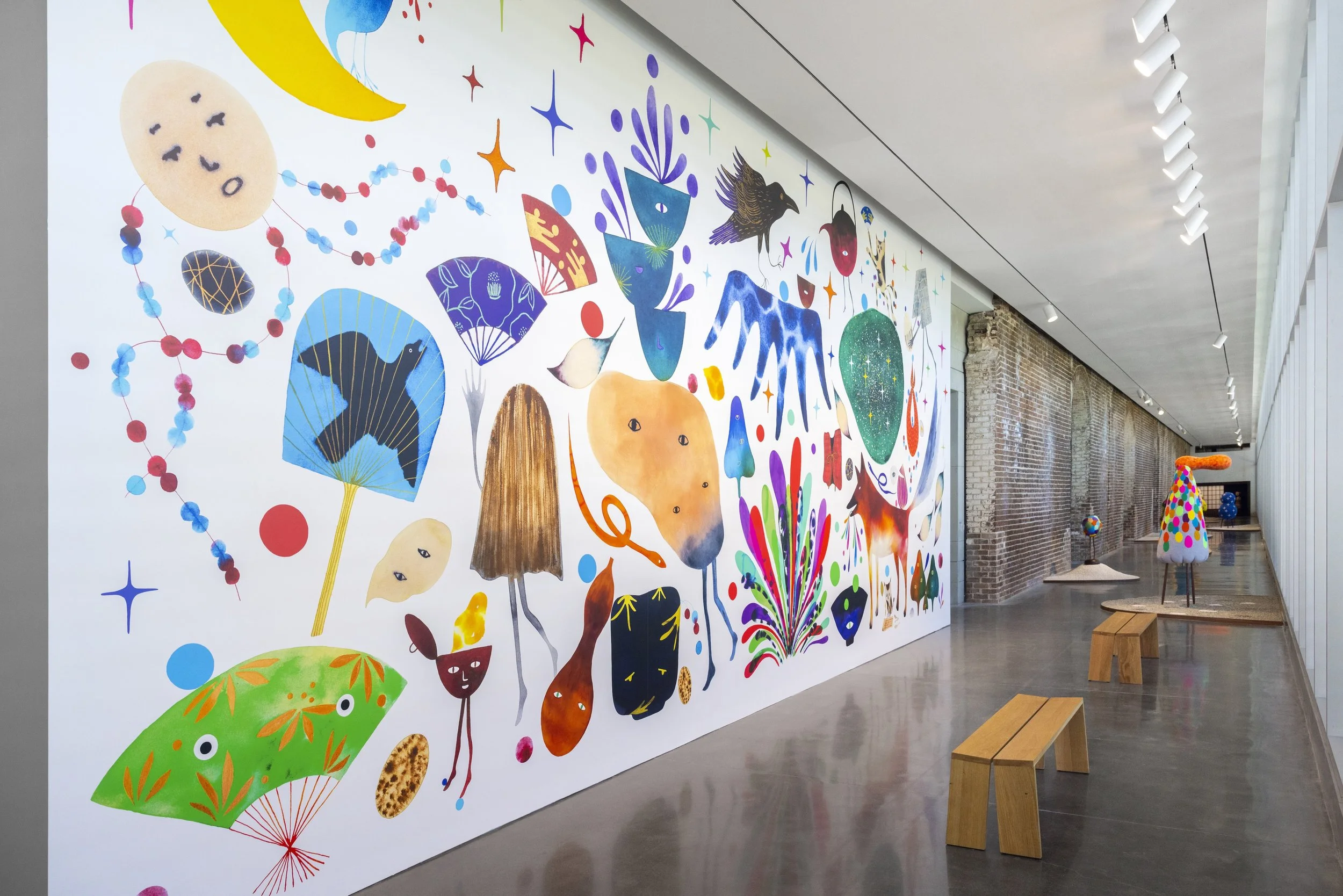
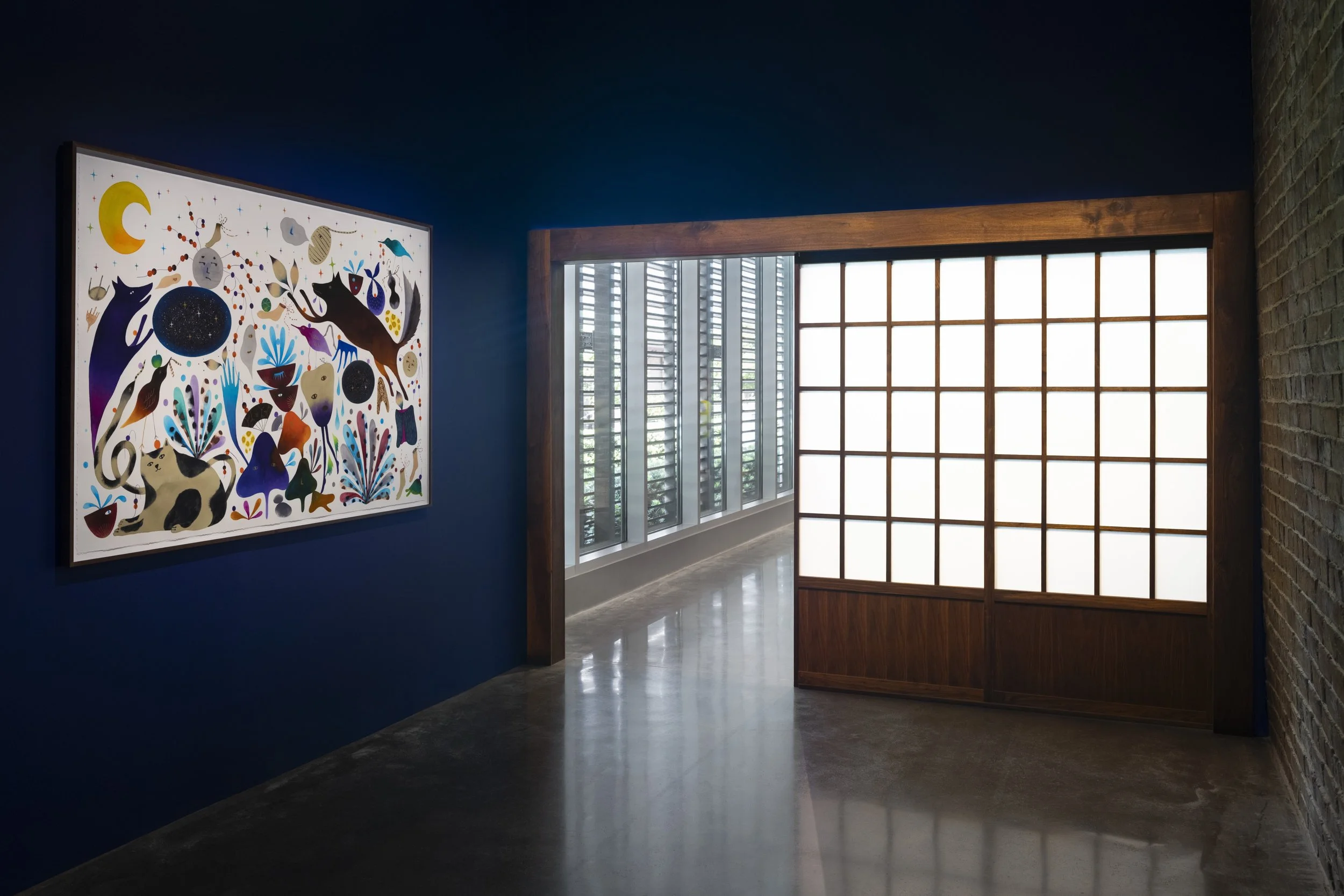
Photo Courtesy of Masako Miki and SCAD MOA
Why did you choose to work with felted wool and watercolor for this exhibition?
I’ve been exploring these mediums for a long time. I started about 10 years ago. I didn't plan to use felted wool. I took a workshop, not expecting it to become my main medium, but I felt a strong connection. It was strange and very accessible. I was making miniatures at the time, so something about its repetitive nature already fit my practice. Before watercolor, I painted in oil, but I had to leave it to deconstruct what I thought I knew. In Western art history, drawing prepared the way for oil painting. I hoped to elevate watercolor painting and the way it speaks.
You also incorporated the Yōkai. How does that folklore inspire this body of work, and why did you choose to reference it?
It’s a really long research commitment. As an artist, I’m very interested in how this cultural narrative was built, and how we came to believe in it. It doesn’t have to be true, but that’s how our contemporary life has been built. For me, these characters are great resources and entry points; these shapeshifters have been around for a long time. They come from an ancient time. I found it very interesting that these characters are outcasts.
They’ve been depicted as replaceable. They’re anonymous and have been discarded. At the same time, they have this resilience because they’re very free—meaning they’re not stuck in one entity. They’re sacred, but also secular. It’s all based on animistic belief in Japan, but I find these characters empowering. They have a sense of humor. I found that we live by those two dichotomies as well.
No one’s perfect, and we keep trying to embrace different parts of ourselves—whether you’re learning about new cultures, immigrating, or moving—there’s a kind of fluidity that is a big part of us and helps us evolve. It’s okay to change and shift. These became important and convincing characters for me because I wanted to give them a new narrative. They’re also loosely based on historical Japanese scroll paintings, depicted as a protest march.
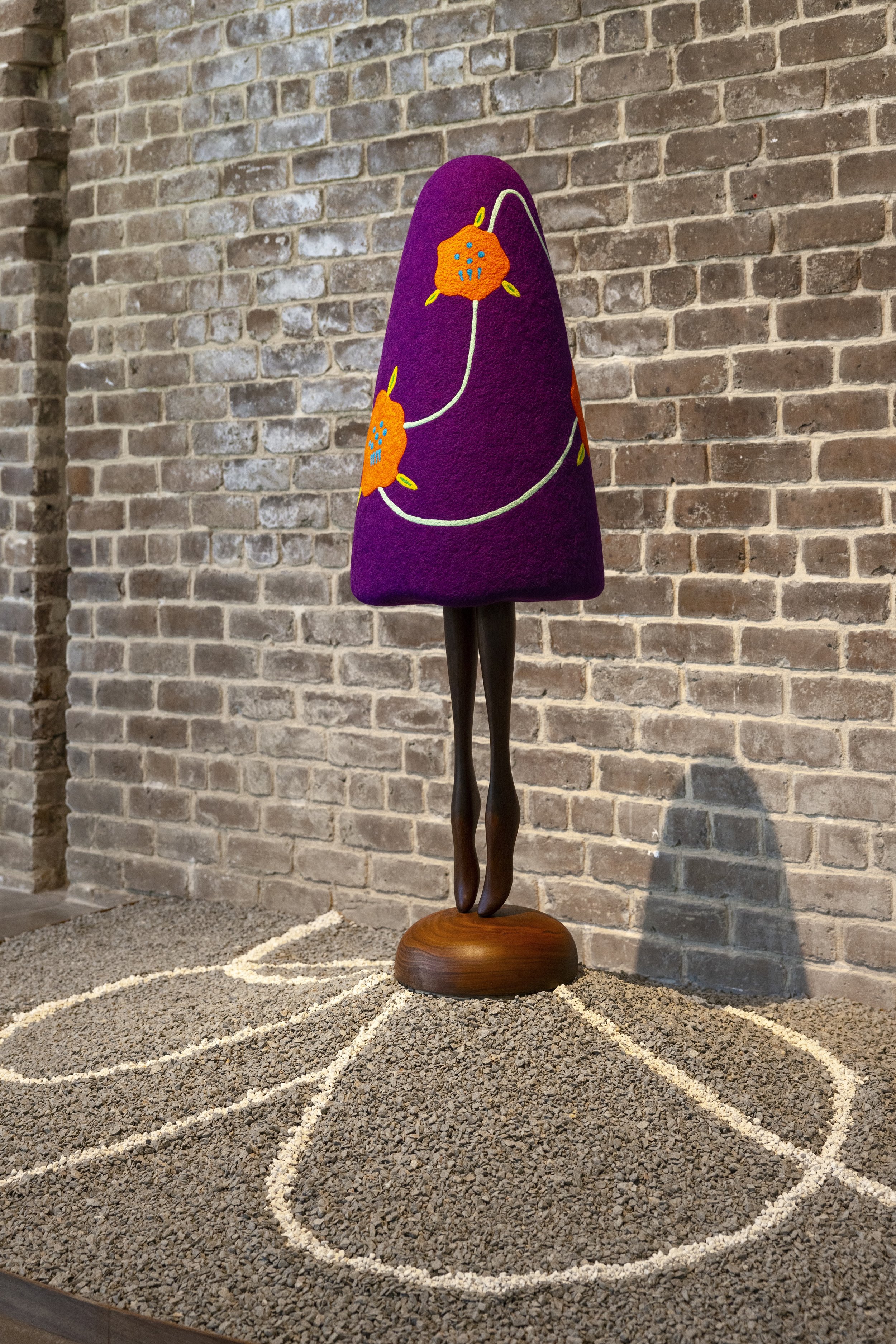
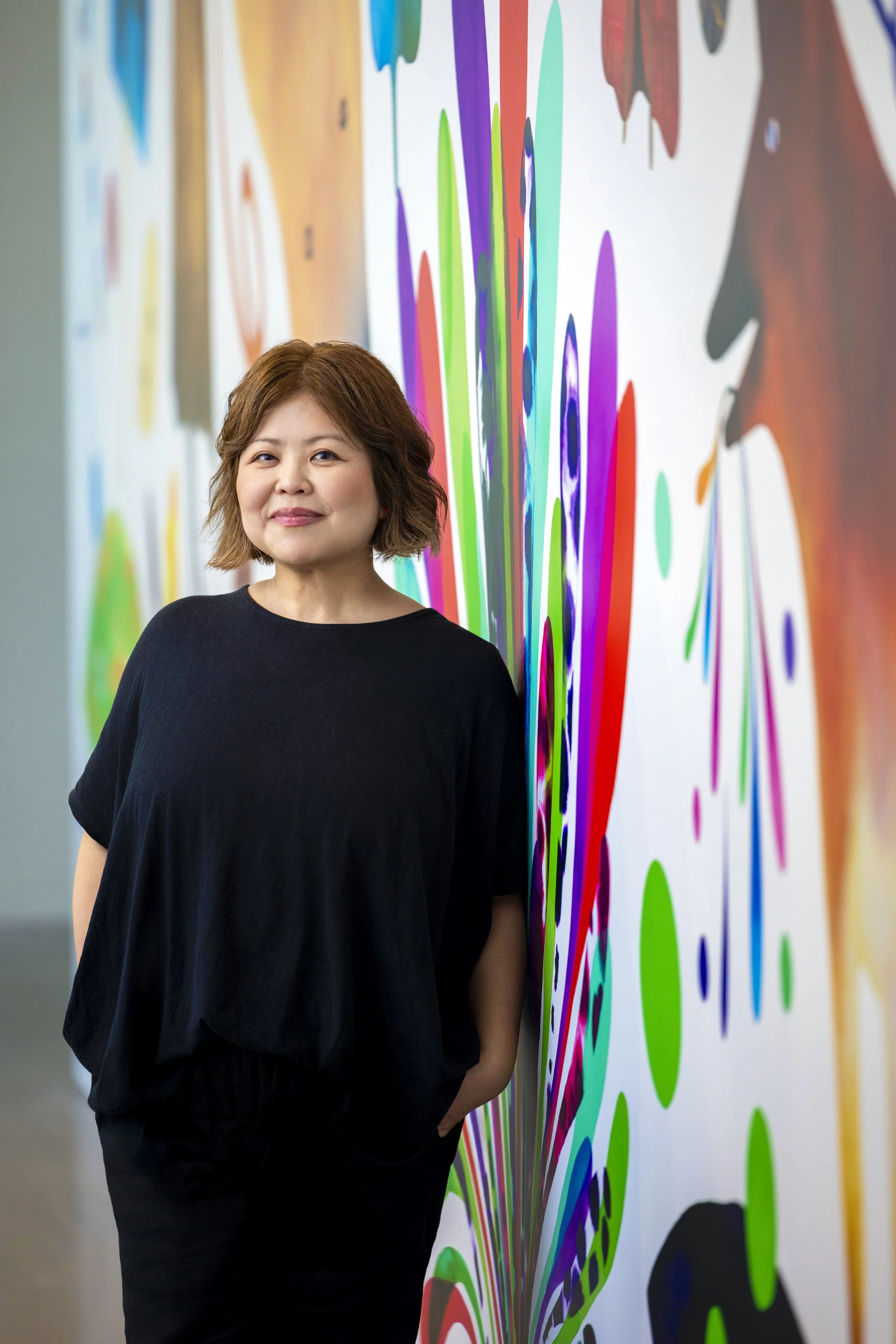
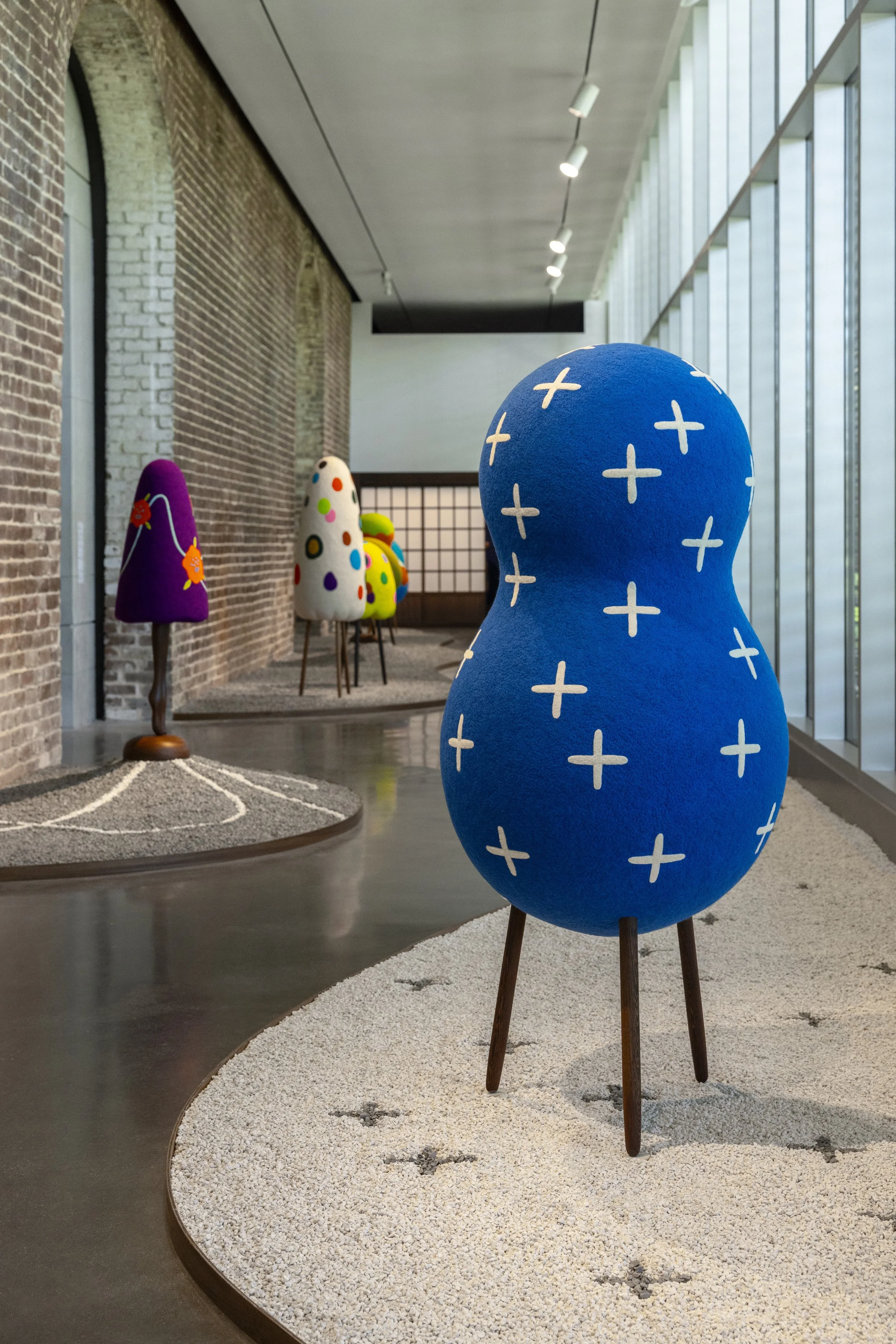
Photo Courtesy of Masako Miki and SCAD MOA
In the ancient folklore, are the Yōkai naturally colorful and bright, or did you interpret it that way?
I definitely took it further. There is a more grotesque, achromatic direction. Many people are familiar with Ukiyo-e prints. They became available in the 1700s and 1800s, and they brought a lot of bright colors to Japanese art. It’s completely different from Zen art: very minimal and achromatic. In scroll paintings, I used a lot of color, and I wanted to heighten the colors and textures. For me, colors and textures are very guttural. You don’t rationalize how it feels, so the colors give it a sonorous quality. That was my artistic freedom.
How long did it take you to make all of the felted wool sculptures? It’s a very intricate process that looks very time-consuming.
It takes a long time. It takes about three to four months from beginning to end, sometimes longer. It’s hard to tell because sometimes when I’m felting, I’ll work up to 20 hours a day, which isn’t healthy. But if I have normal sleeping hours, then I would average six hours a day.
Does a lot of your work build on Japanese folklore, or is this your first time incorporating it into your work?
They’re loosely based on existing characters in Japanese history, but I’m also inventing some, which I think is good because creating new characters means they’re evolving, which is resonating with our time. It’s also interesting to recognize their lineage and where they came from.
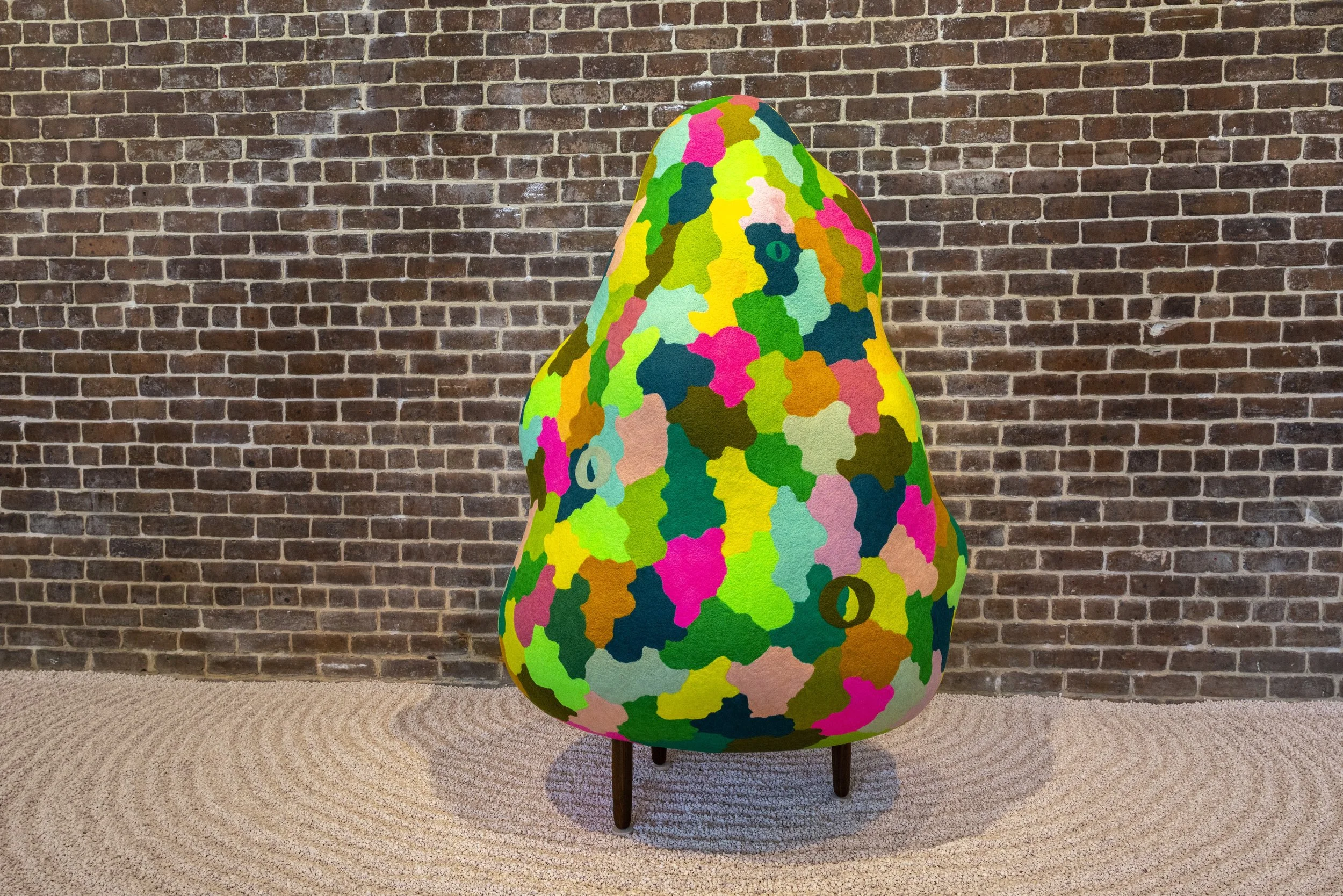
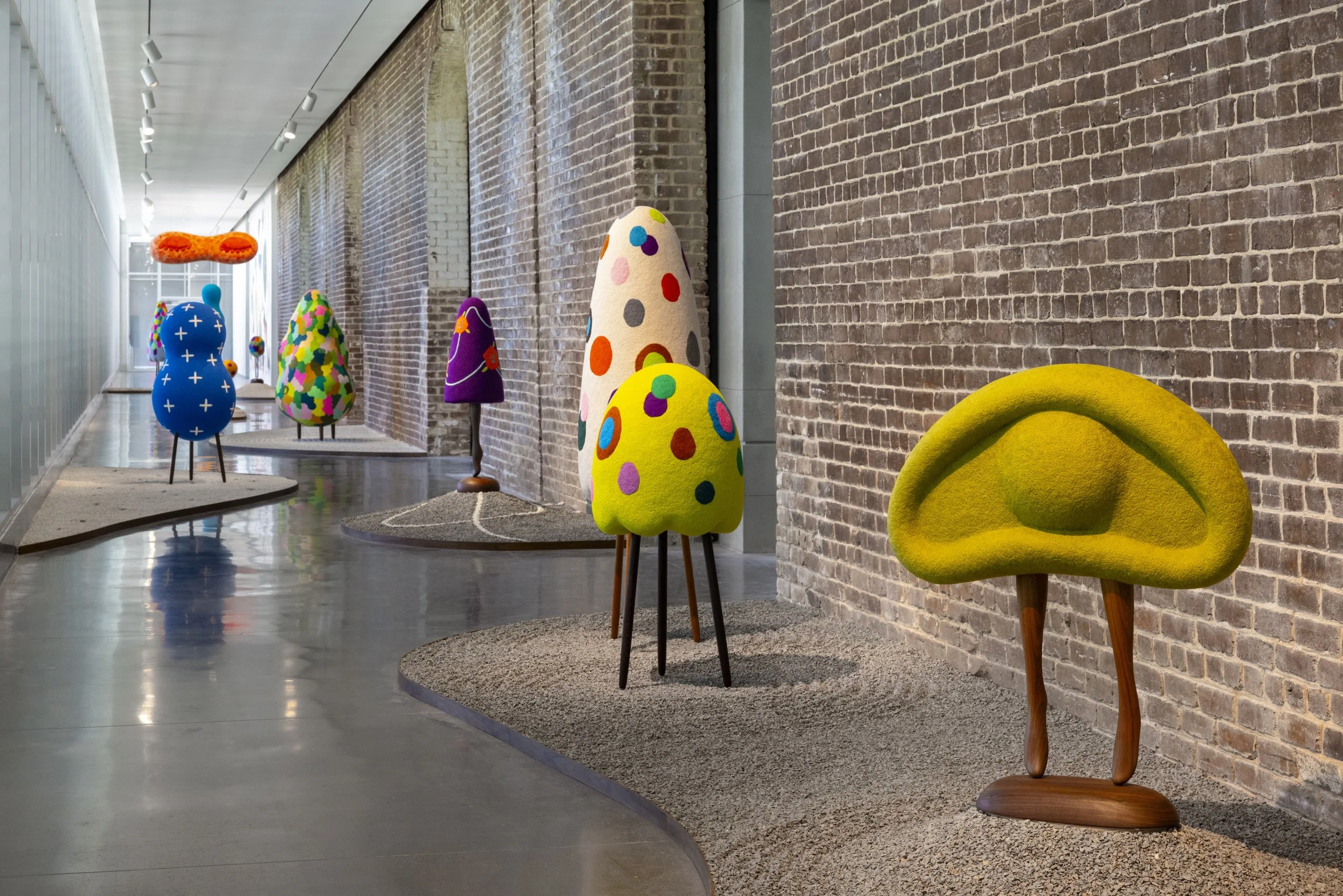
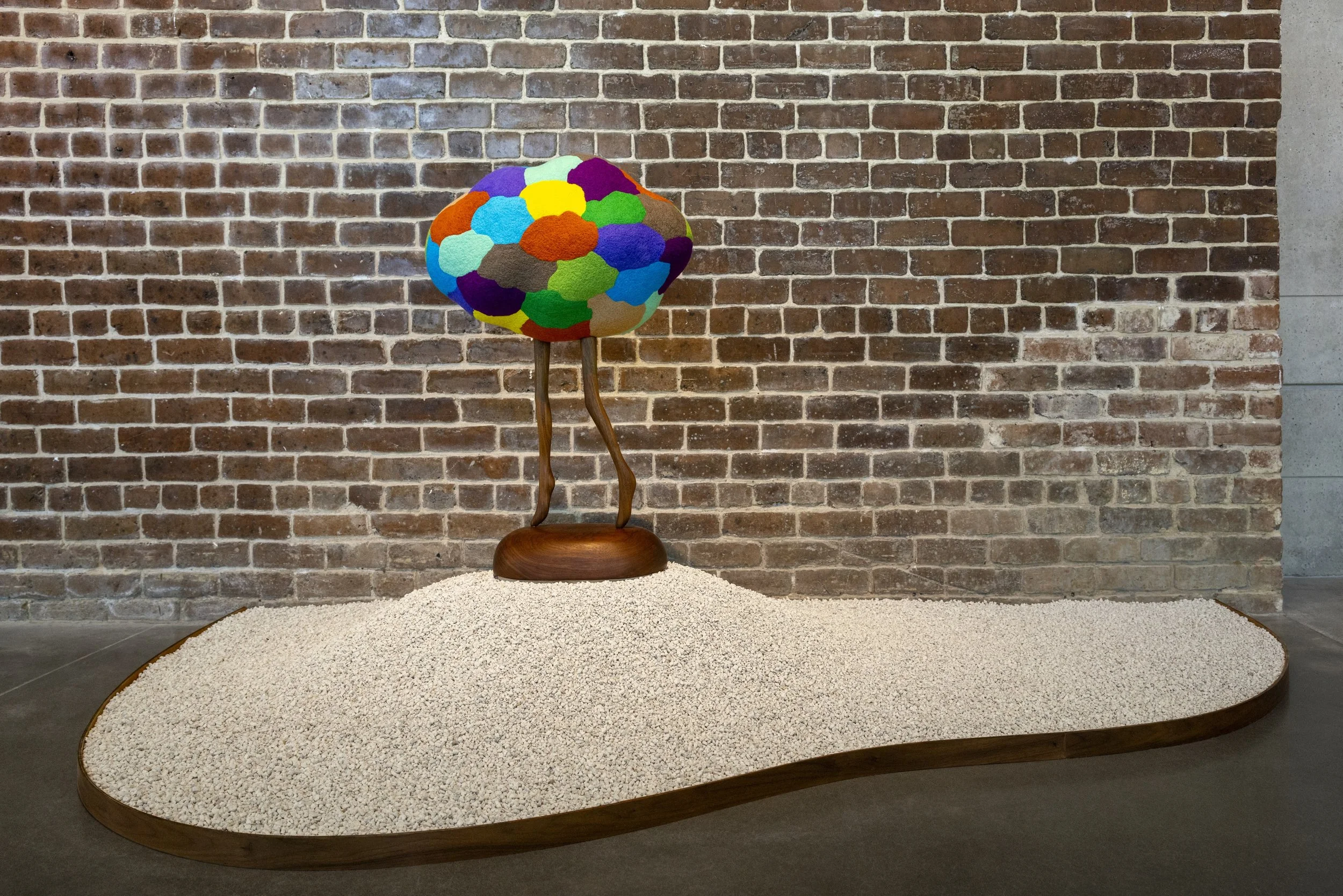
Photo Courtesy of Masako Miki and SCAD MOA
There’s also a sense of childlike wonder and whimsy throughout the body of work. How did you come up with that vision for the large-scale watercolor painting and the characters within it?
My bottom line is to deconstruct this old myth that we came to believe about the dark history of the human species. I’m obsessed with Japan's war history. A lot of atrocities were committed, and the rhetoric became more of a belief. I’m very interested in researching why that was considered okay. Slavery is one of the darkest histories in the United States. We should be inviting people to talk about it because it happened. No one wants to acknowledge it because it’s uncomfortable and dark, but it’s important we recognize that it happened, and it’s still continuing.
These characters are my way of bringing people into the social narrative and cultural identities that we live by. We need to be skeptical, but I feel like the first step is to bring people so that they stay in the installations, in the conversations, and in a certain context where I can really bring these kinds of ideas. I want to believe these characters have an essence of idiosyncrasies, just like you and me. They’re very pure. They have no gender, age, or class.
These characters may be empathetic, instigators, or listeners, and that’s where you connect with another person for their kindness and generosity. I hope these characters represent that idiosyncrasy. Even though we always fight with the good and bad in ourselves, I want to believe we can live by more empathetic qualities as humans, beyond status and class.