IAN SWEET’s ‘Shiverstruck’ Is a Return to What Music Was Supposed to Feel Like
“It was really important for me to find that inner spark again; the thing that really drew me to making music in the first place, and approach it almost with childlike wonder and excitement.”
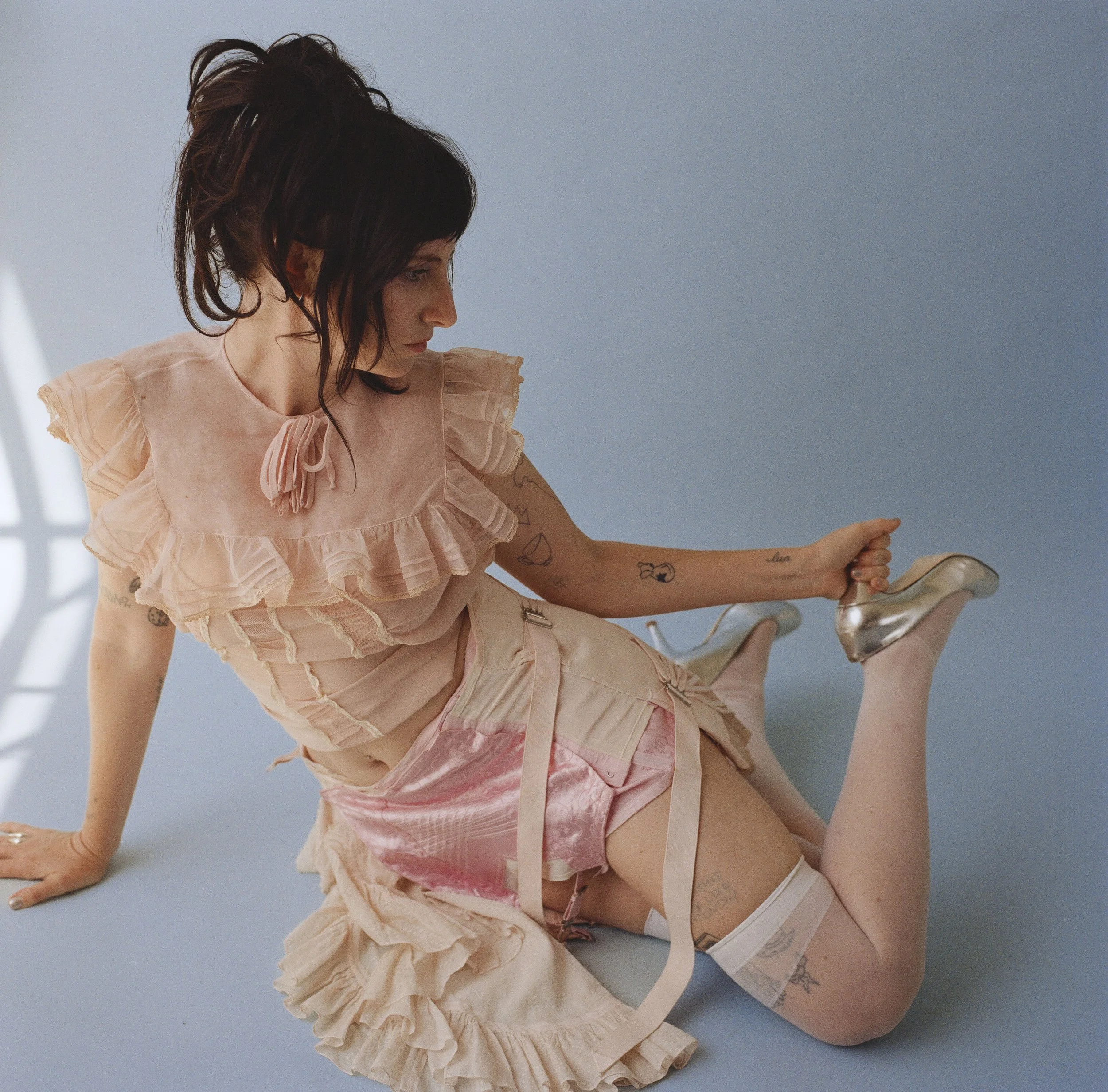
Photography by Wrenne Evans
“You talk like someone’s always listening, like pain makes you more interesting,” are the cutting lines straight off IAN SWEET’s latest offering, Shiverstruck—turning the tortured artist idea into something more self-aware. It is a pointed revealing moment for Jilian Medford, who has spent the better part of a decade making music that turns inward. But on her fifth album, introspection comes with a little more distance and perhaps a little more humor.
In just under an hour, the 10-track record is shaped by movement: between New York and Los Angeles, intimacy and independence, control and surrender, the person Sweet has been and the person she is becoming. It follows 2023’s SUCKER and 2021’s Show Me How You Disappear, but finds her less concerned with proving how much she has changed than with reconnecting with the instinctive joy that first drew her to music. The result is an album that is messy, romantic, self-critical and defiant in equal measure—one that allows its contradictions to remain intact.
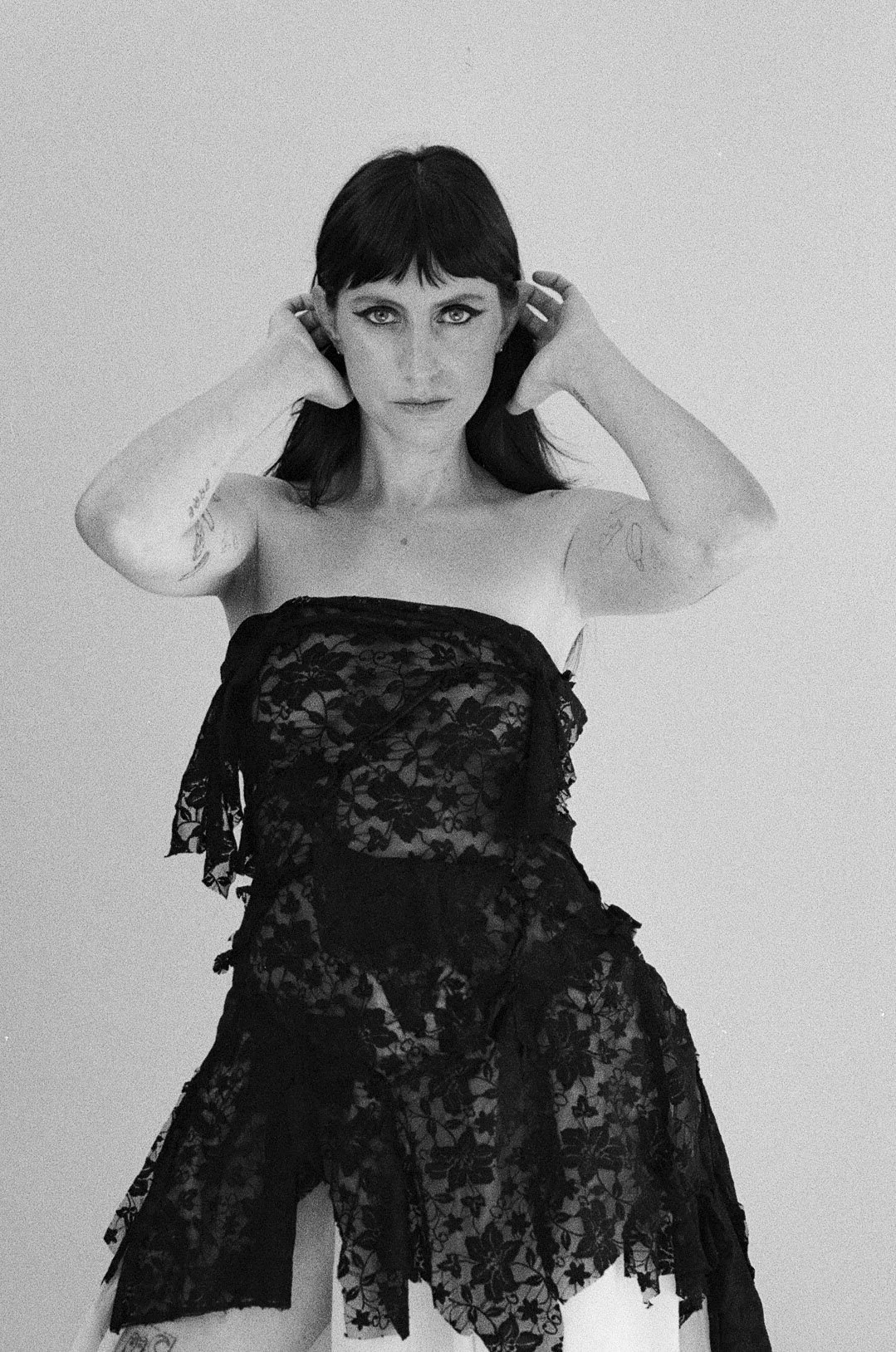
Soon after the release of Shiverstruck, 1202 MAGAZINE caught up with IAN SWEET to talk about returning to her creative instincts, the evolving relationship between Jilian Medford and her musical moniker, the realities of being an independent artist, AI’s place in music, the cities that shaped the record, and what happens when these songs finally leave the studio and meet an audience.
The album feels less like a reinvention and more like a homecoming. At what point did you realize you weren’t just writing about change anymore—you were actually living it?
It was really important for me to find that inner spark again; the thing that really drew me to making music in the first place, and approach it almost with childlike wonder and excitement. After doing it for so many years, sometimes you can lose your way a little bit or feel like a lot of outside things are influencing your music, which is a beautiful thing. I really felt strongly that I wanted this record to feel like a return to what draws me to this art form in the first place. So, I was really trying to find that simplicity; not overthinking things and getting to the core of what makes me love making music so much.
One thing I kept coming back to while reading about the album was your decision to create some distance between you as Jilian Medford and IAN SWEET after years of those identities almost merging together. What has that separation given you, both as an artist and as a person?
It’s really beautiful to have a vessel to process your feelings through, which is what Ian Sweet has been for me for so many years. It’s like a form of therapy, or a way to store feelings I might not be able to process yet, so we can put them over there and get back to them later. I think it was important for me to really tap into what I personally need and not always find a way to have Ian Sweet be a veil for my feelings.
I wanted to be clearer and more honest in all facets of my life. It’s hard. You want to separate them. But also, at the end of the day, it’s all the same. I think it’s important to embrace the messy side and embrace the chaotic side, but then also embrace the side that feels very soft, more loving and caring. I find that with both Ian Sweet and Jilian. All of those can exist.
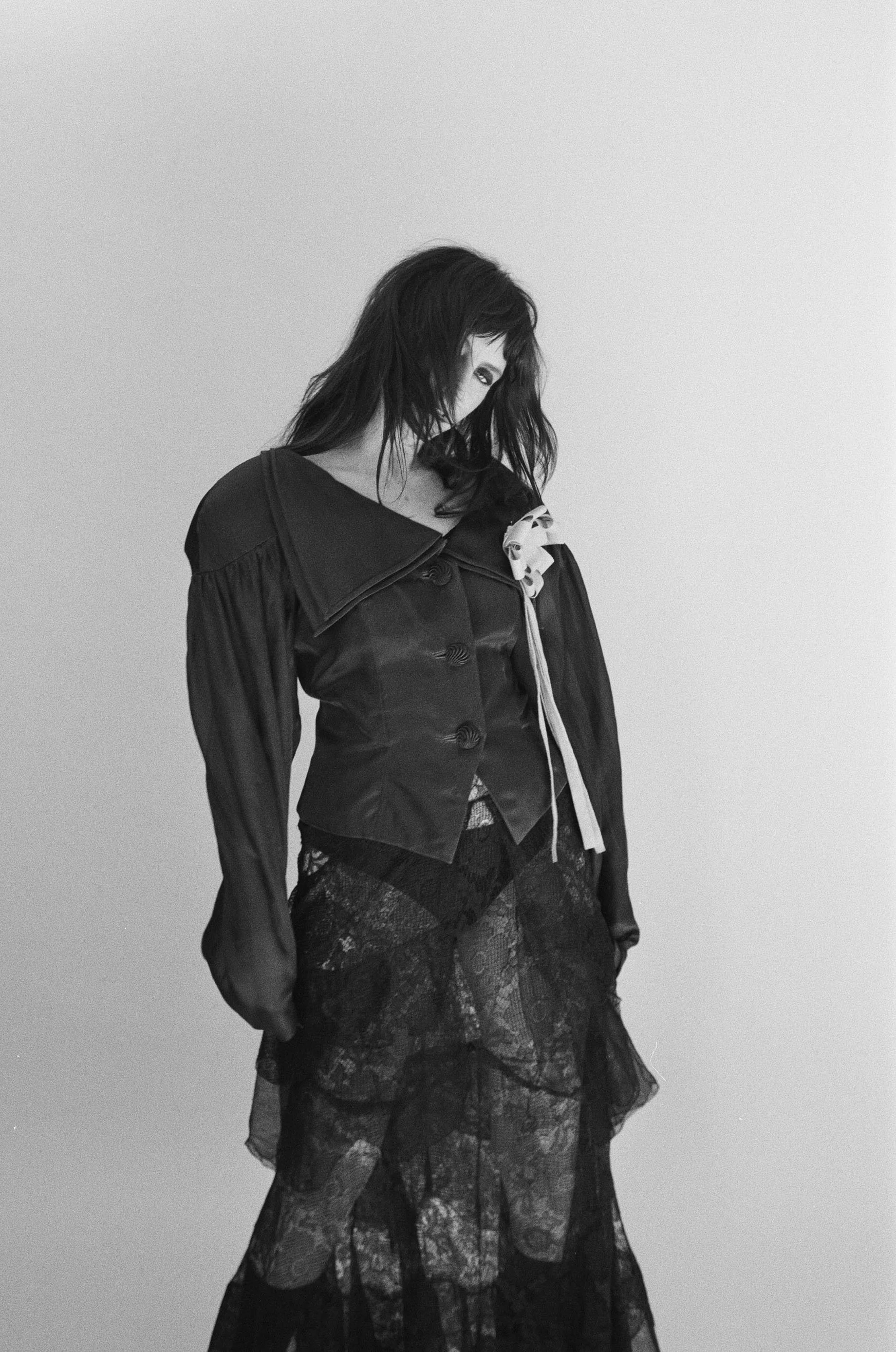
Photography by Wrenne Evans
You also spent part of this album cycle working with children, introducing them to music before self-consciousness has a chance to set in. Did witnessing that kind of honesty reshape the way you approached your own songwriting?
Definitely. It was also very subconscious at the time. But now, the more that I think about it, it did, and I think there’s a way with children where they’re very creative in a way that’s uninhibited. They don’t second-guess anything. It’s just very intuitive, like experiencing music and playing music and also just being free and not having any care in the world and just constantly exploring.
It was really special to be writing this album while experiencing all of that in front of me and seeing how children interact with music. It really inspired me to get to a place where I didn’t feel so self-conscious or constantly second-guessing myself about the music, and to just follow my intuition and my gut.
You’ve described the album as an act of surrender, but you’ve also said these were the hardest lyrics you’ve ever worked on. Those ideas almost seem at odds. Which version of yourself usually wins—the one that wants complete control, or the one that knows when it’s time to let go?
It’s really hard to know when to let go and let your music find its own voice and way to people. I reworked the lyrics and made sure they were in a very good place, but also not perfect. I think the act of surrender was more about not putting too much pressure on myself. I did really go intricately on the lyrics, but in a way that felt really good to me.
It didn’t feel like, this is do-or-die, and I think that has been different for me on this record. I try to lift more of the pressure off myself and see things in the distance, see how they take shape, and accept them as is. I wanted to stop forcing it. It was really about being more intuitive, knowing when things were working, and trusting that.
Was there a particular lyric or song on Shiverstruck that you rewrote over and over because you knew it wasn’t telling the whole truth yet?
Probably the lyrics that I went over and over again the most were on that song ‘Jilian,’ because it’s one of the most vulnerable songs I’ve written. I was like, ‘If I’m going to this place, if I am going to dive in here and write a song unlike any song I’ve ever written before, I need to make sure I say exactly what I want to say. I really reworked those lyrics and changed things even in the very moment of recording the vocals, so I wanted to really get those right.
This year also marks a decade of IAN SWEET. When you think back to Shapeshifter, what’s something that younger version of yourself believed about life or music that you've since had to unlearn?
I actually think it’s the opposite, where not that I unlearned, but I think I returned to that version of myself who started making music in the first place, that didn’t feel so tethered to the success of it or how people would perceive it. Over the years, I have been much harder on myself, and I wanted to have that confidence—that feeling again where you don’t overthink, or you’re not fully thinking about how you’re going to impress people with the project.
I think that’s why I feel so close to and excited about this record because it feels like something I would have made when I was younger. I mean, I couldn’t have made this without all the things that came in between. This record gave me permission to return to being very honest and vulnerable.
Looking back across five albums, has there ever been a song you wrote thinking it was about one thing, only to realize months, or even years later that it was really about something else?
That’s so interesting. I don’t know off the top of my head, but I will say it’s interesting to write songs and then have them take on new meanings over the years. That’s what’s so beautiful about a song: you just don't know. You don’t even know the power or the safety it’s going to provide for you when you might be going through something down the line.
On this record, the song ‘Wild Heart’ could feel like a song about my relationship with the music industry and how my heart and soul for this project and making art will never be stopped. I will always continue to do this. It does sit in different moments. No matter what I'm going through in the moment, it could have different meanings. It could also mean: you can’t stop me from loving you, loving someone, or loving making music.
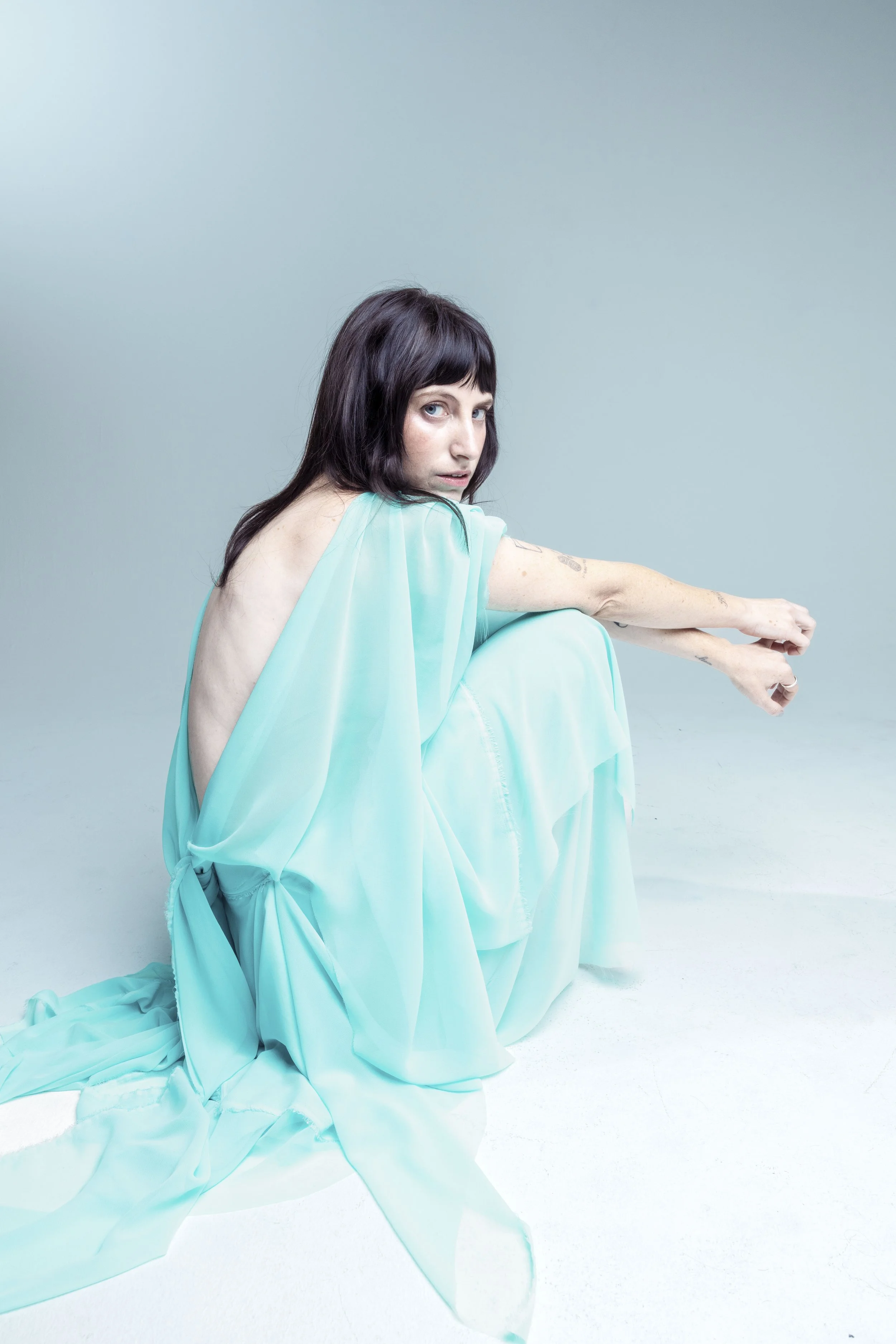
Photography by Wrenne Evans
You’ve experienced AI-generated music appearing under your own artist profile and even had your work used without permission. Has making music ever started to feel secondary to protecting it? And more broadly, what role do you think AI should/shouldn't have in the future of music?
I definitely don’t think AI belongs in any creative space. Maybe some AI tools are useful in the medical field or could help people, but I think we’ve been making songs for hundreds of years without this tool, so there’s no need to have it in our lives now. I think it’s driving a lot of people, more than ever, toward making physical things that you can truly hear are made with human breath and everything. That’s a really special time in the music industry.
We’re also just getting a much more raw version because people are really intentionally setting out to not, at least in my circle, I want to be able to hear your fingers on the strings or like little mistakes or being in the room. It’s really important to have all that kind of noise present to really prove you’re there and present and making the work, which is also so strange. You have to kind of prove to everyone like, I made this. I swear it wasn't a robot.
Your career has stretched across the blog era, streaming, TikTok, and now AI. Through all of those shifts, what do you hope never changes about the relationship between artists and listeners?
The most important thing is connecting with your listeners. Because at the end of the day, you can put things out into a void or put it on the Internet, but if people aren’t connecting with it, it’s an endless cycle. It’s been interesting to try to keep up with all these things. I’m not super big on TikTok, but I see the benefit and how people can really connect with their fans. It’s just a beautiful relationship for people to connect with your music.
It’s not something I take for granted, but I don't even fully process it. It’s kind of crazy to think that someone could come up to you and say, ‘This song particularly got me through this phase in my life.’ It was something that someone was really leaning on for comfort, and to be able to do that for somebody is incredible because, in the end, I don’t write my songs for anybody else.
Being very honest with yourself is what translates. The strongest connection that you can have is just being true to who you are and not trying to be anybody else because I think that listeners pick up on that and really can tell if you’re not being honest.
You’ve spoken candidly about taking another job while continuing to make music. From the outside, people often assume that touring internationally and releasing critically acclaimed records automatically means financial security. Do you think the industry has created a misleading picture of what it actually means to be an independent artist today?
It’s extremely difficult. Every day and every tour is like a balancing act between wanting to create and thinking about the music. There’s so much involved and so many moving parts with touring, especially since I’m a solo artist. I’m the band really, so I have to hire people to play with me. That’s a whole operation as well; you’re paying people and making sure that they can make a living before you can.
It can be difficult to make sure that everybody else gets paid before you do, even though it’s your own music. That's just what it means to be like a working artist now. It’s all extremely worth it to me just to play, play the shows and work as hard as I can with my other jobs to be able to provide for myself, because it's just like there’s nothing else I want to be doing. It weighs on you; it’s hard to be financially stable, for sure.
Sometimes when you have that in the forefront of your mind, thinking how to pay your rent and survive, it can be hard to say, ‘I’m going to be super creative today and have energy.’ It’s a balancing act of not pushing yourself. If you’re having a tough time as well, you have to check in and ask, ‘Is this bringing me joy?’ Because if it’s not, you have to reevaluate.
Shiverstruck was largely written in New York, but you’ve since found your way back to Los Angeles. Do those two cities challenge different parts of you creatively, or did returning home allow you to reconnect with a version of yourself you’d been missing?
I was born in Los Angeles, and I grew up here. Living in both places really taught me so much, and I feel so fortunate for my New York experience. It really challenged me in ways I wasn’t expecting and pushed me out of my comfort zone. Every day, there is something new. You never know what you’re going to get. There’s something so exciting about that.
It always feels like you’re constantly moving and going, and that’s both something I loved and something I was really struggling with because the pace of life in California is a lot different. I grew up here, so it was a bit of a challenge for me, but New York taught me a lot of resilience and how to find my place and stand my ground. I missed small comforts while I was there; even nature, or being in my car and listening to the radio, was something I missed.
I do write about that a lot on the record, stretching out my hand and wishing I had these things here with me in New York to feel a little more grounded. I definitely think moving back here was the right move for me. It also feels like a culminating factor: the record, the record process, making it all wrap up. Then, after I moved back to LA, it felt like a chapter was being closed.
Photography by Wrenne Evans
You’ll soon be taking these songs on the road, and live performance has a way of changing a song’s meaning. Is there a track on the album you're especially curious to see take on a life of its own once it's in front of an audience?
I went on tour in July and started playing some of the new songs, which was really special. One of the songs I wasn’t expecting to connect with as hard as I did live was ‘La La Love.’ It’s such a cathartic song to play live. I felt like the audience felt that energy too. We’ll see what continues to take shape on this tour, but I'm excited. I’m going to add more of the softer songs in.
I’ll probably play the opening track off the record ‘987’ to have a different feel in the live set. I’m interested to see how that’s going to take shape live because it's such an intimate, very stripped song. I love those moments in a set, though, where you go from bigger, all-encompassing, every-instrument-hitting songs to the juxtaposition of a more stripped-back song. Those will be fun in the set list.
After spending ten years as IAN SWEET, what’s one misconception about your music—or about you—that you still find yourself wanting to correct?
When you write very emotional, sad songs, people put you in a box of being a sad person or constantly bogged down. But my personality is not like that at all. I am a very joyous, happy-to-be-alive person. I mean, it’s taken a lot of work to get to that place over the years, but I think a misconception is that just because you’re writing sad, vulnerable songs does not make you such a heavy person all the time. There are so many facets, and I think sometimes people are starting to, with this record and this press cycle, it’s nice to be able to show my personality more and be all of those.
Finally, if someone presses play on one of your records for the very first time and Shiverstruck is their introduction to your world, what do you hope stays with them long after the final song ends?
I hope that after the song ends, they want to listen to it all again. I really wanted this record to feel timeless. I hope it has a timelessness that goes with it, and that you can find your way and your place in the music no matter what—because it’s so timeless. I think that would be the goal.