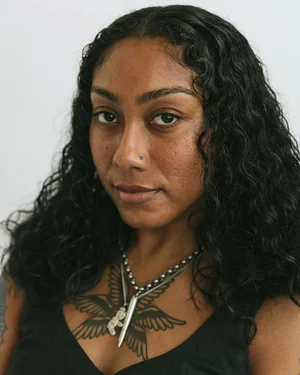
LETTONNE Draws Women’s Protection and Autonomy in ‘Les Archangels’
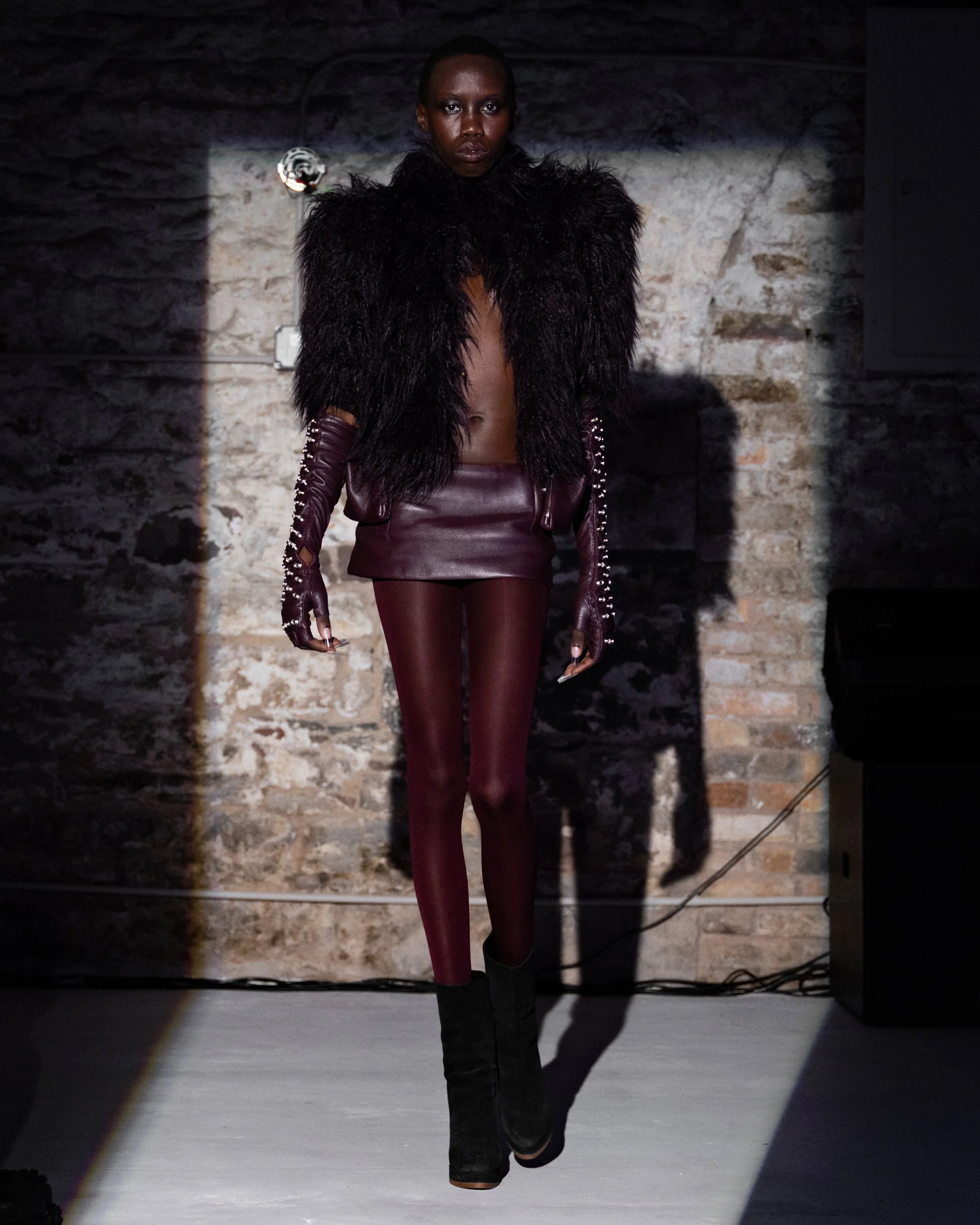
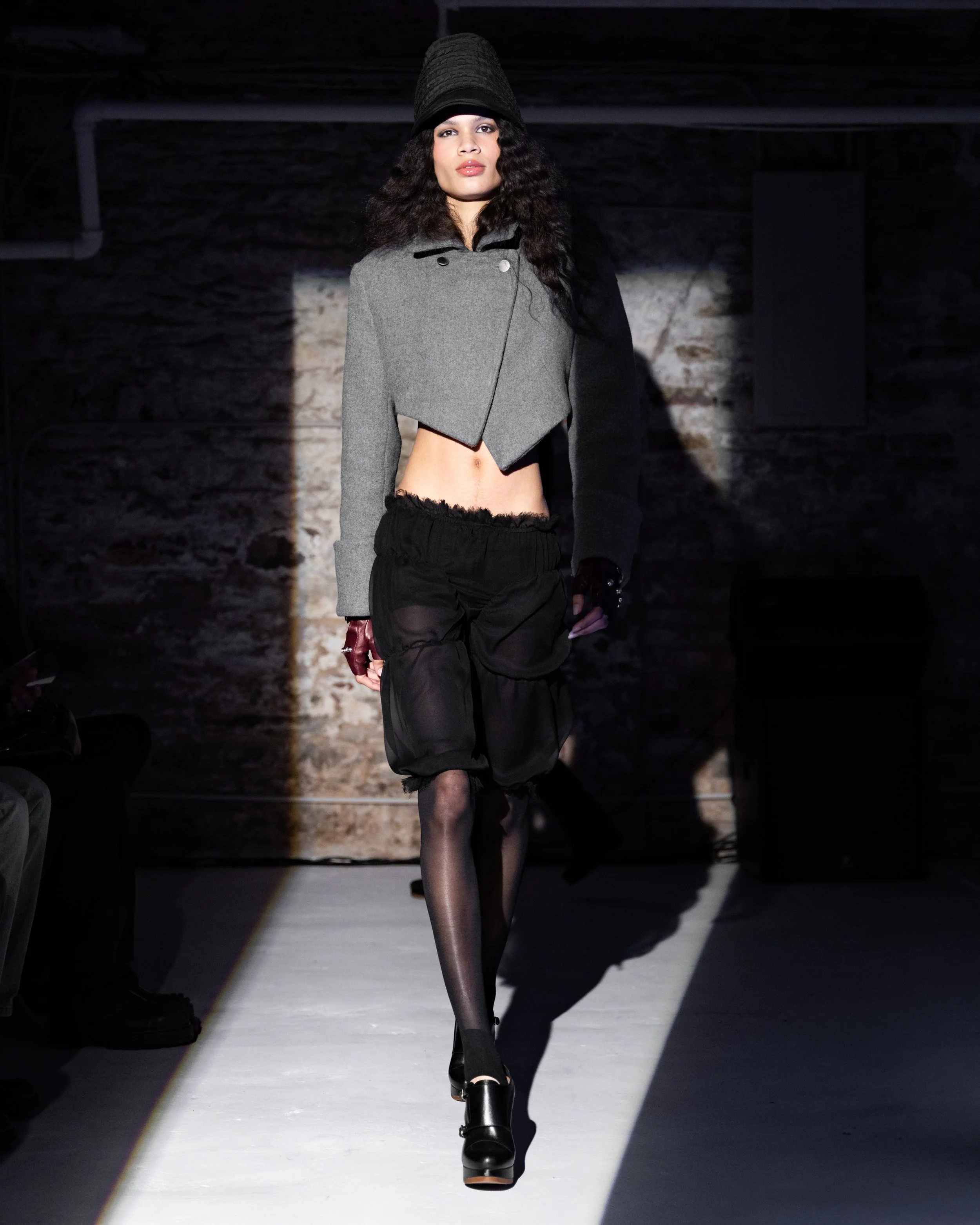
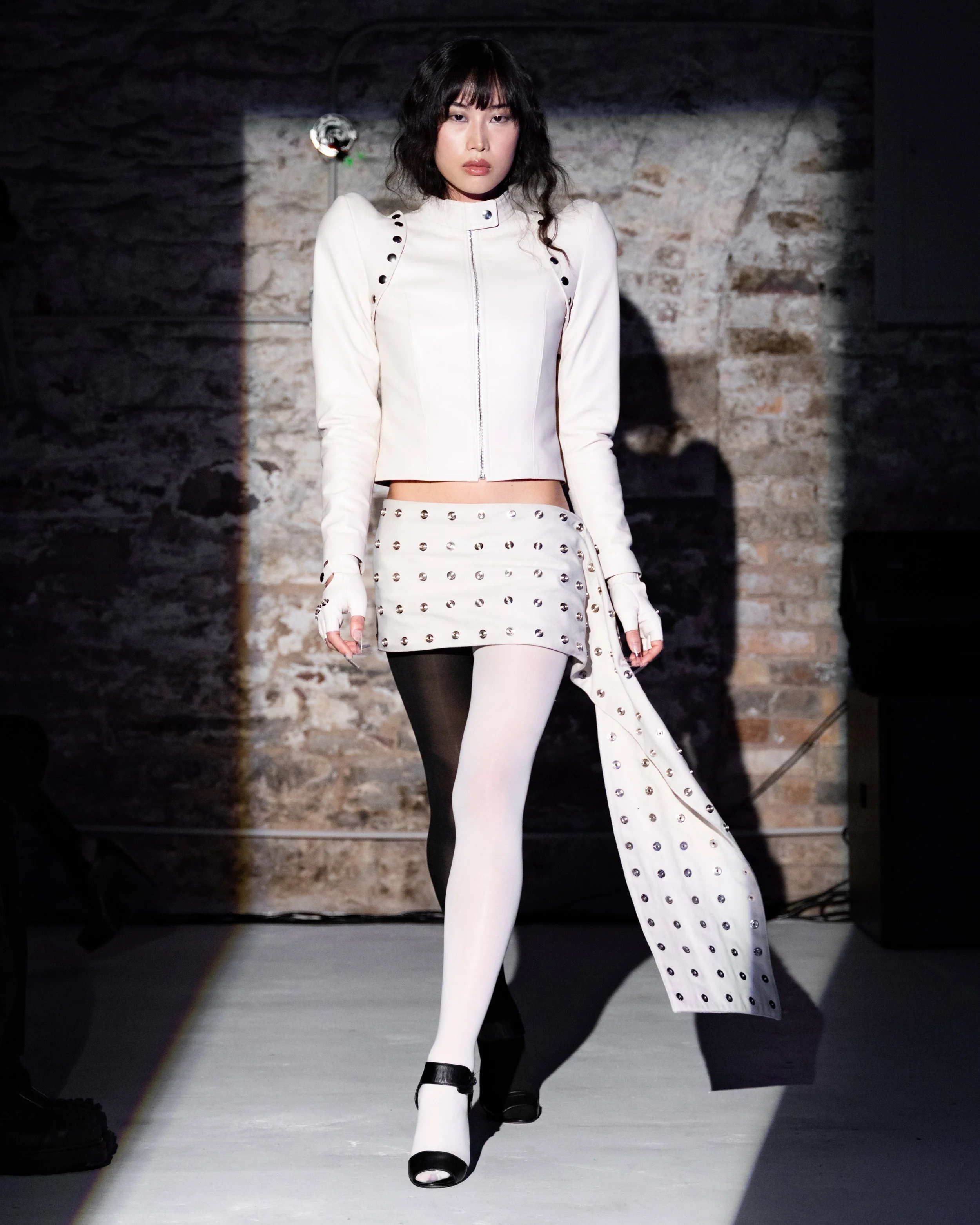
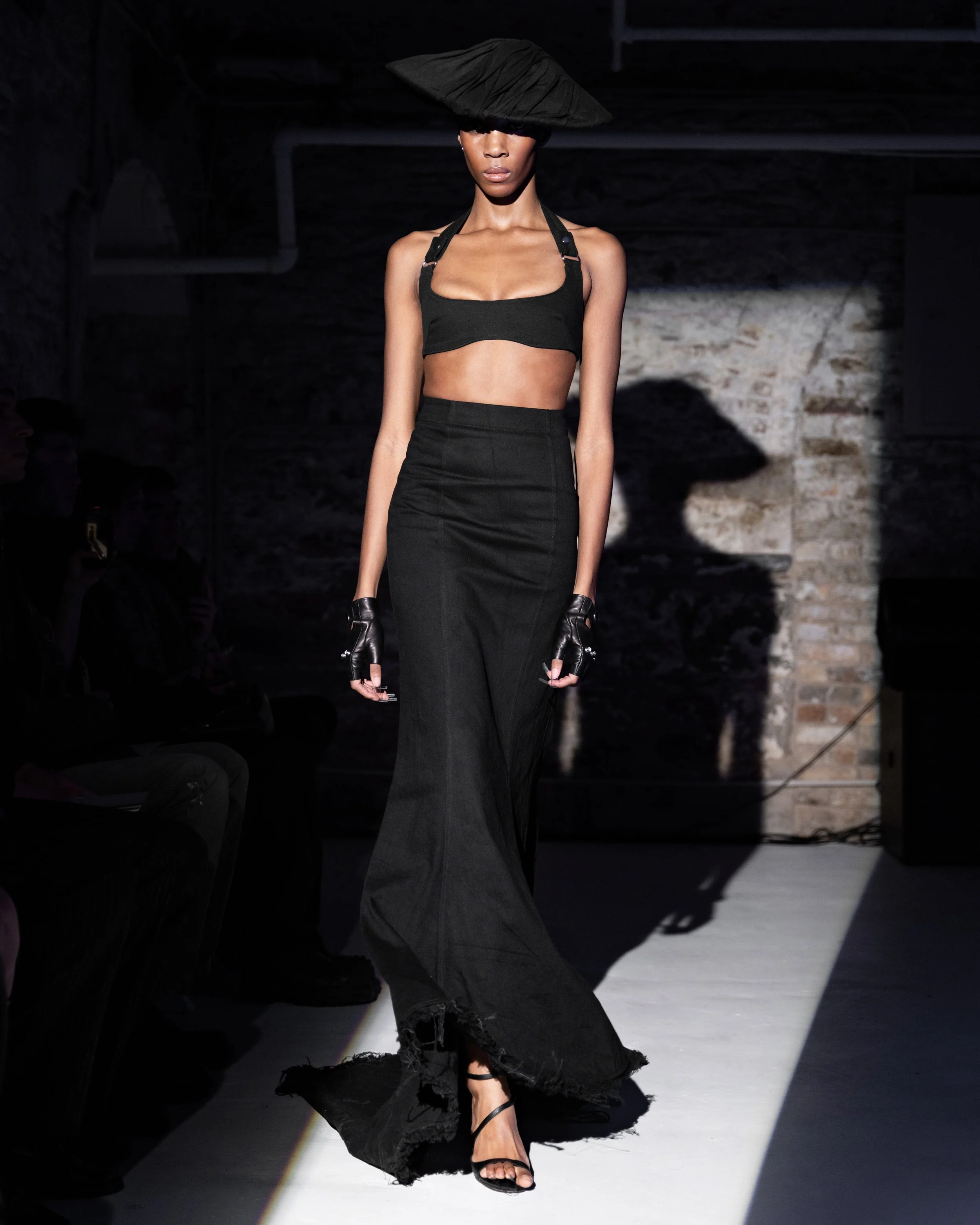
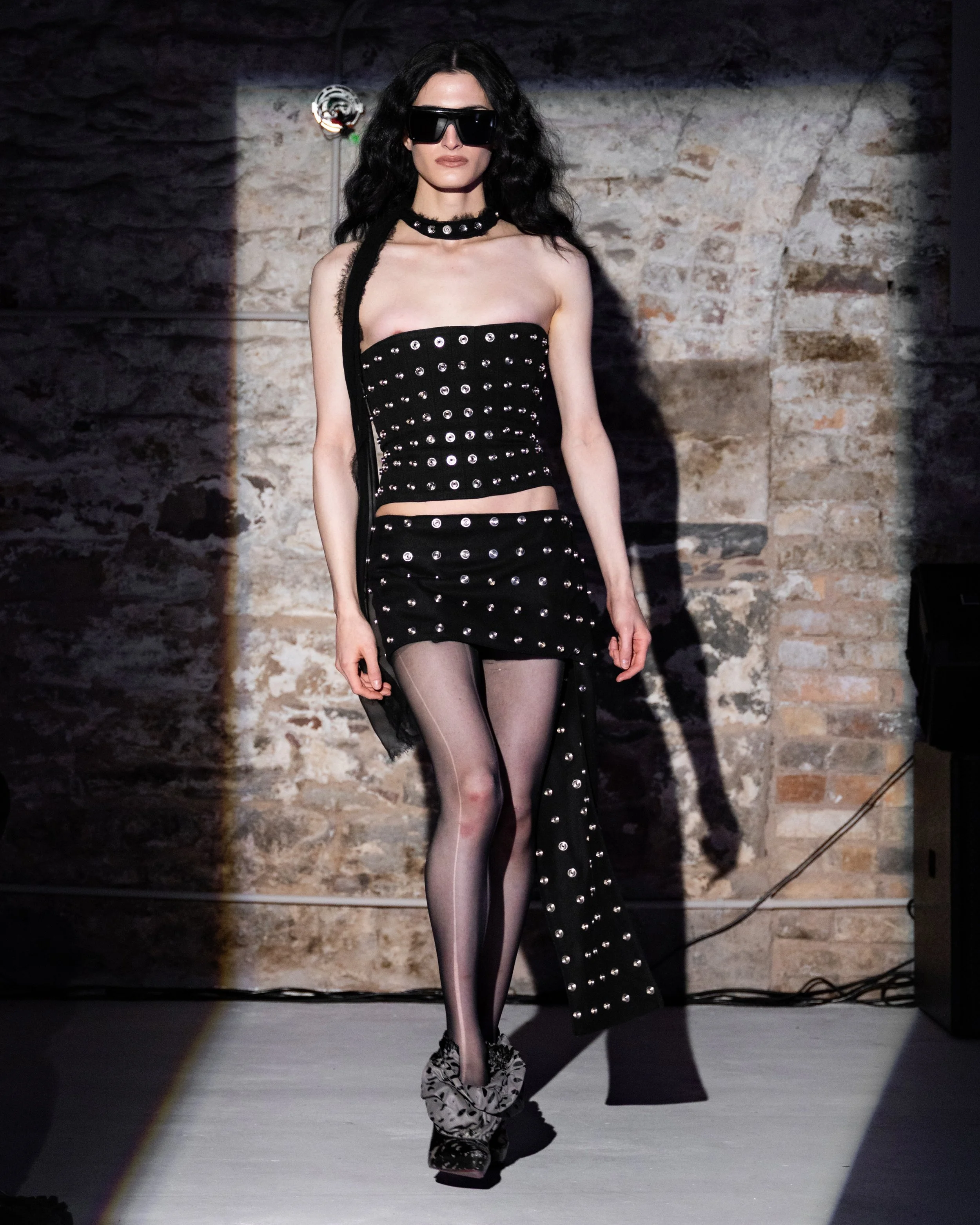
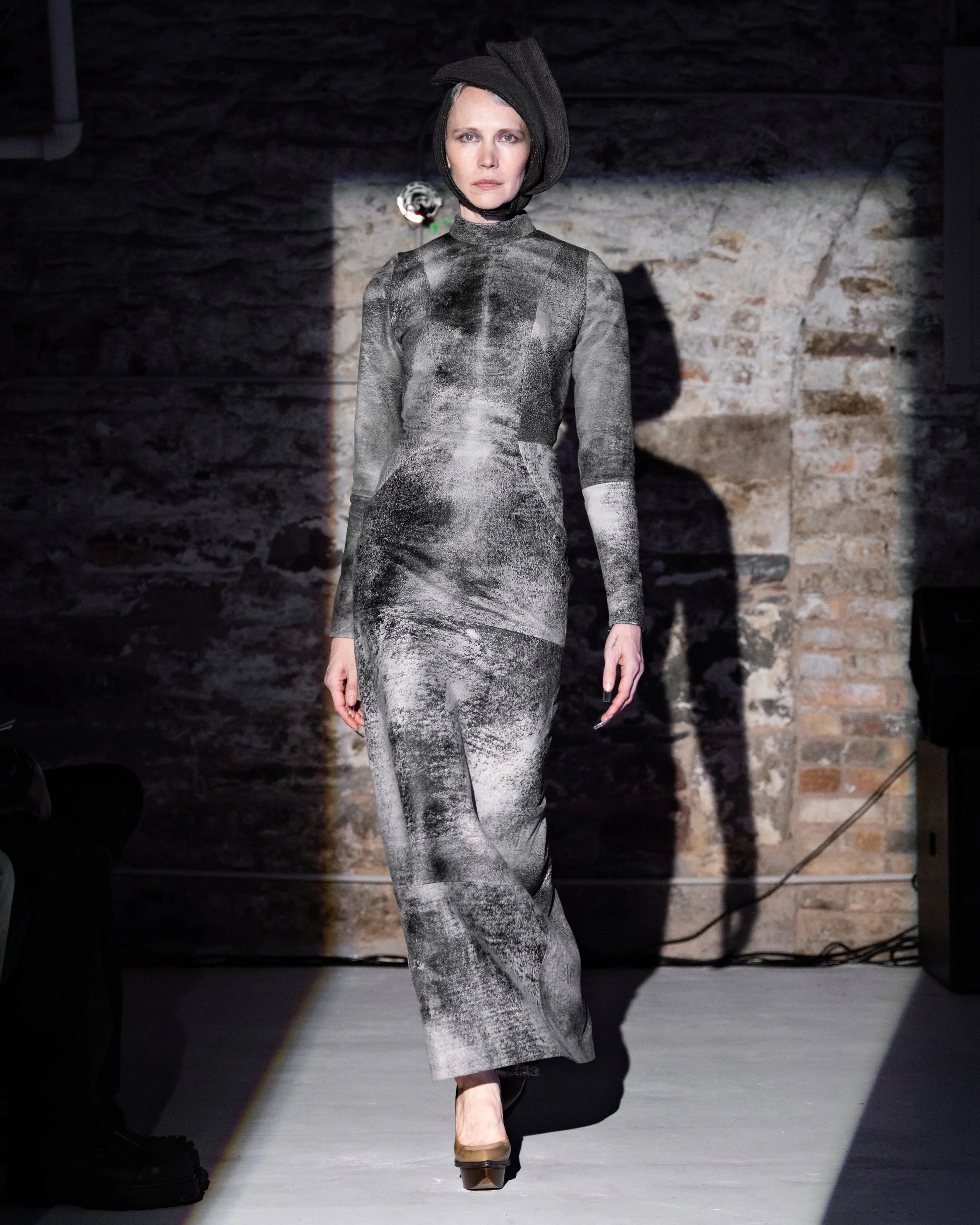
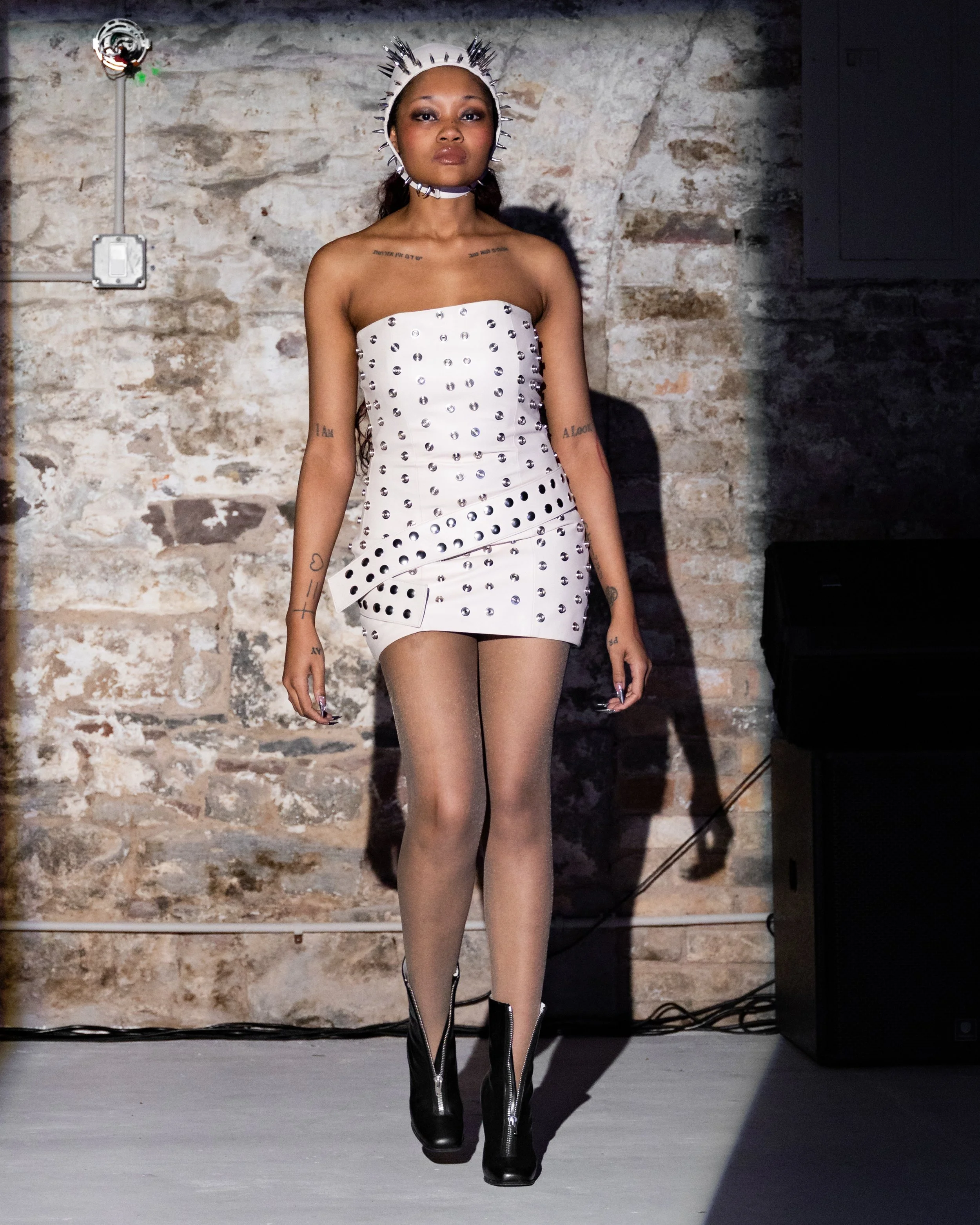
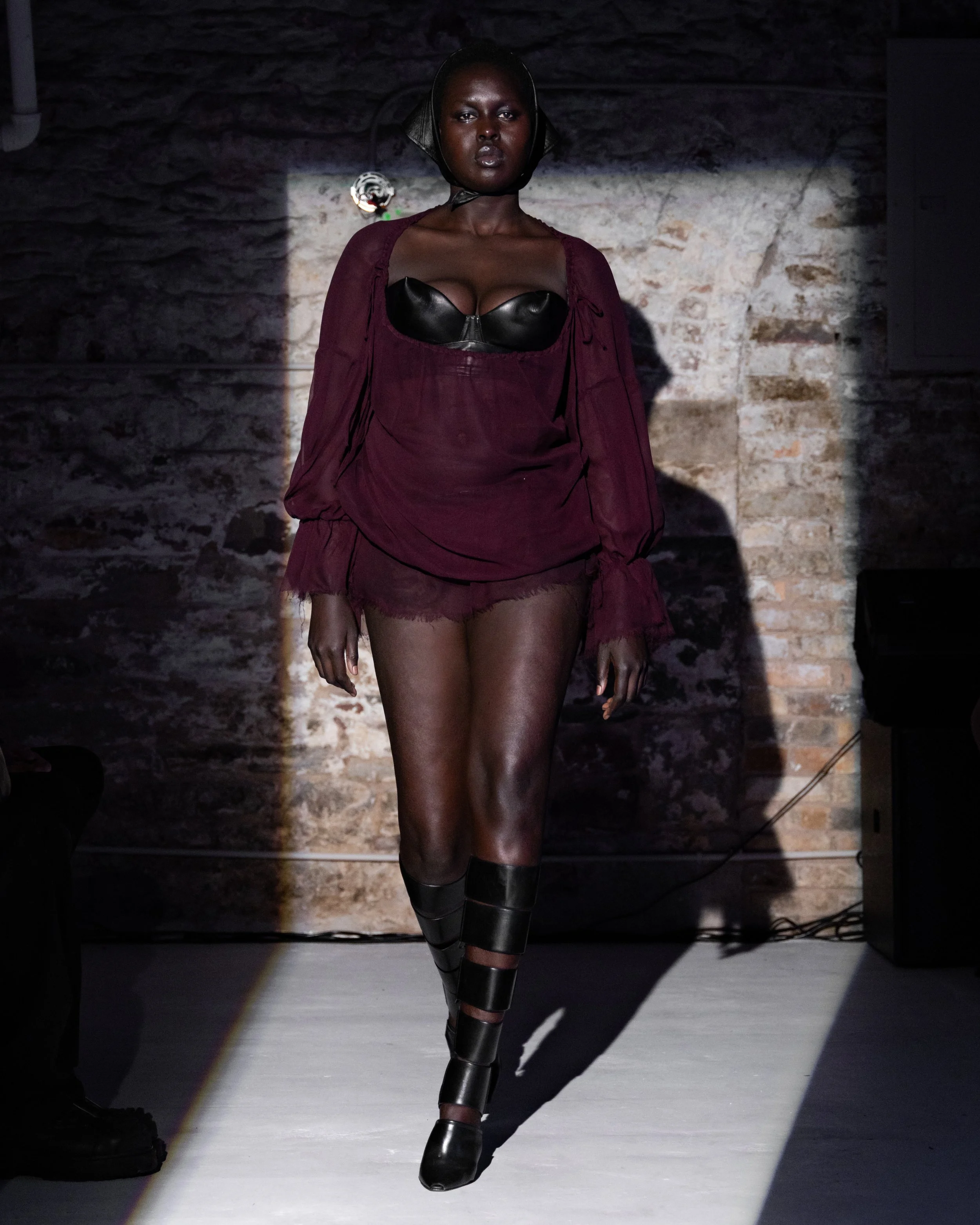
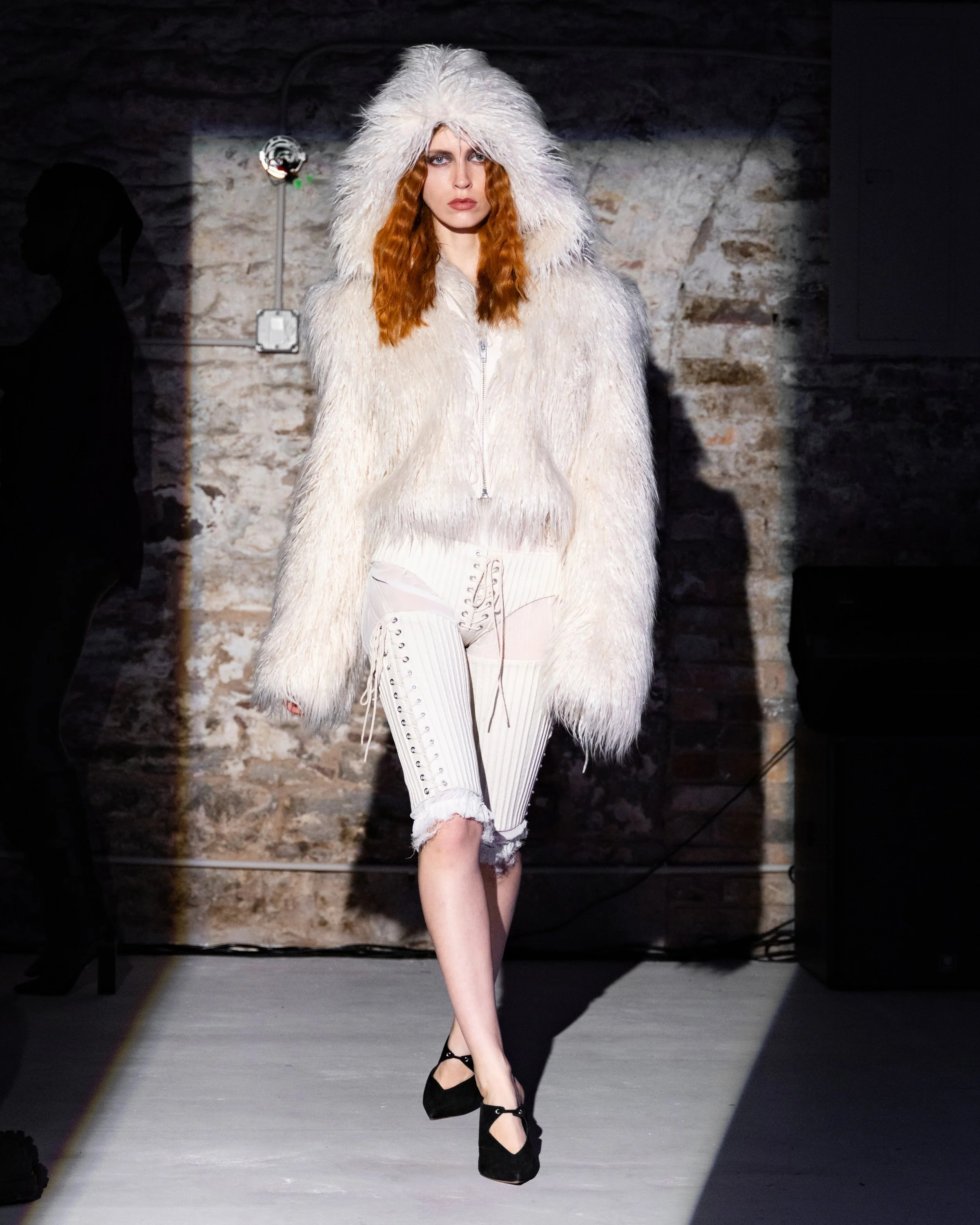
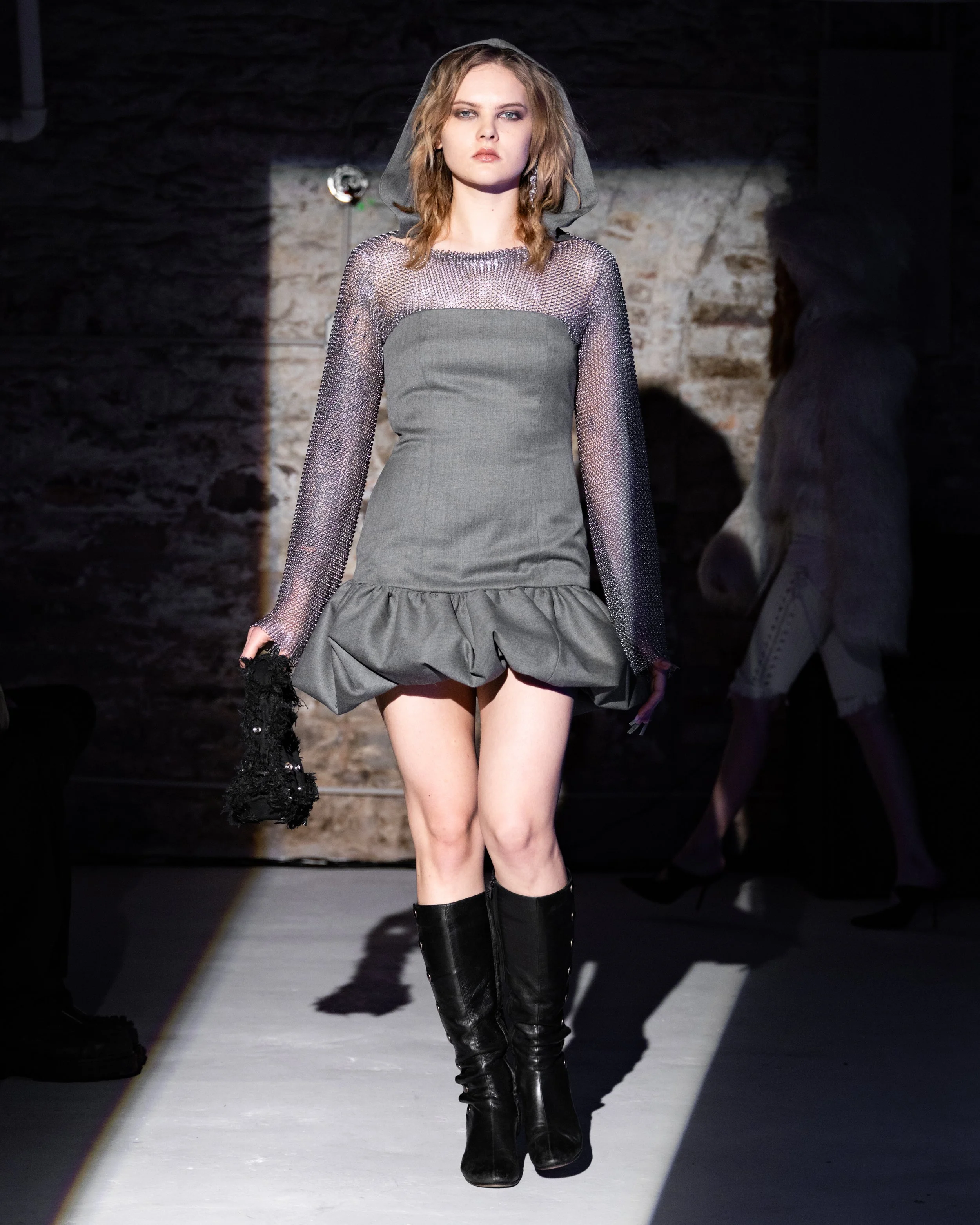
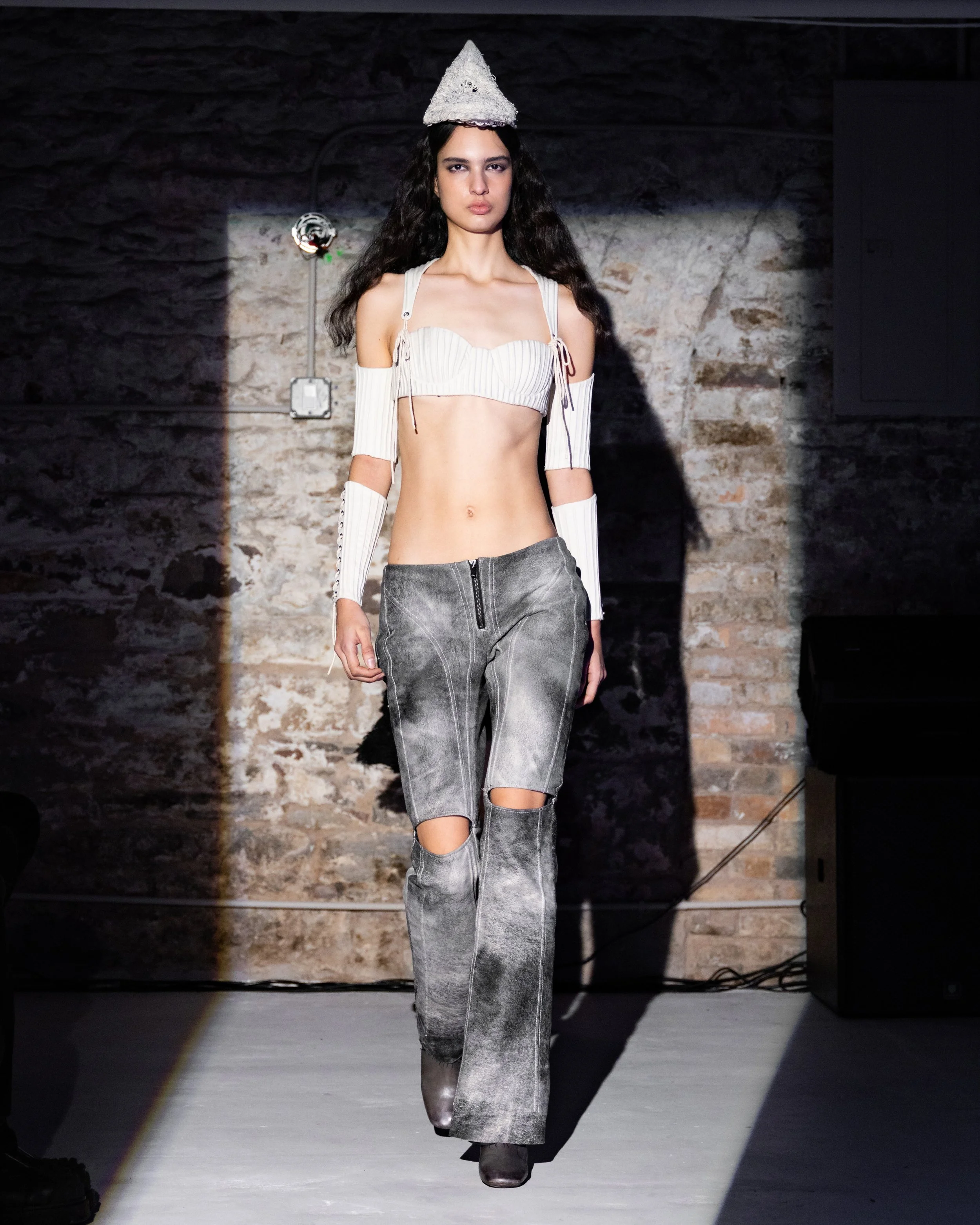
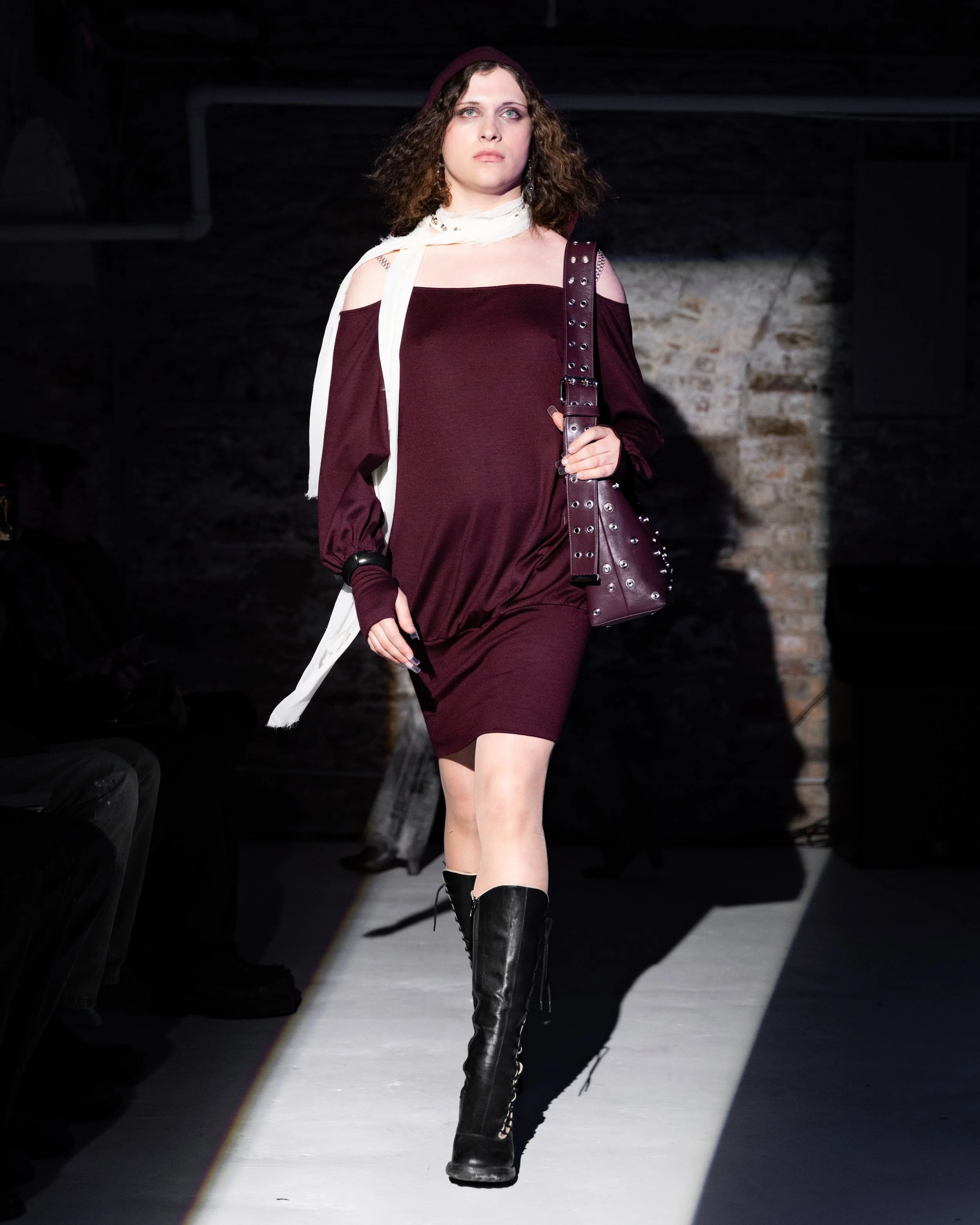
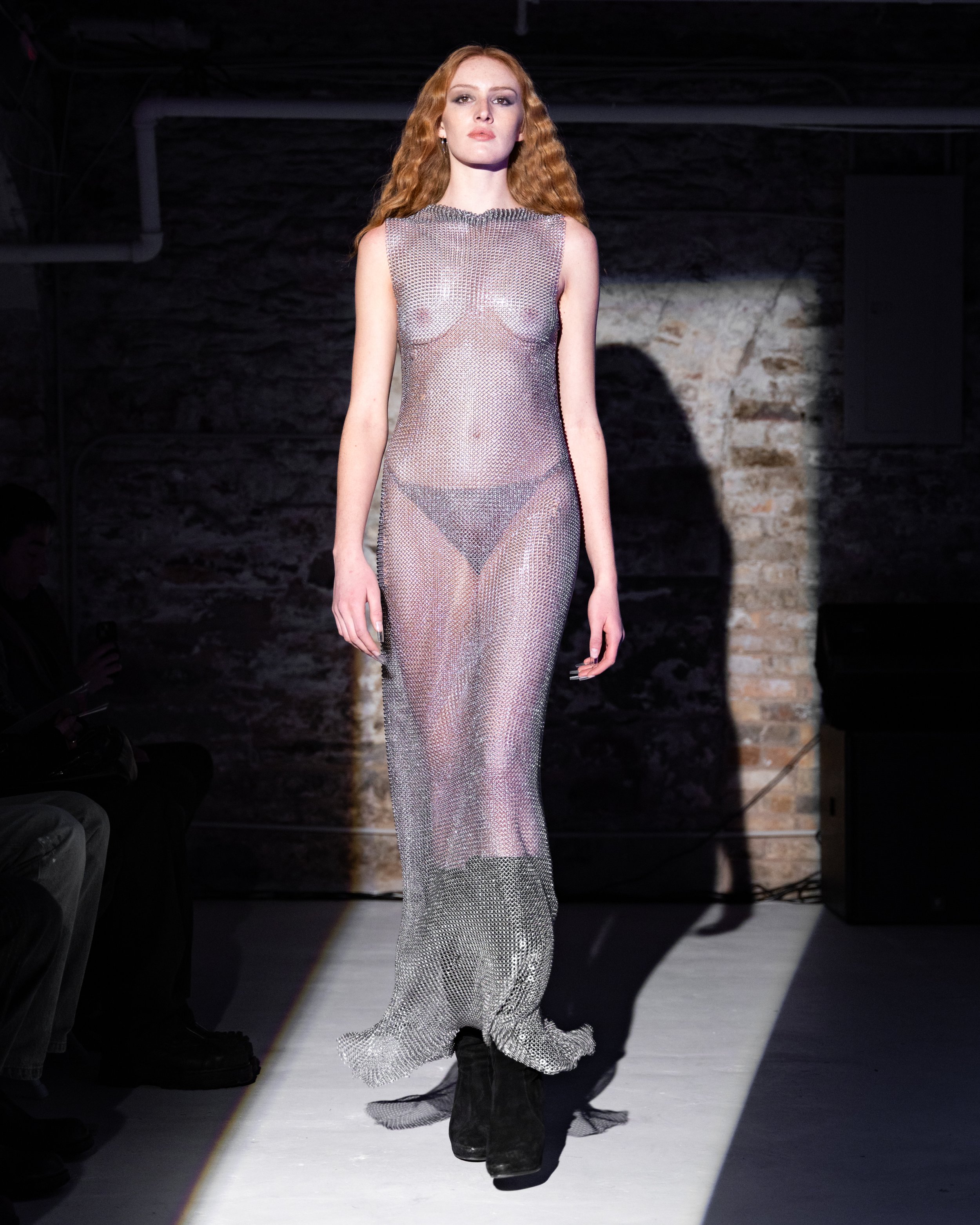
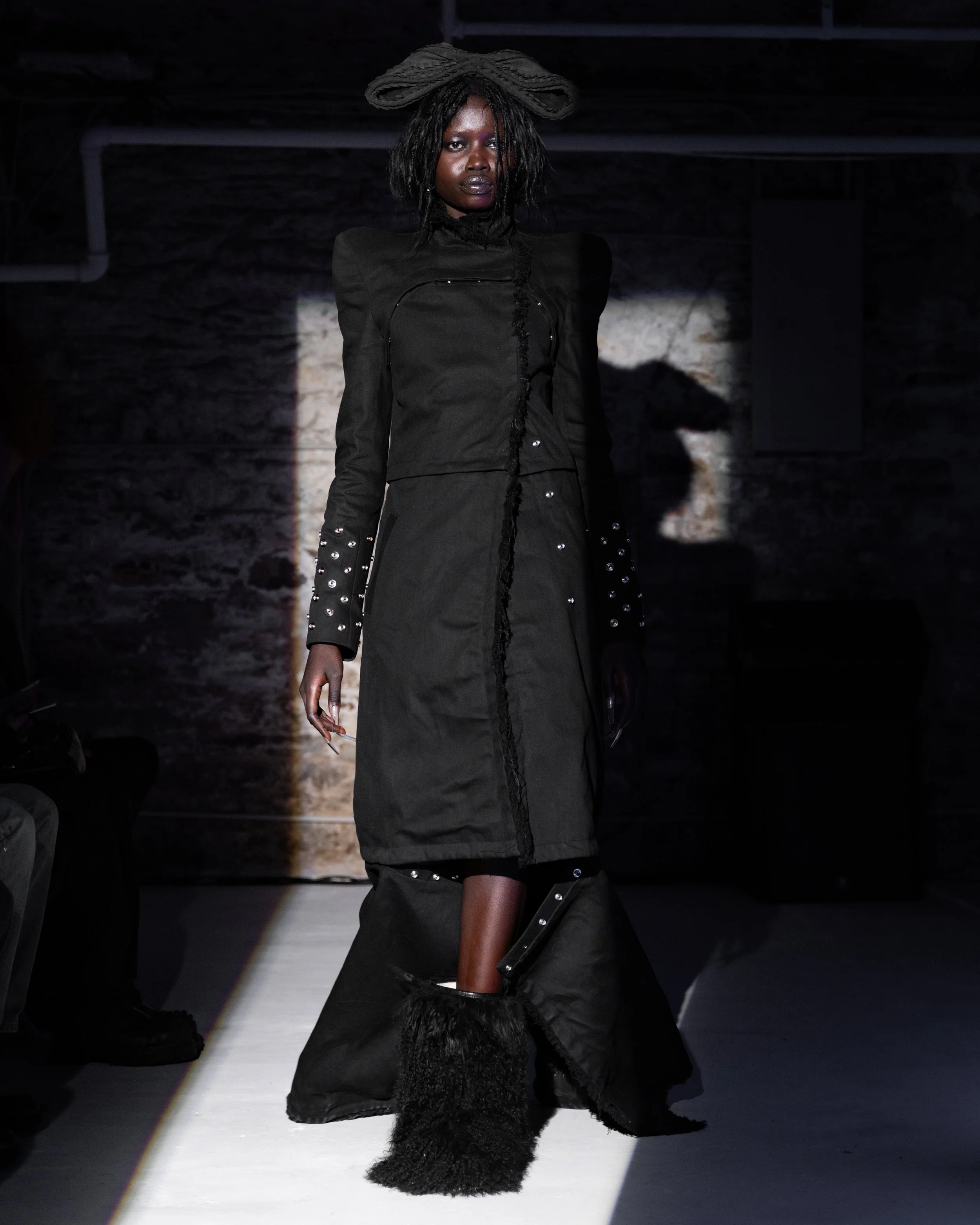
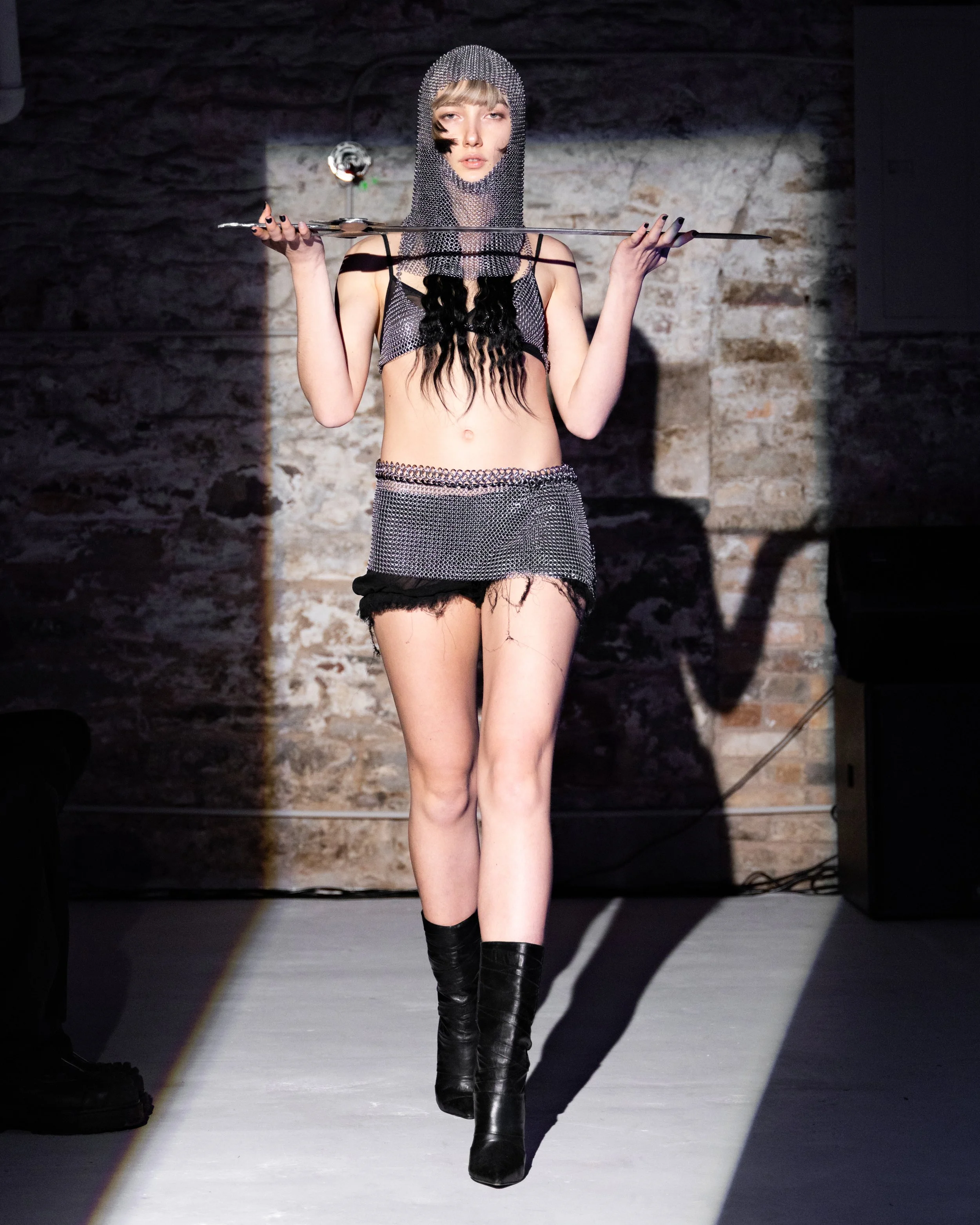
The garments represent armament and liberation, serving as both functional and decorative pieces with chainmail, hardware, furs, and more.
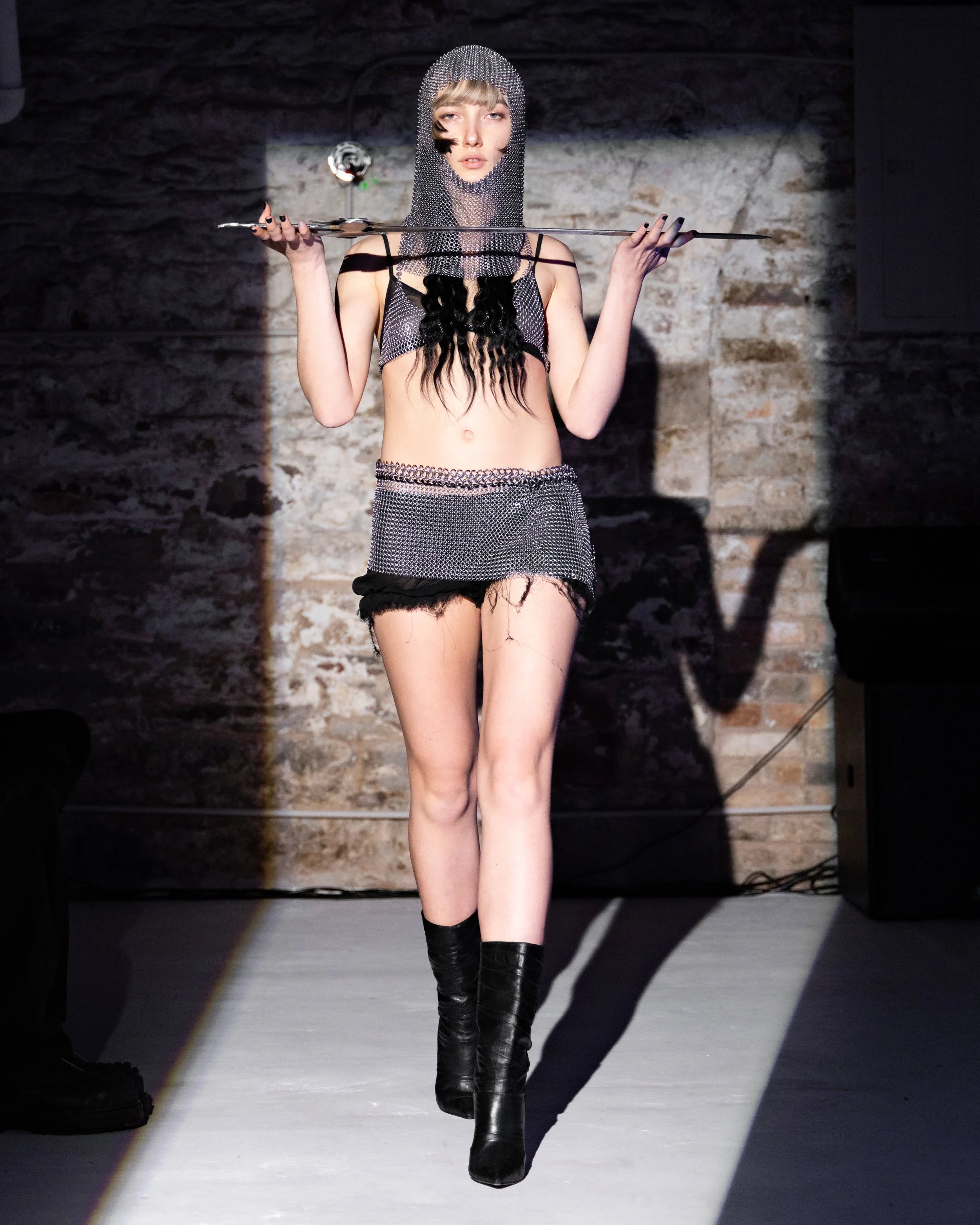
Photography by Colin Savercool
Regardless of how a woman is dressed, she is often subjected to harassment, judgment, misogyny, and even femicide. Anita Murnieks, founder and designer of LETTONNE, shows that what we wear, as well as how we wear it, can serve as forms of autonomy and liberation. Whether it be a sheer dress or a literal piece of armor, LETTONNE conveys the duality of femininity.
In late February, Murnieks debuted LETTONNE’s runway collection, Les Archangels. The 20-look collection draws from Kartlis Deda, the Mother of Georgia, a woman who holds both the sword and the wine. The show takes place above the city of Tbilisi, and as a woman yields her weapon, she reveals her boundaries, introducing tension into the defense.
The garments represent armament and liberation, serving as both functional and decorative pieces with chainmail, hardware, furs, and more. The Mother of Georgia’s offerings are community-oriented and move with good intentions. Les Archangels juxtaposes pieces of skin-exposing materials with heavy fabrics, giving a sense of vulnerability with resilience.
Murnieks spoke with 1202 MAGAZINE on her experience debuting LETTONNE on the runway, what women’s autonomy means to her, and how Eastern European culture influenced Les Archangels.
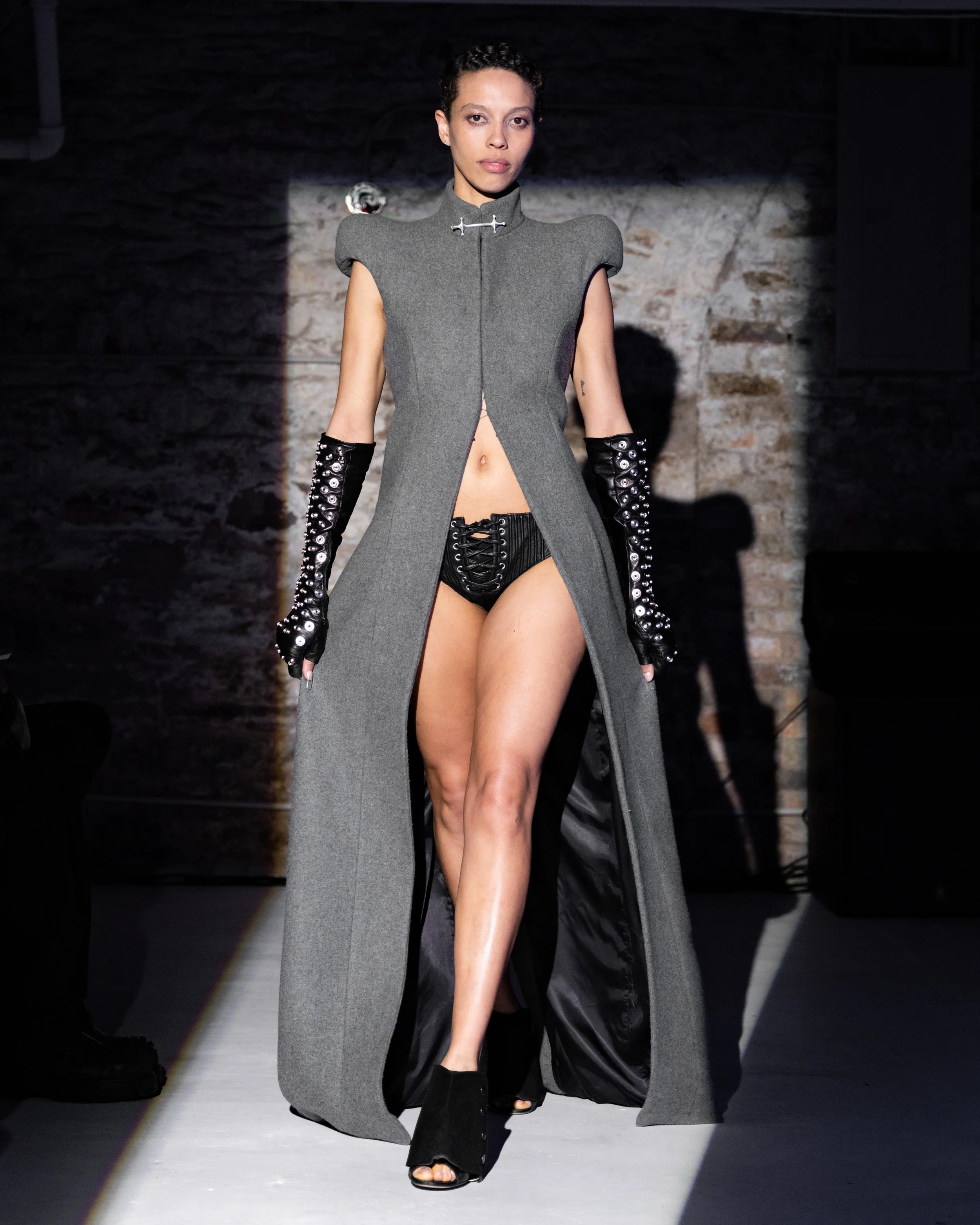
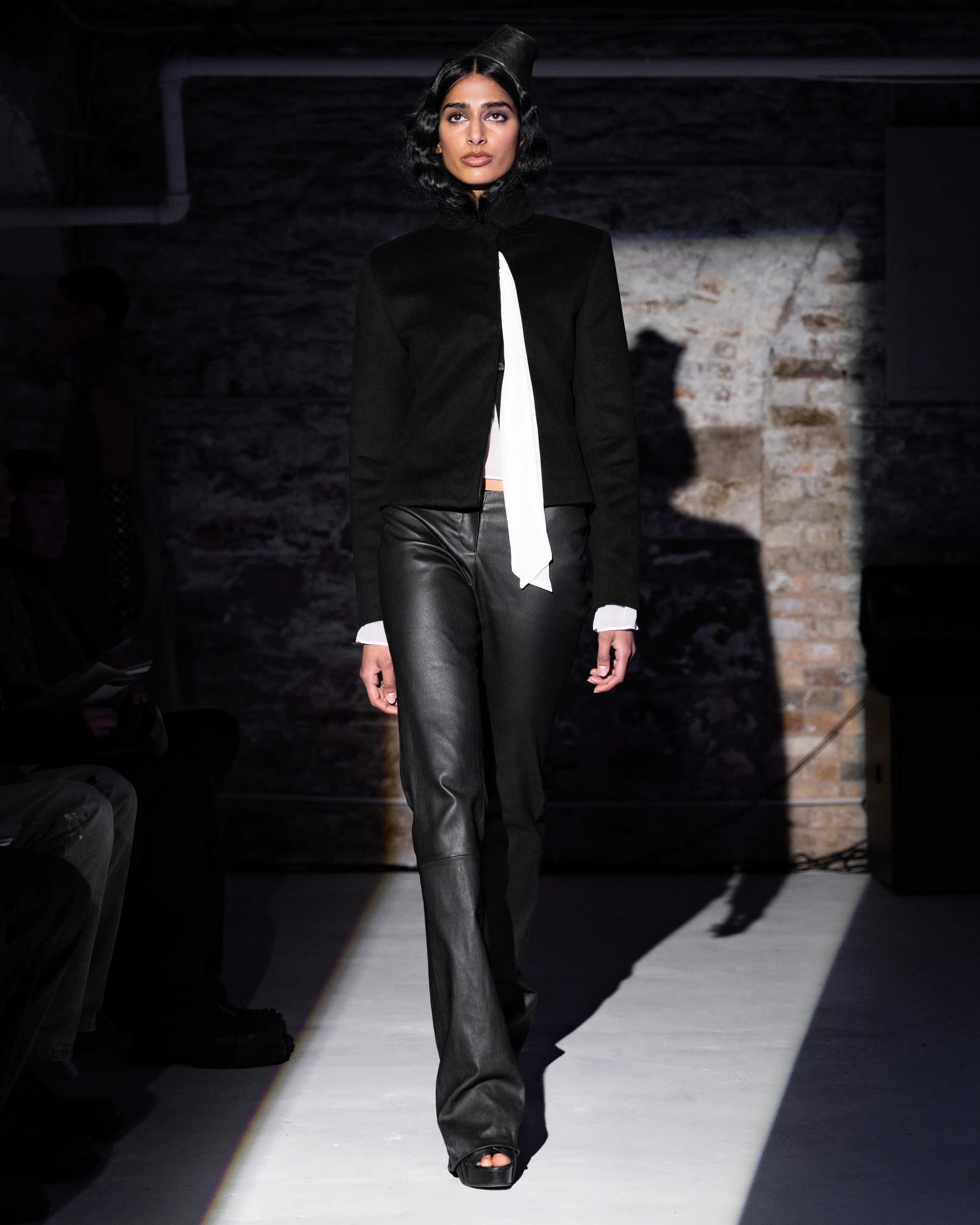
Photography by Colin Savercool
When did you first know you wanted to become a designer?
It happened very randomly when I first came to the U.S. I studied business economics and social science. My cousin was reapplying to study marketing, but deep down, she was an artist. She prepared her portfolio, so I went with her to an art store, and I got a notebook. She did more academic painting and drawing, but I sat by her and sketched. I knew I was a designer. Then, I transferred my credits from my business school to study fashion business at FIT. I took a drawing class to learn how to sketch figures.
What does the name of the brand represent, and how did you come up with it?
The literal translation is, ‘Latvian woman.’ It’s a French word. My father is Latvian, and during COVID, I took a French class. We talked about nationalities and how to pronounce certain words. When he told me, it was also the exact time I came up with the collection the night before.
How did the collection come to life, and what is its theme?
It was very intuitive and research-based. I started that research when I was in Georgia—the country, not the state. I’m very connected to Georgia; many of my friends are based there, and it has a rich culture. My creative assistant lives there, so I went there with the understanding that I wanted to make a collection. She’s a radical feminist, and I wanted to explore the idea of a woman's place in society. A few weeks earlier, we went on vacation, and we talked about all the imbalances and unfair cases everywhere. I researched a lot about how women are portrayed across different cultures and eras.
I saw Egyptian references where women used to be topless, and I was curious as to how we ended up being more conservative, especially through the perception of religious symbolism throughout the globe. There’s a large Mother of Georgia statue, depicting a woman holding a glass of wine in one hand and a sword in the other. She’s peacefully standing there. I saw similar statues of women holding swords in about eight countries in Eastern Europe. The sword became hardware. The handle of a sword looks ornamental, as do military blazers and jackets with embroidery.
I experienced a lot of moments myself when I physically felt the harassment and how difficult it can be to be a woman in the modern world. The research I landed on focused on creating greater protection and safety for women. I wanted to make something more revealing and sexy. At the same time, the crime statistics against women get crazier every year, so that’s why I wanted to launch self-defense products with different charms, because they are really needed. There are also more spikes, so all around, the collection represents the body and its ownership.
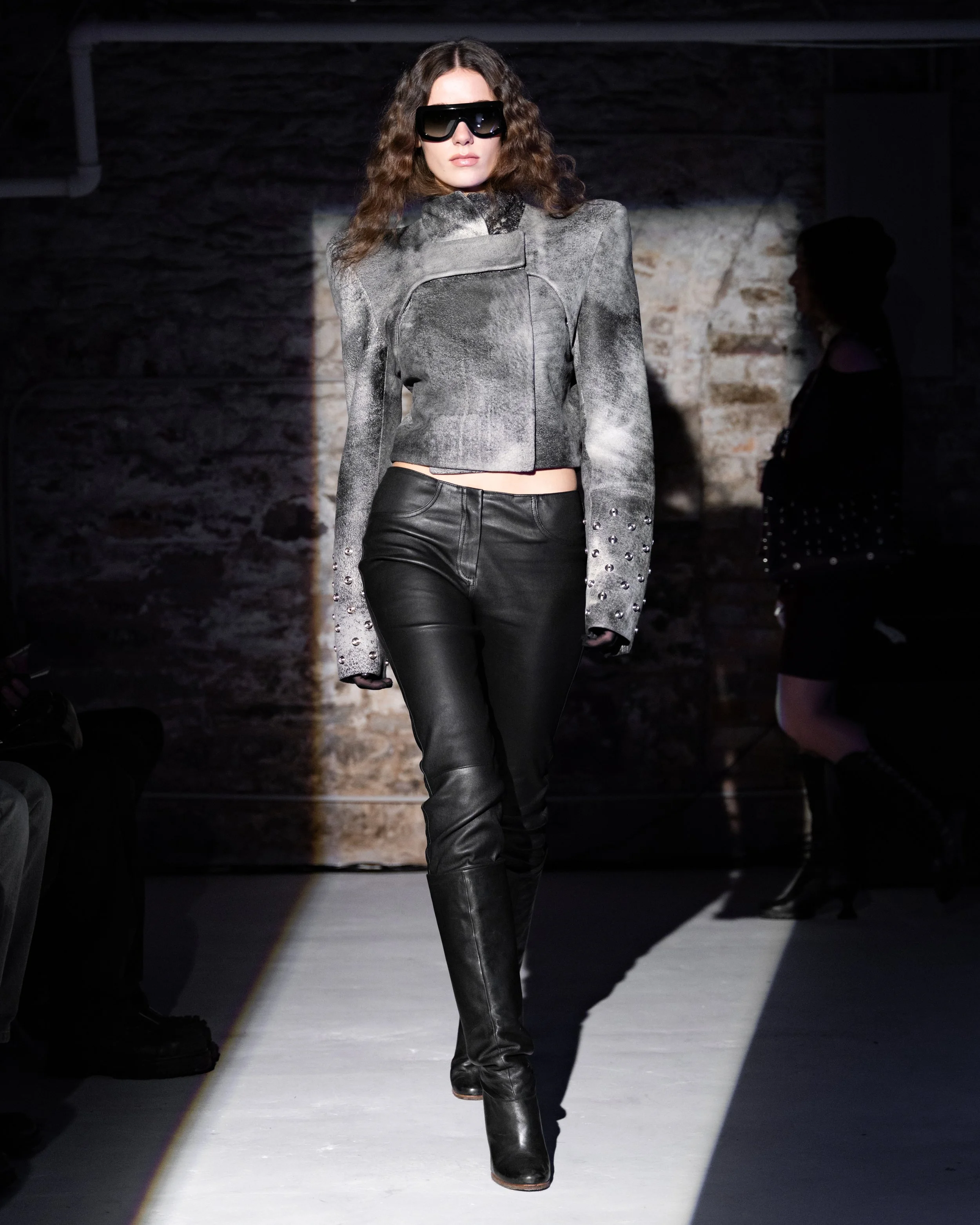
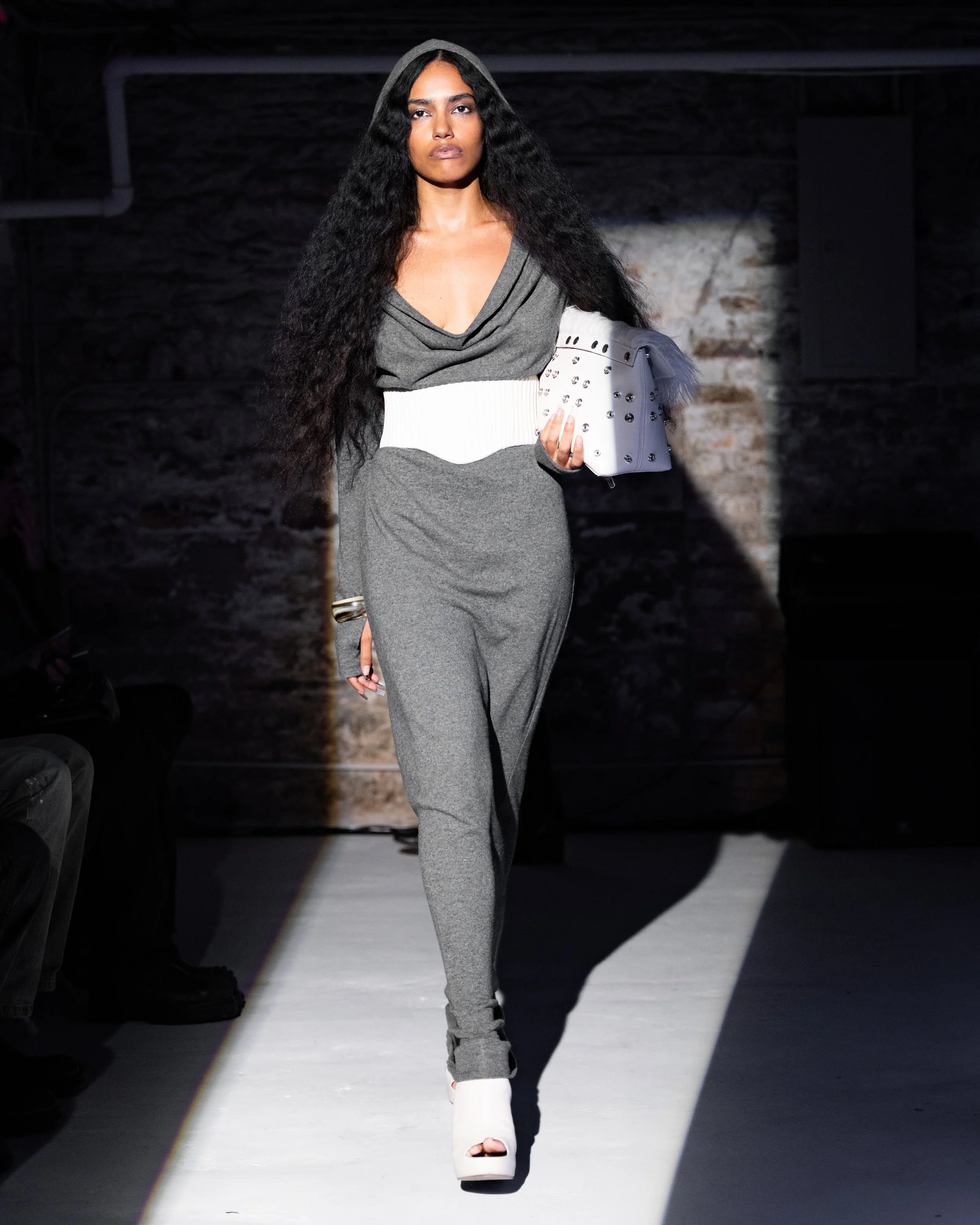
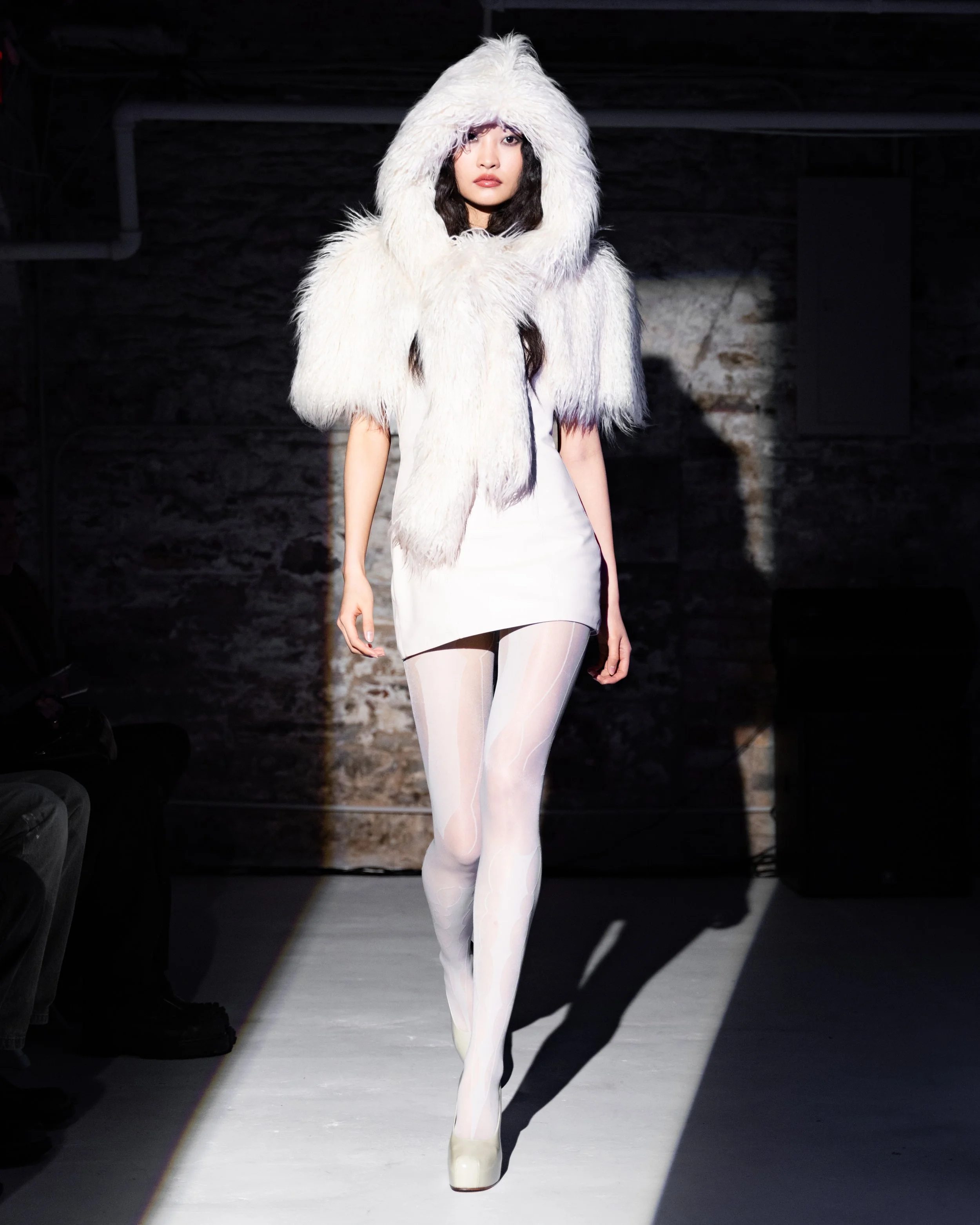
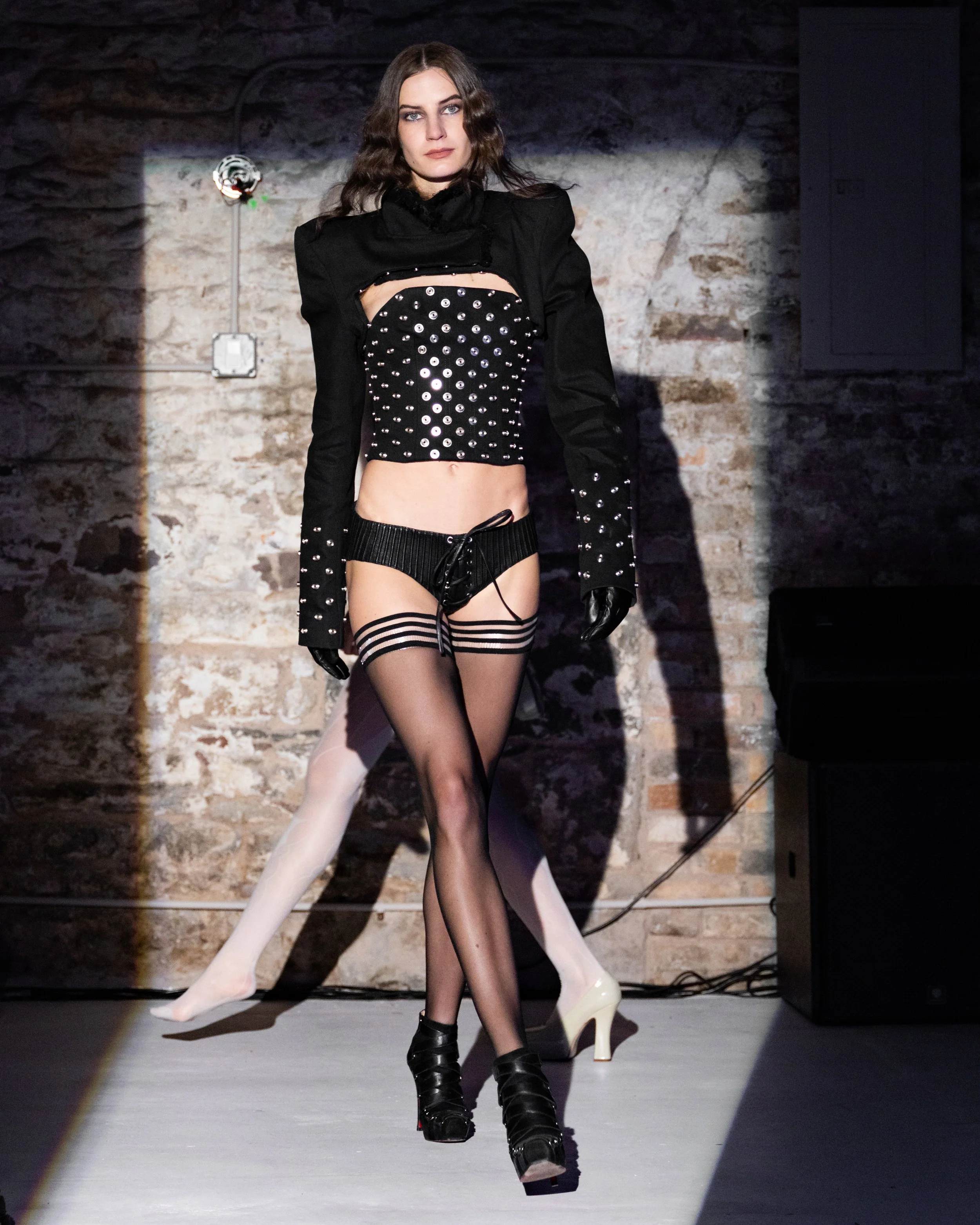
Photography by Colin Savercool
What were some emotions, obstacles, or challenges you faced while finishing Les Archangels?
We were faced with so many challenges. The chainmail itself broke during the show under the weight and pressure, and it was the closing look. I was about to go on the runway, I lifted my arms, and my bra broke on my chest, but we fixed it quickly. A lot of the materials are deadstock, and many aren’t available anymore. The hardware was the main challenge we faced. In the end, everything worked out ideally despite the blizzard.
What pieces were your favorite, or stuck out most for you to make?
I love the shape of the bra with horns because it’s silk on top. It’s a beautiful combination of layers and structure, hard combined with something softer. We also have ivory capris with silky undergaments. I also like how I styled the furry coat with the corded, lace tops, because it completely changes the look. Initially, it was planned to be serious because it’s a replica of a warrior. It changed the look’s shape, and at some point, it seemed I was responsible for it until it created itself. I also have a strong connection to the piece I walked, especially with the sharpening of the sword.
LETTONNE’s ethos is centered around women’s autonomy and liberation. Are there any other themes you want to explore in future collections?
I’m thinking about my summer collection and how I can follow up with a similar theme. I love the corded elements combined with silk. I’m thinking about the beauty of softness. I’m going to Georgia in a week to embed myself in culture and nature again. I’m experiencing the beauty of presence and life in more abstract ways. This collection also explores how femininity and masculinity coexist. Everything is yin and yang. It’s a philosophy that no matter who you identify as, there will always be a symphony of two elements.
How did Les Archangels display your evolution as a designer?
Interestingly, I actually made about four collections from the beginning to the end. There are a lot more out-of-the-ordinary pieces in this collection, and I judged myself throughout this journey. I want to reassure everyone and send a message: you should never doubt your impulses. If it comes to your mind, there is a right for it to exist. Even if you don’t like it, others might, and it’s important not to shut it down. Every version of the collection showed its evolution.